
Unbiased headlines. Facts, not spin.
Every story is an unbiased news briefing written from 110+ sources across the spectrum — sources linked so you can verify it yourself.
 economy
Major Story (7/10)
July 28, 2026 at 02:47 AM
economy
Major Story (7/10)
July 28, 2026 at 02:47 AM
States Move to Cut Utility Profit Margins as Electricity Bills Outpace Inflation
The Complaint
Electricity prices have been rising faster than inflation for years now, and the public has a clear suspect: the utilities themselves. A March poll from Pew Research found 85% of respondents blame rising home energy costs partly on utilities "wanting to make more money."
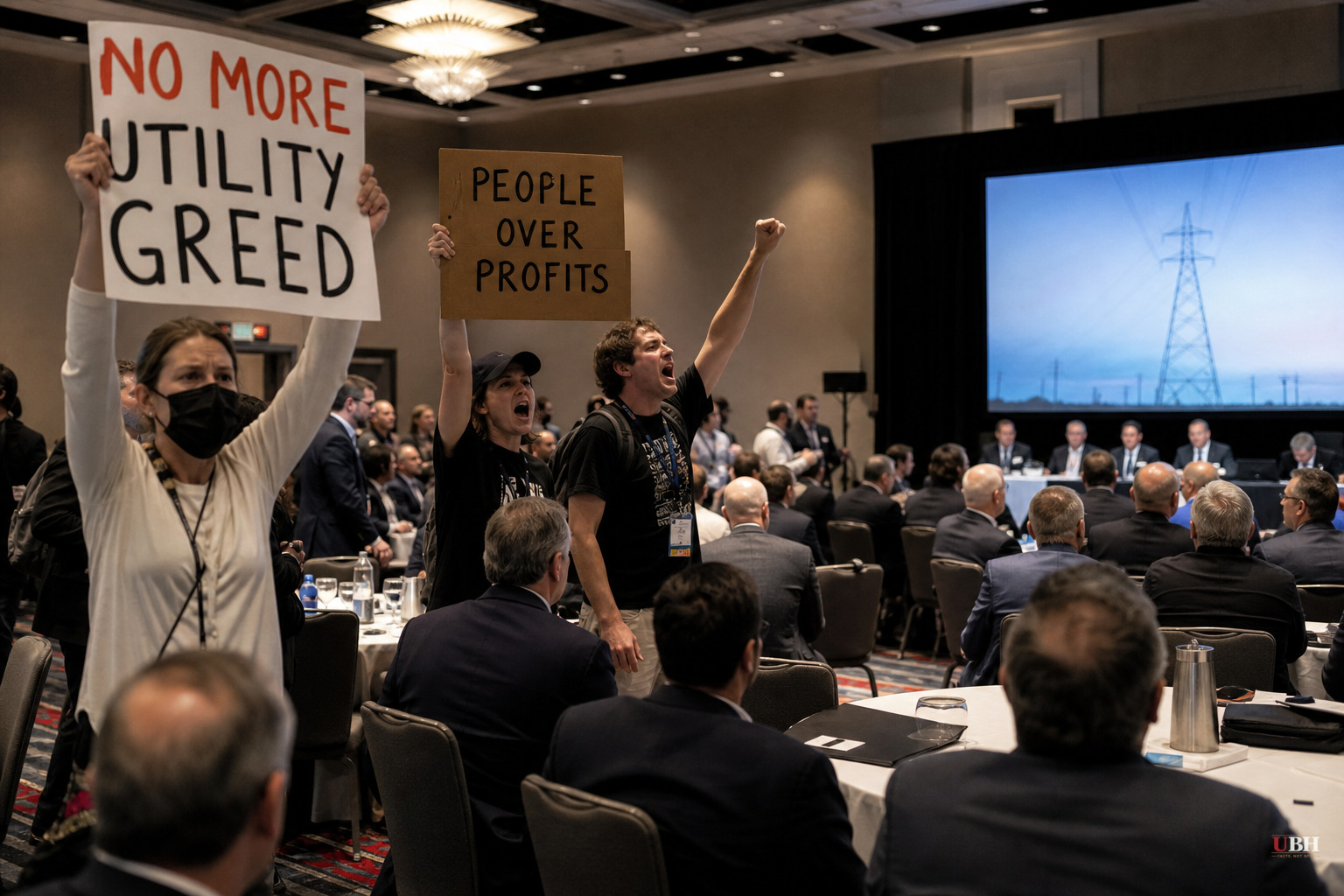
That frustration boiled over last month when protesters disrupted a Las Vegas conference for executives of the nation's largest investor-owned utilities, according to Utility Dive. It was a blunt signal that patience with the industry's legally guaranteed profit margins is running thin.
Now several states are doing something about it. Regulators and lawmakers in multiple states have taken steps to lower utilities' allowed return on equity, the profit margin regulators bake into customer rates to cover the cost of capital. Consumer advocates call it overdue. Utility executives call it dangerous.
The Numbers
Regulated utility profit margins averaged 9.7% in 2025, ranging between 9% and 10.5%, according to Synapse Energy Economics. That's not exotic by market standards, but utilities are a different animal. They operate as government-sanctioned monopolies with an "obligation to serve" every customer in their territory, and in exchange regulators guarantee them a return, according to a 2016 guide from the Regulatory Assistance Project. Unregulated businesses can post ROEs far above or below that range because they take on real market risk. Utilities largely don't.
That guaranteed-return model is now facing real scrutiny. A series of reports from Lawrence Berkeley National Laboratory found investor-owned utilities, which handle roughly 70% of national electricity sales, charge higher prices that have climbed faster than those of public power utilities without the same profit incentive.
The same research found investor-owned utilities requested $18 billion in rate increases last year, the highest revenue requests in decades. And regulators aren't pushing back the way they used to. Over the past five years, regulators approved an average 64% of the dollar value of those requested increases, up from a 52% average over the prior two decades, per the Lawrence Berkeley data.
Regulators are approving a bigger chunk of bigger asks, and ratepayers are footing the bill.
Maryland Is the Test Case
The fight everyone's watching is in Maryland, where a rate case involving Pepco is pending before state regulators. The Maryland consumer advocate is arguing for a cut to Pepco's allowed return on equity, according to Utility Dive. Utility executives say this is a matter for regulators to weigh carefully, not a political football, while consumer advocates say it's exactly the kind of case where regulators should push profits down closer to the actual cost of serving customers.
How Maryland rules could set a marker other states look to. Utility Dive quoted experts describing this moment, driven by electricity's growing importance to modern life combined with its rising cost, as a potential inflection point for how much profit the public is willing to tolerate from utility monopolies.
The Utilities' Real Argument
Utilities argue that slashing ROE has consequences beyond their shareholders' dividends. A lower allowed return can drag down a utility's credit rating. A weaker credit rating means higher borrowing costs. Higher borrowing costs for a company that has to spend billions on grid maintenance, storm hardening, and new transmission lines eventually show up on customer bills anyway, just repackaged as financing costs instead of profit margin.
Rating agencies do watch state regulatory environments closely, and utilities in states seen as hostile to investor returns have in fact seen credit outlooks shift. Whether the savings from a lower ROE outweigh the added financing costs from a downgrade is exactly the kind of math state regulators are supposed to referee.
The Data Center Wildcard
Complicating all of this is the explosion of data center demand hammering grids nationwide. Massive computing facilities, many built to feed AI models, need enormous and constant power. That demand is straining infrastructure and, in many cases, driving new rate cases and transmission investment, according to Utility Dive's reporting.
The public backlash against data centers has merged with the affordability fight. Ratepayers increasingly see themselves footing the bill for grid upgrades that primarily benefit tech companies' server farms, giving consumer advocates a much bigger and more receptive audience than they had a decade ago.
What Happens Next
Maryland regulators are expected to rule on the Pepco case, and that decision will be parsed closely by regulators, utilities, and consumer advocates in other states deciding whether to follow suit. If Maryland cuts Pepco's ROE meaningfully, expect consumer advocates in other states to cite it immediately in their own filings. If regulators side with the utility's credit-risk argument, expect utilities to point to that outcome just as fast. Either way, the fight over what counts as a fair profit margin for a monopoly that Americans have no choice but to pay isn't ending with one rate case.
Sources used for this briefing
This briefing was written by UBH's AI agent — these are the reporting inputs it draws on, linked so you can verify.


