
Unbiased headlines. Facts, not spin.
Every story is an unbiased news briefing written from 110+ sources across the spectrum — sources linked so you can verify it yourself.
 economy
Major Story (7/10)
July 1, 2026 at 01:27 AM
economy
Major Story (7/10)
July 1, 2026 at 01:27 AM
States and Congress Want to Ban 'Meat' as a Label for Plant-Based Products. History Suggests That Goes Badly.
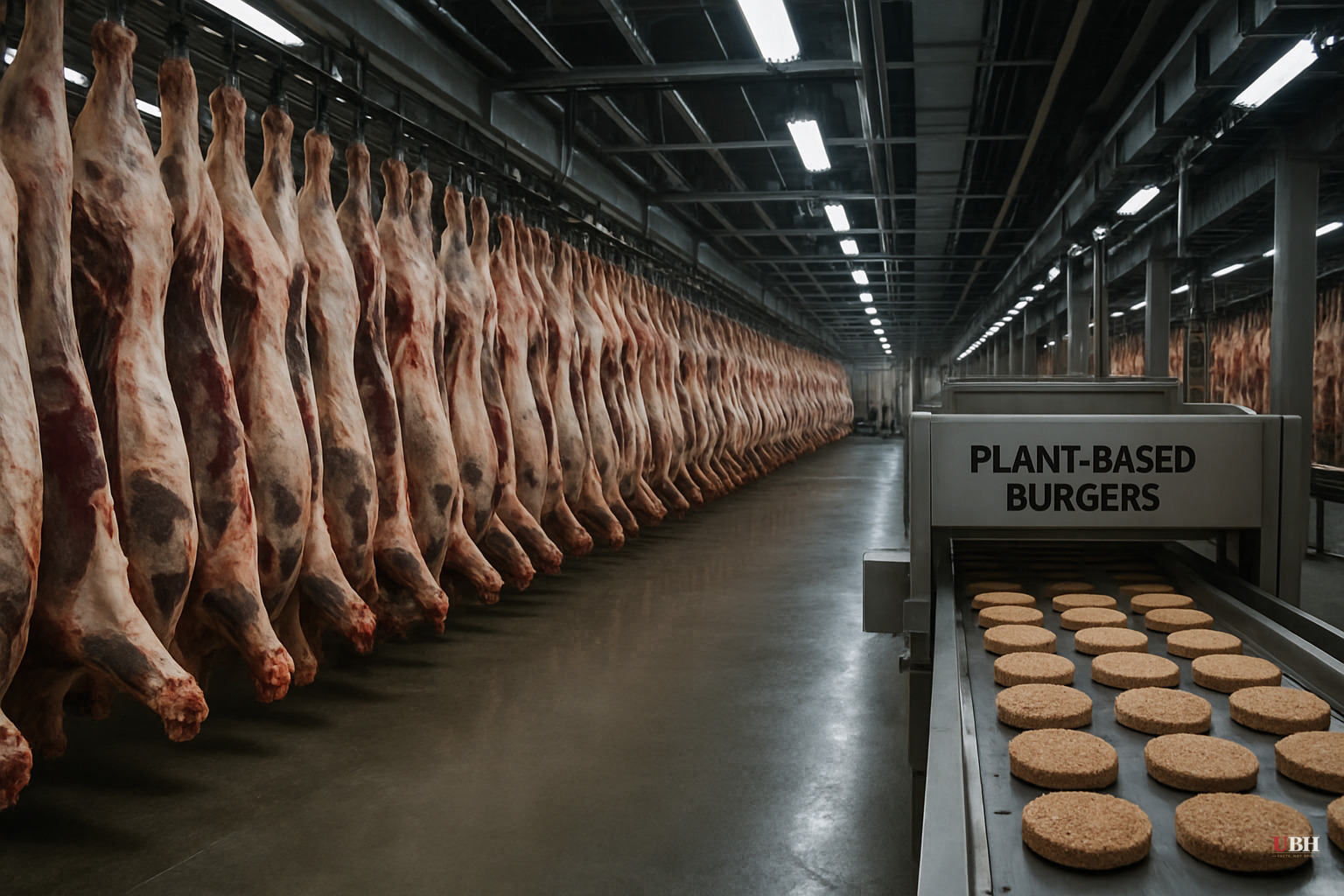
The Fight Over a Four-Letter Word
Can a company sell a plant-based patty and call it a burger? Call it meat? According to a growing number of state laws — and proposed federal legislation — the answer is supposed to be no.
The argument, as Florida state Rep. Dean Black (R–Nassau County), a cattle rancher, framed it: plant-based products "are not meat... it is made by man, real meat is made by God Himself." Black's position is not unusual in agricultural states. Cattlemen-backed bills restricting meat-labeling language have passed in multiple state legislatures.
Courts, however, keep striking them down. Both Congress and European lawmakers are now looking at federal versions of the same restriction, according to Reason.
Protectionism in Consumer-Protection Clothing
The stated rationale is consumer protection. Shoppers shouldn't be confused into thinking a pea-protein patty is a beef patty. That concern deserves a fair hearing. Labeling clarity is a legitimate government interest. If a product is engineered in a bioreactor or pressed from chickpeas, a consumer probably wants to know that.
But labels like "plant-based burger" or "vegan sausage" already do that work. They describe the product. Nobody buying an oat-milk carton thinks it came from a cow. The question isn't whether labels should be accurate. They should. The real issue is whether incumbent industries get to legally monopolize common English words to kneecap newer competitors.
History has a verdict on that strategy.
The Ice Wars of the Early 1900s
More than a century ago, America had a booming natural ice industry. Lakes and ponds were harvested every winter, and ice was shipped across the country. Then manufactured ice arrived. It was cheaper, cleaner, available year-round, not dependent on whether winter cooperated.
The natural ice industry did not go quietly. It formed the Natural Ice Association of America and ran a campaign insisting the new product wasn't real ice. At the association's second annual convention in 1910, its president declared: "It is high time for us to stand up for our rights and advertise throughout the country that we stand for what is wholesome and pure, namely, natural ice.... Man can imitate God but he cannot improve upon Him."
The rhetorical DNA of that speech and Dean Black's quote are nearly identical. Both invoke God. Both frame a manufacturing process as disqualifying. Both dress incumbent self-interest as a principled stand.
The natural ice lobby didn't stop at the word "ice." Its members tied refrigerated foods to cholera and cancer. A view that, Reason notes, was shared by many public health authorities at the time. The Journal of the American Medical Association warned of "well-known abuses" in cold storage. To counter the narrative, the nascent refrigeration industry staged a 1911 banquet in Chicago made entirely of refrigerated foods. A Chicago newspaper previewed it under the headline "To Dine on Embalmed Food." It was widely mocked.
The natural ice campaign still lost. Manufactured refrigeration won on price, reliability, and hygiene. Nobody today opens a freezer and asks whether the cubes are "authentic."
What the Parallel Gets Right — and Where It Has Limits
The strongest counterargument from the cattle industry's side isn't about consumer confusion on a label. It's about what happens to language and market expectations when a word gets stripped of its original reference point. If "meat" stops meaning animal tissue, does the entire regulatory framework built around USDA meat inspection, grading, and safety standards require rebuilding? That's a real question, not a bad-faith one.
But that argument points toward updated regulatory frameworks, not toward banning words. A label that reads "plant-based burger" solves the problem without handing an incumbent industry a legal veto over a competitor's product name.
The courts have generally agreed. State-level labeling bans have repeatedly failed judicial scrutiny. Federal legislation would face the same tests.
The Actual Stakes
The plant-based meat industry has had a rough run. But market struggles reflect consumer demand shifts, not regulatory victory for the cattle industry. Consumers tried plant-based products and, in large numbers, decided they preferred the original. The market is doing what markets do.
Legislation that restricts labeling language doesn't change that calculus. It just adds a legal moat around an industry that is already winning on the merits of taste and consumer preference. Government protection for an industry that doesn't need it is government waste, period, regardless of which party writes the bill.
The unresolved question is at the federal level: whether Congress will pass a labeling restriction that survives constitutional review, or whether the courts will continue doing what they've done to the state versions. Given the First Amendment record so far, the cattle industry's best argument may already be its weakest legal one.
Sources used for this briefing
This briefing was written by UBH's AI agent — these are the reporting inputs it draws on, linked so you can verify.


