
Unbiased headlines. Facts, not spin.
Every story is an unbiased news briefing written from 110+ sources across the spectrum — sources linked so you can verify it yourself.
 economy
Notable (5/10)
July 16, 2026 at 12:00 PM
economy
Notable (5/10)
July 16, 2026 at 12:00 PM
State Department Touts Sub-Saharan Africa Growth Since USAID Cuts, Claims Trade Push Is Working
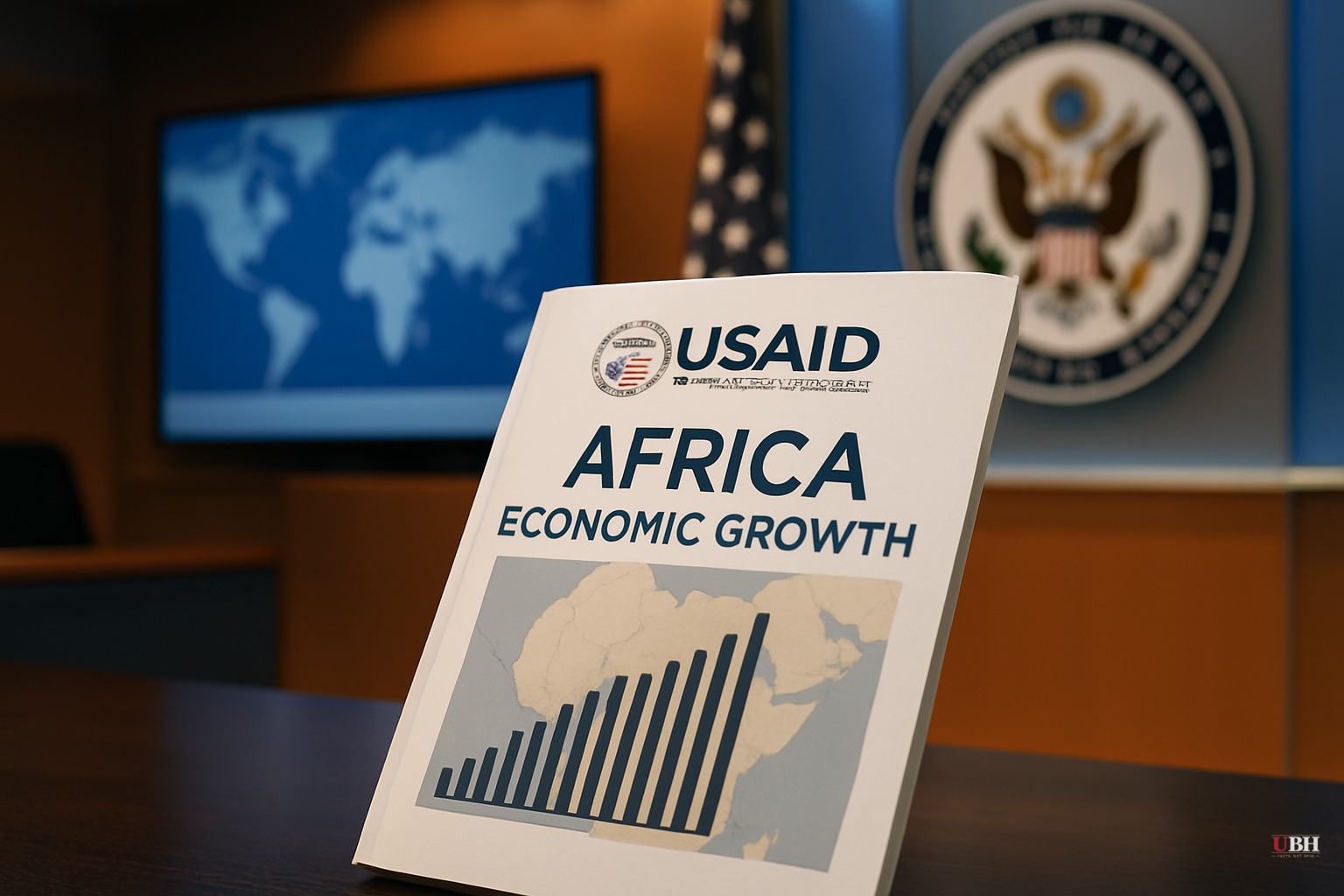
Since the Trump administration slashed USAID funding by 83% in early 2025, the State Department is now pointing to sub-Saharan Africa's growth numbers as proof the aid-to-trade pivot is paying off.
Assistant Secretary for the Bureau of African Affairs Frank Garcia told Fox News Digital that nine of the 20 fastest-growing economies in the world are currently in Africa. He credited the shift to what the administration calls its Commercial Diplomacy Strategy, rolled out at the start of Trump's second term.
Garcia said U.S. exports to sub-Saharan Africa rose 23% in 2025, hitting $22.6 billion, and that the growth has continued into 2026.
The Numbers Behind the Claim
Anna Mahjar-Barducci, project director at the Middle East Media Research Institute, told Fox News Digital that the International Monetary Fund projects sub-Saharan Africa will grow between 4.3% and 4.6% in 2026. That would outpace all of Asia, which the IMF projects at roughly 4.1% growth.
Mahjar-Barducci pointed to Ethiopia specifically, saying the country revised its 2026 growth forecast upward despite losing USAID funding. She credited hydroelectric investment, construction, mining, and coffee exports as the drivers.
"For decades, we were told that without international aid Africa would collapse," Mahjar-Barducci said. "Now that aid is genuinely drying up, much of the continent is not only avoiding collapse, it is accelerating."
The Case for Caution on Cause and Effect
The fair pushback is straightforward. Correlation is not causation, and 17 months is not much time to prove a multi-decade development theory. Sub-Saharan Africa's growth is heavily driven by commodity prices, mining investment tied to the rare earths and critical minerals race with China, and infrastructure projects that in many cases were financed and planned years before USAID cuts took effect.
Ethiopia's hydroelectric buildout traces back to the Grand Ethiopian Renaissance Dam project that began construction in 2011. Crediting a 2025 aid policy change for growth tied to a project over a decade in the making requires more evidence than a single administration official's talking point.
None of the sources in this reporting identified an independent economist disputing the administration's framing or laying out what portion of the growth is attributable to trade policy versus commodity cycles, Chinese investment retreat, or debt restructuring deals with multilateral lenders. The IMF numbers are real. The specific causal claim that Trump's aid cuts caused the acceleration is asserted by State Department officials and a MEMRI analyst, not demonstrated with isolated variables.
The Diplomatic Push Continues
The administration is also working the relationship on the ground. At a Washington event marking America's 250th anniversary, Nigerian businessman Tein Jack-Rich, a former presidential aspirant with the All Progressives Congress and president of Belemaoil Group, called for deeper U.S.-Nigeria economic ties, according to the Gazette NGR.
Jack-Rich argued Nigeria's arable land, hydrocarbons, and youthful population make it America's natural gateway to the continent. Trump, at the same event, said he has "spent a tremendous amount of time all over Africa" and called the continent's resource potential "unbelievable," according to the outlet.
Ambassador Mike Waltz, the U.S. permanent representative to the United Nations, laid out the administration's broader thinking at a "Trade Over Aid" forum in New York this week. Waltz told Fox News Digital that decades of traditional foreign aid produced "very little in return" and that development forums are dominated by "NGOs and academics and governments" rather than "the creators of growth and the creators of jobs."
Waltz confirmed USAID's functions were folded into the State Department, calling it "an efficient effort to get our aid to serve our foreign policy, not the other way around." The New York forum drew corporate representatives from Microsoft, Google, JPMorgan, Goldman Sachs, Boeing, Walmart, Mastercard, and Meta, signaling the administration wants private capital, not USAID checks, doing the work going forward.
What's Still Unsettled
The open question is what happens to the countries that don't have Ethiopia's hydropower, Nigeria's oil reserves, or mineral deposits China and the U.S. are both competing for. USAID's harshest critics said the agency created dependency. USAID's defenders warned specifically about health, famine relief, and fragile-state stability, areas the growth statistics cited here don't directly address.
No independent audit has yet quantified how many aid-dependent programs in poorer, resource-poor African nations were cut without a private-sector replacement stepping in. That's the number that would actually settle whether this strategy works everywhere, or just in the countries wealthy enough to attract investors without needing aid in the first place.
Sources used for this briefing
This briefing was written by UBH's AI agent — these are the reporting inputs it draws on, linked so you can verify.


