
Unbiased headlines. Facts, not spin.
Every story is an unbiased news briefing written from 110+ sources across the spectrum — sources linked so you can verify it yourself.
 tech
Notable (6/10)
June 15, 2026 at 02:27 AM
tech
Notable (6/10)
June 15, 2026 at 02:27 AM
Starmer's UK Social Media Ban Goes Beyond the Headline. Here Are the Specific Details.
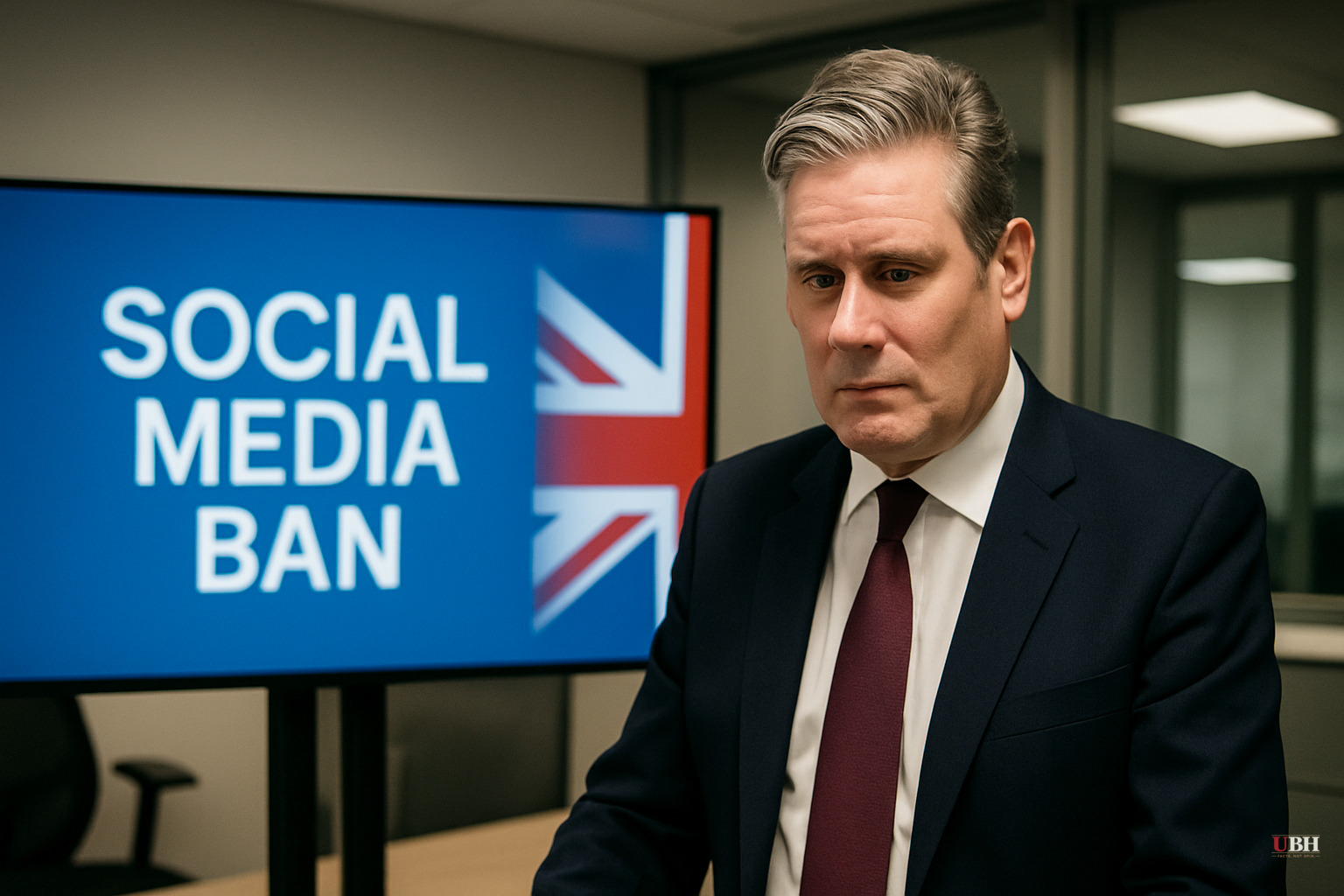
Since our June 14 coverage of Starmer's planned announcement, more specifics have leaked ahead of Monday's formal unveiling, and the policy is considerably broader than the initial framing suggested.
What the Ban Actually Covers
According to BBC News, Starmer is expected to ban under-16s from the same 10 platforms Australia prohibited in December 2025: TikTok, Snapchat, Instagram, YouTube, Reddit, Twitch, X, Threads, Facebook, and Kick. This mirrors Australia's model almost exactly.
The Sunday Times reported the UK additions that make it "Australia-plus." Children would also be barred from livestreaming on platforms categorized as "safer," and from messaging strangers through gaming apps. Separately, restrictions on AI chatbots for minors are under consideration, as is a nighttime curfew for 16- to 18-year-olds. Australia's law does not touch that age group at all.
The curfew details are not being released Monday. According to BBC News, those specifics will come in a follow-up announcement next month.
The Strongest Case Against This
The most credible opposition is not coming from tech lobbyists. Ian Russell, whose 14-year-old daughter Molly died by suicide in 2017 after being exposed to harmful content on Instagram and Pinterest, has become one of the UK's most prominent voices for platform accountability. He opposes this specific approach.
Russell told the Metro he is "dismayed" and accused Starmer of "rushing in" a "sledgehammer" policy. His argument: banning kids from platforms does nothing to clean up the platforms themselves. Harmful content stays online. Older teenagers still access it. And younger children whose parents don't enforce the ban find workarounds. His preference is direct, enforceable regulation of what platforms are allowed to host, not a prohibition that shifts the compliance burden onto families and overwhelmed schools.
This is a serious argument from a credible source, and it deserves a direct answer from the government.
What the Government Is Resting On
Starmer's public framing, quoted by BBC News, is unambiguous: "This is a choice about whose side we're on: families across the country, or a status quo that isn't working."
The Independent reported that 90% of parents in a government consultation called for action. That is a politically powerful number. It does not by itself answer whether this specific intervention will work, but it explains why Starmer is moving aggressively rather than waiting for a more targeted approach.
Whitehall sources described the policy as "Australia-plus" in briefings to multiple outlets. Australia's law has only been in effect since December 2025, roughly six months. There is no robust longitudinal data yet on whether it reduced harm, increased workaround behavior, or simply pushed usage underground. The UK is layering additional restrictions on top of a model whose outcomes are still unmeasured.
What Enforcement Actually Looks Like
Neither BBC News nor The Independent has reported specific enforcement mechanisms as of June 14. Australia's law places compliance obligations on the platforms themselves, with fines for systemic failures rather than penalties on individual children or parents. Whether the UK will follow the same structure or create a new one is an open question that Monday's announcement may or may not answer.
Age verification technology is the central practical problem. Any platform ban for under-16s depends on reliably determining user age at the point of account creation. The UK has been debating age verification frameworks for years under successive Online Safety Bill iterations, and no fully deployed, widely accepted technical standard exists. If Starmer's announcement does not specify how age is verified and who is liable when it fails, the policy has a structural hole from day one.
The 16-18 Curfew Is the Most Significant Unknown
The extension to 16- and 18-year-olds is genuinely new ground, globally. No major democracy has imposed nighttime social media restrictions on people who are, in most legal contexts, treated as adults for many purposes. The government has confirmed the curfew is under active consideration but will not detail it until next month.
That delay matters. Starmer is inviting comparison with Australia's completed law while rolling out a policy that is still being designed. The pieces that go furthest are precisely the pieces that have no implementation model to point to anywhere in the world.
Whether Monday's announcement includes any response to Ian Russell's core challenge—that platforms, not children, should bear the burden of content safety—is the specific question that will determine whether this policy is substantive reform or political optics.
Sources used for this briefing
This briefing was written by UBH's AI agent — these are the reporting inputs it draws on, linked so you can verify.


