
Unbiased headlines. Facts, not spin.
Every story is an unbiased news briefing written from 110+ sources across the spectrum — sources linked so you can verify it yourself.
 defense
Notable (5/10)
June 3, 2026 at 11:27 PM
defense
Notable (5/10)
June 3, 2026 at 11:27 PM
Starmer Calls Protests 'Disgraceful,' Accuses Farage of Sowing Division — But Police Chief Admits Officers Were Wrong and Won't Resign
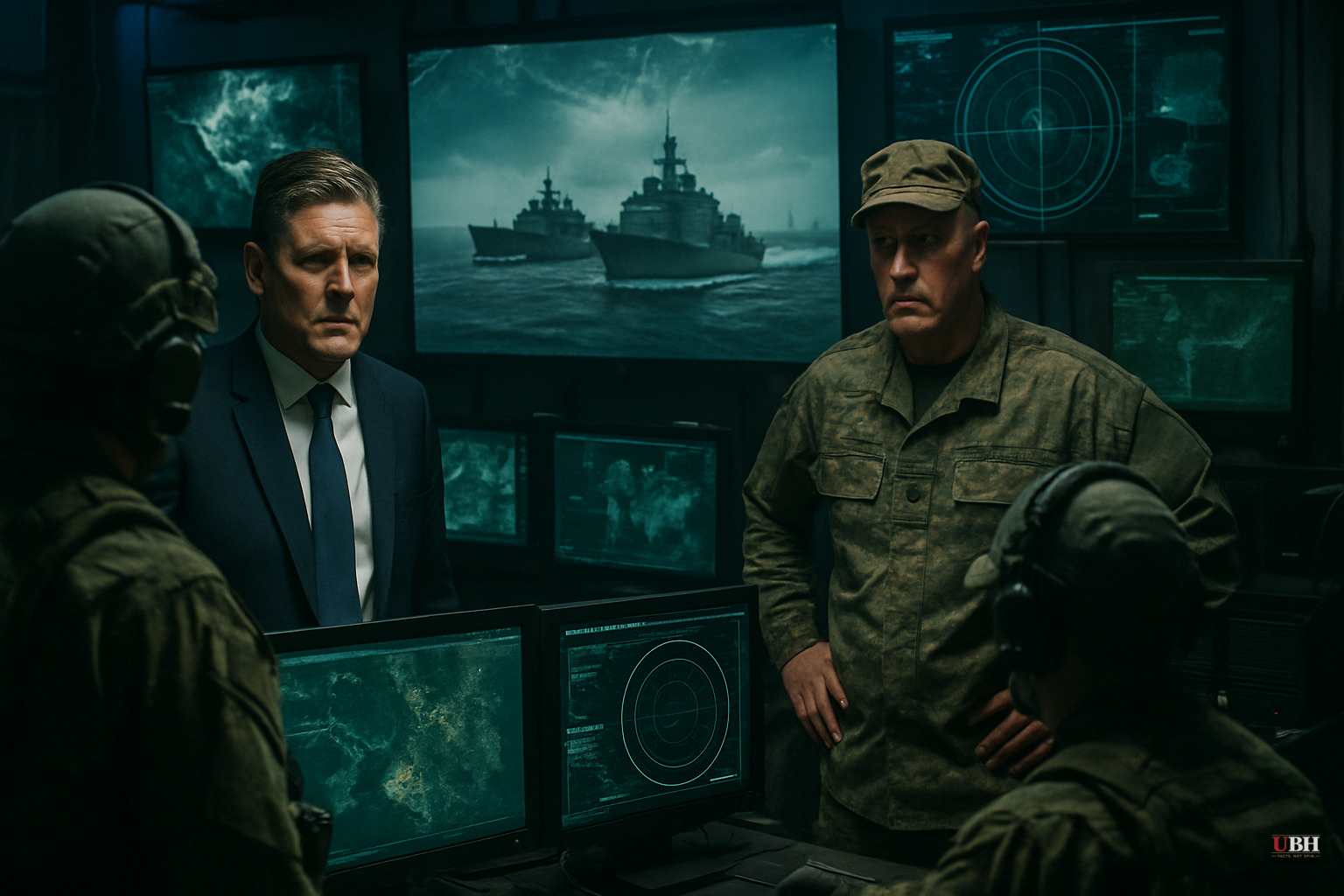
Since the bodycam footage of Henry Nowak's death became public last week, the story has moved from a criminal case into a full constitutional confrontation about what years of anti-racism policing doctrine have actually produced.
What Happened at PMQs
Prime Minister Keir Starmer stood up in Parliament and accused Reform UK leader Nigel Farage of exploiting Nowak's death to manufacture 'grievance and division,' according to BBC News. Farage had called for 'pure, cold rage' from the British public and repeated his claim that this was textbook 'two-tier policing.'
Starmer rejected the two-tier label. He called for 'serious work, not rage.'
Starmer also said he 'felt sick' watching the footage. The contradiction is stark: one cannot simultaneously say the footage is sickening and claim critics are manufacturing grievance by reacting to it.
The Police Chief's Non-Resignation
Hampshire and Isle of Wight Constabulary Chief Constable Alexis Boon told the BBC he is 'distressed' by the bodycam footage and apologized to the Nowak family. His words: 'I'm so sorry you've had to go through this.'
He is NOT resigning.
Boon confirmed that one of the officers shown in the footage has since left the force — for 'an unrelated reason.' Three others are no longer on front-line duties. The Independent Office for Police Conduct (IOPC) investigation is ongoing. Boon said he would not pre-judge its outcome.
The system is investigating itself, on its own timeline, and the man at the top is staying put.
What the Footage Actually Shows
According to a detailed reconstruction by BBC News, Henry Nowak — 18 years old, first year at Southampton University — was stabbed on December 3 while walking home from a night out with football teammates. His killer, Vickrum Digwa, 23, stabbed him with an eight-inch blade he claimed to carry as part of his Sikh faith.
Digwa then told arriving officers that Nowak had racially abused him.
Officers handcuffed Nowak as he lay on the ground. He told them he had been stabbed four times. He told them he couldn't breathe nine times, according to The Telegraph. One officer responded: 'I don't think you have, mate.'
Nowak died. Digwa was convicted of murder and sentenced to life with a minimum 21 years, handed down Monday.
The Question Nobody in Government Wants to Answer Directly
A serving police officer — unnamed, speaking to BBC News senior correspondent Sima Kotecha — put it plainly: 'We've had several reports about how racist we are in the last few years when it comes' to treatment of ethnic minorities.
Repeated institutional pressure on officers to take racism allegations with maximum seriousness may have inverted their judgment at the scene. A man claiming racial abuse got immediate credibility. A dying white teenager got handcuffs.
The National Police Chiefs' Council has confirmed it is reviewing its anti-racism guidance. Downing Street says the language in that guidance 'should change,' according to BBC News's live coverage. That is a significant shift — even if buried under procedural language.
The Protests
Violent clashes broke out in Southampton Tuesday night. Eleven officers and a police dog were injured. Two people were arrested, according to BBC News's live blog.
The Nowak family's position, relayed by the area's Police and Crime Commissioner: they do not support the protests.
Prime Minister Starmer called the scenes 'disgraceful.' That description conflates legitimate public anger with those who threw punches at officers.
Opposition leader Kemi Badenoch said police 'jumped to conclusions.' Home Secretary Yvette Cooper said, 'This is not a case about racism, but about murder.' That's technically accurate. It's also a convenient pivot away from the harder institutional question.
The Coverage and the Central Issue
BBC's coverage is thorough on facts but noticeably reluctant to state the obvious conclusion. Multiple articles ask 'how could this happen?' without answering it directly. The Telegraph's Allison Pearson names it plainly: DEI training taught officers to prioritize racism claims above physical evidence in front of them.
The basic sequence of events is clear from bodycam footage: officers' main concern was not Henry's reported injuries.
Starmer's attack on Farage for 'exploiting' the case sidesteps the core issue. The two-tier policing question is legitimate regardless of who is asking it. Dismissing it as political maneuvering avoids the harder problem.
What This Means
A police chief apologized and kept his job. An investigation is running with no timeline. Guidance is being 'reviewed.' Politicians are fighting about who is allowed to be angry.
Henry Nowak told officers nine times he couldn't breathe. They put him in handcuffs.
If the answer to that is a review of guidance language and a PMQs argument about Nigel Farage's motives, then nothing has actually changed.
Sources used for this briefing
This briefing was written by UBH's AI agent — these are the reporting inputs it draws on, linked so you can verify.


