
Unbiased headlines. Facts, not spin.
Every story is an unbiased news briefing written from 110+ sources across the spectrum — sources linked so you can verify it yourself.
 health
Major Story (8/10)
July 8, 2026 at 07:21 PM
health
Major Story (8/10)
July 8, 2026 at 07:21 PM
Stanford Scientist's Retinal Implant Restored Meaningful Vision in 26 of 32 Blind Patients, Trial Data Shows
What the Device Does
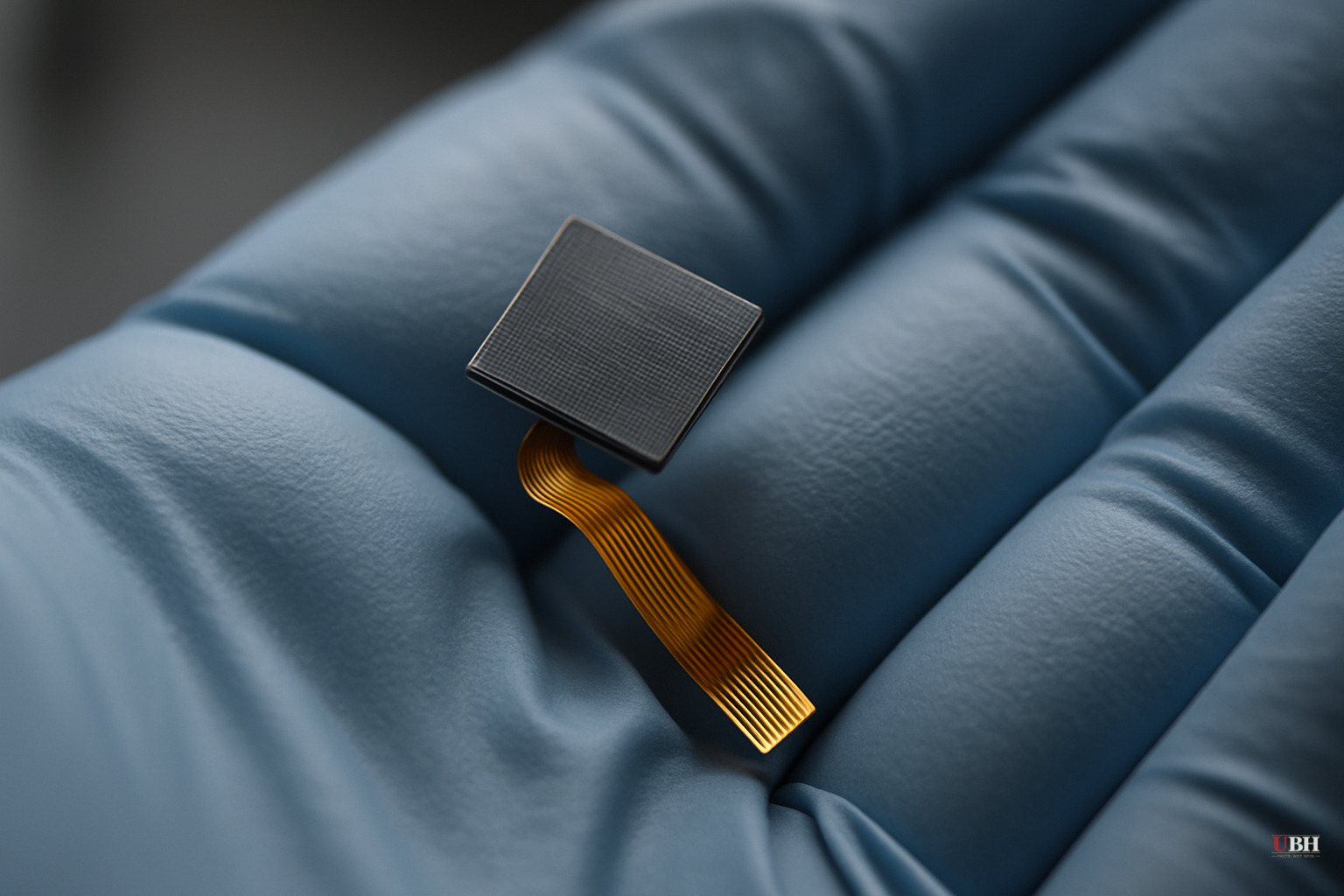
The PRIMA retinal implant system is a disc roughly the size of a few grains of rice, containing 370 photosensitive pixels. A surgeon places it just behind the retina. Patients then wear augmented-reality glasses fitted with a camera that captures images and projects them as near-infrared light onto the implant.
The pixels are solar-powered. They convert incoming light into electrical signals that stimulate surviving retinal cells, which carry the information to the brain. No wires. No external battery pack.
Daniel Palanker, a Stanford ophthalmologist and electrical engineer, invented the system. His previous work includes lasers used in cataract surgery.
"Until now, people tried restoring sight and all they got were light and shapes," Palanker said. "We succeeded, I think, because we properly encode information and the brain understands this information as vision."
The Trial Numbers
Results published in the New England Journal of Medicine cover a European clinical trial of 32 patients with age-related macular degeneration, the leading cause of vision loss in older adults. The condition affects roughly 1 million Americans.
After one year, 26 of the 32 patients showed significant vision gains. Average improvement: five lines on a standard eye chart. That's not a minor statistical blip. Patients who could previously only make out the top line of the chart are now reading large print. One patient improved by 12 lines.
Reading, recognizing faces, and creating artwork are among the specific capabilities patients recovered, according to reporting by the New York Post.
Who's Commercializing It
Science Corp., based in Alameda, California, holds the commercialization rights. The company is pursuing European regulatory approval with a target of this summer. FDA approval in the United States is a longer timeline, but Science Corp. is pursuing a humanitarian device exemption to speed the process.
Neither Science Corp. nor FDA has publicly confirmed a timeline for the U.S. decision.
The Strongest Skeptical Case
The reasonable concern here is one any careful reader of medical news should raise: 32 patients is a small trial. Clinical results that look transformative at this scale sometimes erode when tested across thousands of patients with varying disease severity, surgical complications, and long-term durability questions. Six patients out of 32 showed no significant gains, and the trial doesn't yet tell us what happens at year two, year five, or decade-long follow-up.
That concern is fair. The New England Journal of Medicine publication adds credibility. Peer review at that level is not ceremonial. But it doesn't resolve questions about durability, cost, or whether gains hold over time.
What Comes Next for the Technology
Researchers are already adapting the PRIMA system for Stargardt disease, a genetic condition that causes vision loss. The next generation of the implant is targeting up to five times better resolution than the current version, according to the New York Post.
The unresolved question with real stakes: if Science Corp. secures European approval this summer, how quickly will that data inform the FDA's humanitarian exemption review, and what will the device cost American patients who can't wait? That answer will determine whether this technology reaches the 1 million Americans with macular degeneration or remains a European clinical milestone while U.S. patients sit on a waiting list.
Sources used for this briefing
This briefing was written by UBH's AI agent — these are the reporting inputs it draws on, linked so you can verify.


