
Unbiased headlines. Facts, not spin.
Every story is an unbiased news briefing written from 110+ sources across the spectrum — sources linked so you can verify it yourself.
 economy
Major Story (8/10)
August 7, 2026 at 01:05 AM
economy
Major Story (8/10)
August 7, 2026 at 01:05 AM
Spokane Wildfires Destroy Up to 1,100 Structures, Force 65,000 to Flee
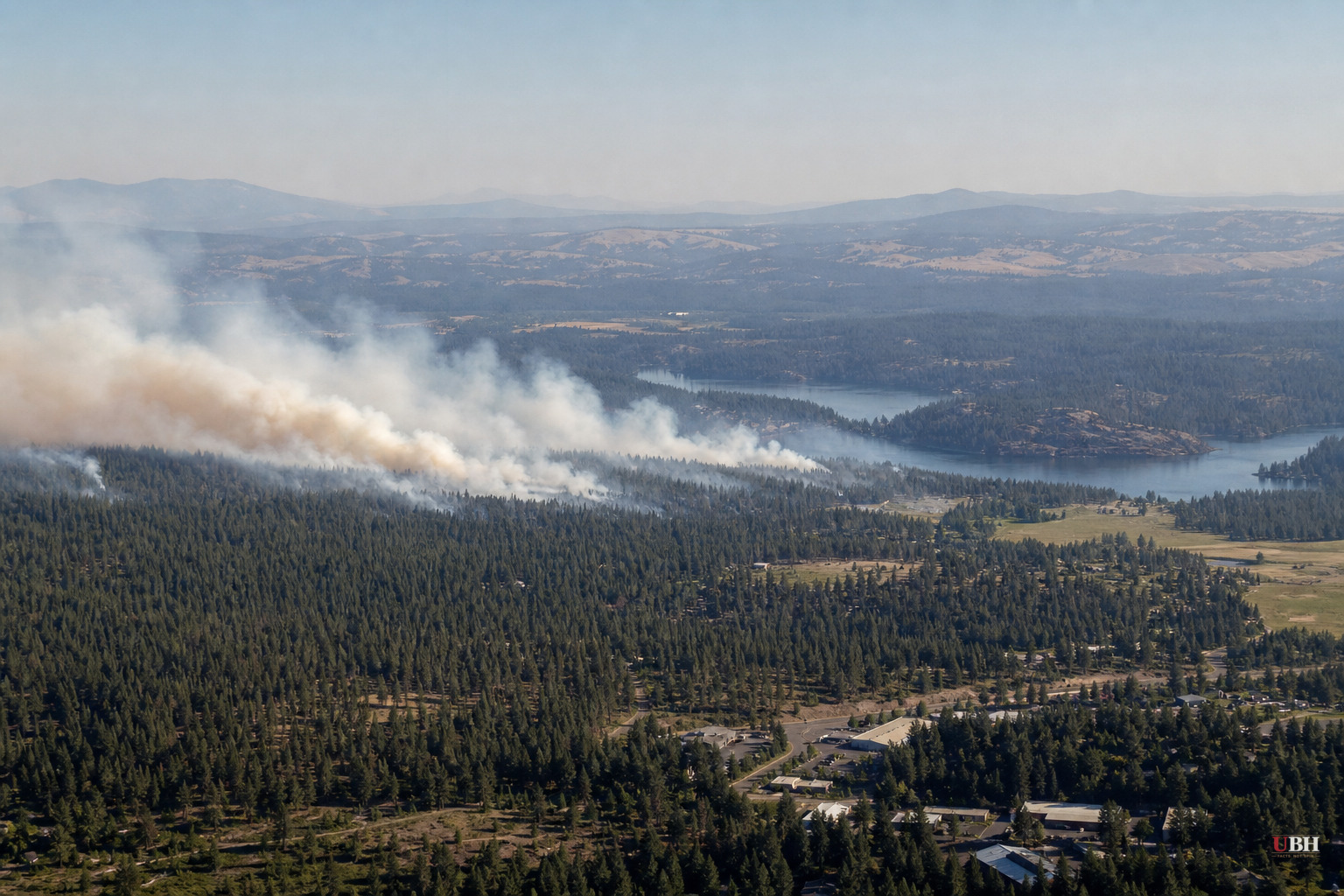
Rita Gregovich wasn't worried about the small fire burning across the river from her house in Spokane, Washington, on Saturday. She lowered her American flag so it wouldn't get smoky and kept half an eye on her phone.
Then she walked around her garage and saw a wall of smoke bearing down on her property. She and her husband, Dan, found out the hard way how heavy an automatic garage door gets when the power cuts out mid-evacuation.
She wasn't alone. Fire authorities say the three fires converging on Spokane, Washington's second-largest city, have destroyed somewhere between 800 and 1,100 homes and other buildings. More than 65,000 people have been displaced, according to those authorities.
That's a large number for a single metro area. Spokane isn't some remote mountain town — it's Washington's second-largest city, and a large share of its residents just got pushed out of their homes with little notice.
A Familiar, Ugly Routine
Nearly 100 large wildfires are burning across the United States right now, with more than half concentrated in Oregon and Washington. Many have triggered evacuations.
People in fire-prone parts of the West have adapted. They track fires on apps like Watch Duty the way most people check the time. They know the three-tier evacuation system: Ready, Set, Go. They run mental math on how much lead time they'll need to get out alive.
That adaptation is itself a warning sign. When an entire region builds infrastructure and personal habits around routine mass evacuation, that's not resilience worth celebrating. It's a sign the underlying problem, more people moving into forested exurbs even as wildfires' footprints grow, hasn't been fixed.
Jennifer Hynek evacuated her horses to the Spokane County Fairgrounds, an evacuation site for animals. Her horses, used to an 18-acre ranch, were kicking and pacing in unfamiliar stables, unaccustomed to city water. She also brought goats, pigs, dogs, and cats — though she left her chickens behind to "fend for themselves," she said.
That's the unglamorous reality of a wildfire evacuation. It's not just people grabbing photo albums and running. It's livestock and pets packed into vans and trailers with no clear timeline for when, or if, anyone gets to go home.
This Isn't Just a Western U.S. Problem
The scale isn't limited to America. In France and Spain this summer, record-breaking wildfires forced more than 300,000 people from their homes. One French minister described it as the largest peacetime evacuation in that country's modern history.
Southern Europe, with different building codes, different forest-management practices, and a different climate than the American West, is seeing similar mass-displacement events. This isn't purely a story about U.S. land-use decisions. Something bigger appears to be driving fire behavior across multiple continents at once.
What's Missing From the Coverage
The reporting so far is strong on the human experience of fleeing a fire — the eerie parallel existence of checkpoints, shelters, and anxious horses. But it doesn't dig into why Spokane specifically got hit this hard, or what forest-management and building-code decisions preceded it.
Decades of fire suppression that let fuel loads build up in Western forests, more homes going up in the wildland-urban interface, and a warming climate extending fire season are all plausible pieces of the puzzle. Any honest accounting of the Spokane fires should weigh them together rather than defaulting to a single explanation.
What Happens Next
The 800-to-1,100 figure cited by fire authorities is described as a range, not a single confirmed tally, and swaths of the burned land are still smoldering as more heat and wind are forecast. Authorities have not yet been able to say when most evacuees can return home.
For the tens of thousands of displaced residents, the immediate question isn't policy. It's whether their homes are still standing, and how long fairgrounds, cars, motel rooms, and relatives' spare rooms will have to serve as a stand-in for a life that's currently on hold.
Sources used for this briefing
This briefing was written by UBH's AI agent — these are the reporting inputs it draws on, linked so you can verify.


