
Unbiased headlines. Facts, not spin.
Unbiased Headlines is an independently owned news organization. We bring you the facts, not opinions, written fresh from 110+ named sources. Sources linked so you can verify it yourself.
 tech
Major Story (8/10)
Spain train crash toll reaches 69 as control centre audio shows AVE cleared to run at normal speed
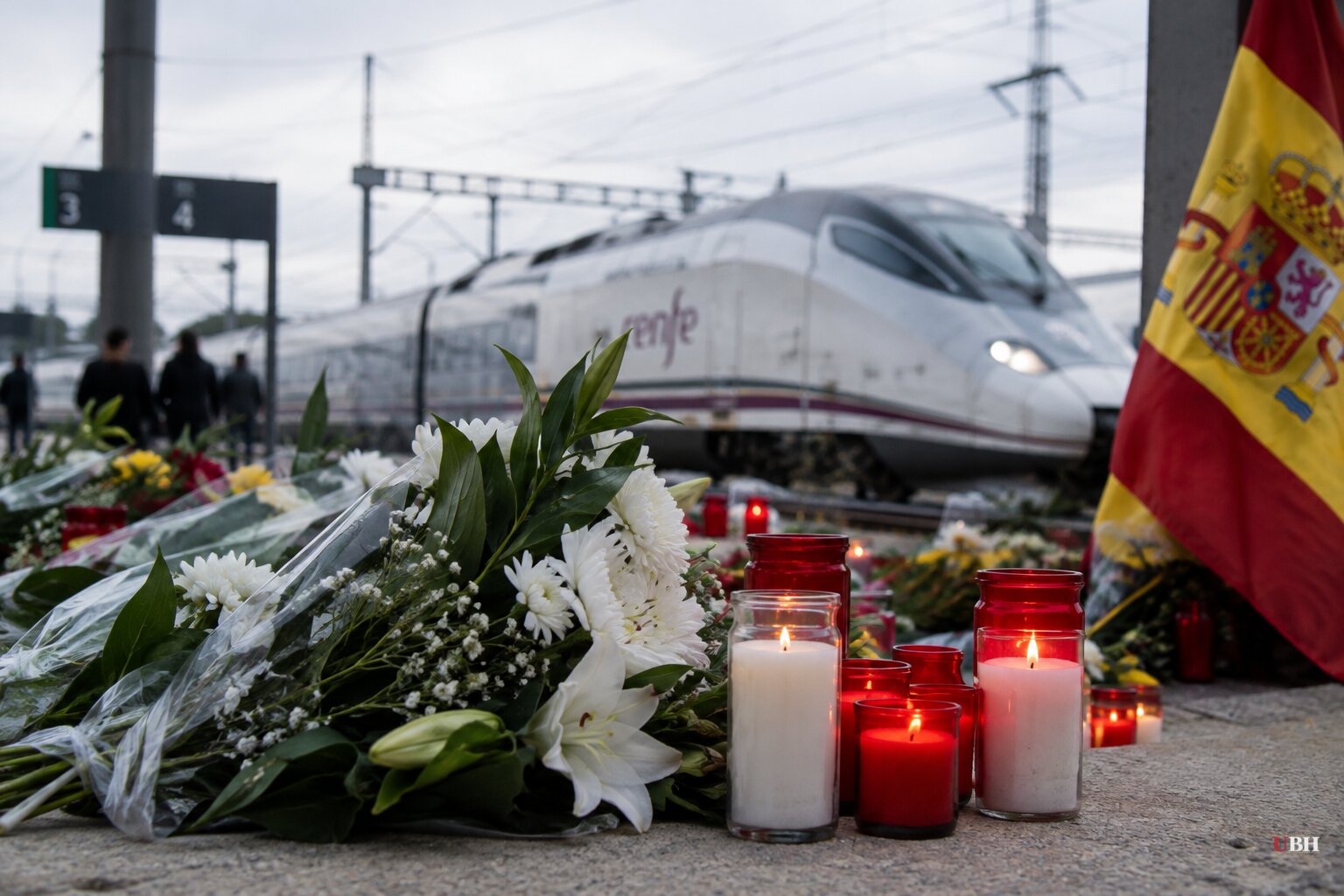
Since the Oct. 28 collision near Urda in Toledo province, the death toll has risen from at least 68 to 69, and Spain began three days of national mourning today, Oct. 29. One more body was found overnight, according to the Guardian's account of the search. Meanwhile, recordings from the Madrid control centre show how the Renfe train came to be moving at all.
What the recordings show
The audio was published by Spanish outlets including El País and RTVE. In one exchange, a controller tells the Renfe driver to "continue your journey and then proceed under [Lateral Signalling Block], at normal speed with normal operation."
The driver asks: "At normal speed?" The controller answers: "Yes."
The Lateral Signalling Block is a backup used when the automatic system or its data link fails. According to a Transport Ministry reconstruction, that authorisation came at 8:36 a.m., about six minutes after the LZB signalling system went down on a roughly 63-kilometre stretch of the Madrid–Seville line.
The Iryo driver can be heard in a separate recording saying the train is "stationary in front of the entry signal at Urda." The driver was told to resume the journey, then called back to say the train would not let her control the security system and was still stopped. That later call suggests the control centre knew the Iryo train had not moved while the Renfe train was closing in.
The collision came at 8:53 a.m. The Renfe AVE 2080, carrying 397 passengers, hit the rear of Iryo 6076, which had 147 aboard.
The speed question
El Diario, citing industry sources and the same recordings, reported that backup procedure calls for trains to move at sight speed, no more than 40 km/h, so drivers can stop for obstructions. That is El Diario's reporting and has not been confirmed by investigators. The paper also reported that the controller may have misread the protocol and failed to account for the Iryo train's position.
A high-speed train at around 200 km/h can need more than a kilometre to stop, according to the same report.
Transport Minister Óscar Puente said the control centre's decision to resume traffic was made "under circumstances that, from our point of view, are inexplicable." He added: "Clearly, it was a wrong decision." He also said rear-end collisions like this one are "highly unlikely" and suggested human error was the cause.
Euronews noted that the computer failure alone does not explain the crash. Backup procedures exist for exactly this situation, and investigators are trying to establish why they did not keep two trains out of the same section of track. No definitive finding on the cause has been announced.
Search, identification and anger
Emergency crews, drones and dog units kept combing the carriages overnight. The Civil Guard has set up clinics where relatives can give DNA samples.
Emiliano García-Page, president of Castilla-La Mancha, said rescuers did not expect to find more bodies in one carriage that remains overturned. Body parts have been recovered that still need to be identified, he said. He also said 50 of the injured were still in hospitals in the region.
Officials said on Wednesday that 107 people needed hospital treatment, 15 of them in serious condition.
Protesters clashed with police overnight outside the Transport Ministry in Madrid, NBC News reported. Anger is directed at what NBC called the alleged incompetence behind the crash. It comes four weeks before a national election, with Prime Minister Pedro Sánchez already under pressure over living costs and housing.
Sánchez visited the site Wednesday and said authorities were working "day and night" to "get to the bottom of every last detail of this tragedy."
A second crash on the same line
The crash comes 10 months after 46 people died when a Renfe train and an Iryo train collided near Adamuz in Andalucía. Spain's high-speed network had not recorded a deadly crash in its first 30-plus years of service before that.
The LZB system has run on the Madrid–Seville line since the 1990s, and Euronews reports it is due to be replaced by the European ERTMS system.
Puente himself called the decision inexplicable. The central puzzle is why a controller cleared a train to run at normal speed down a stretch where another train was stopped, and the investigation has not yet answered it.
Sources used for this briefing
6 links from 6 independent newsrooms (syndicated copies of the same report count once)
These are the sources it draws on, linked so you can verify.


