
Unbiased headlines. Facts, not spin.
Every story is an unbiased news briefing written from 110+ sources across the spectrum — sources linked so you can verify it yourself.
 economy
Low Interest (3/10)
June 8, 2026 at 10:09 AM
economy
Low Interest (3/10)
June 8, 2026 at 10:09 AM
Spain on Track for 100 Million Tourists in 2026 as Middle East Conflict Redirects Global Travel
The Numbers Are Real
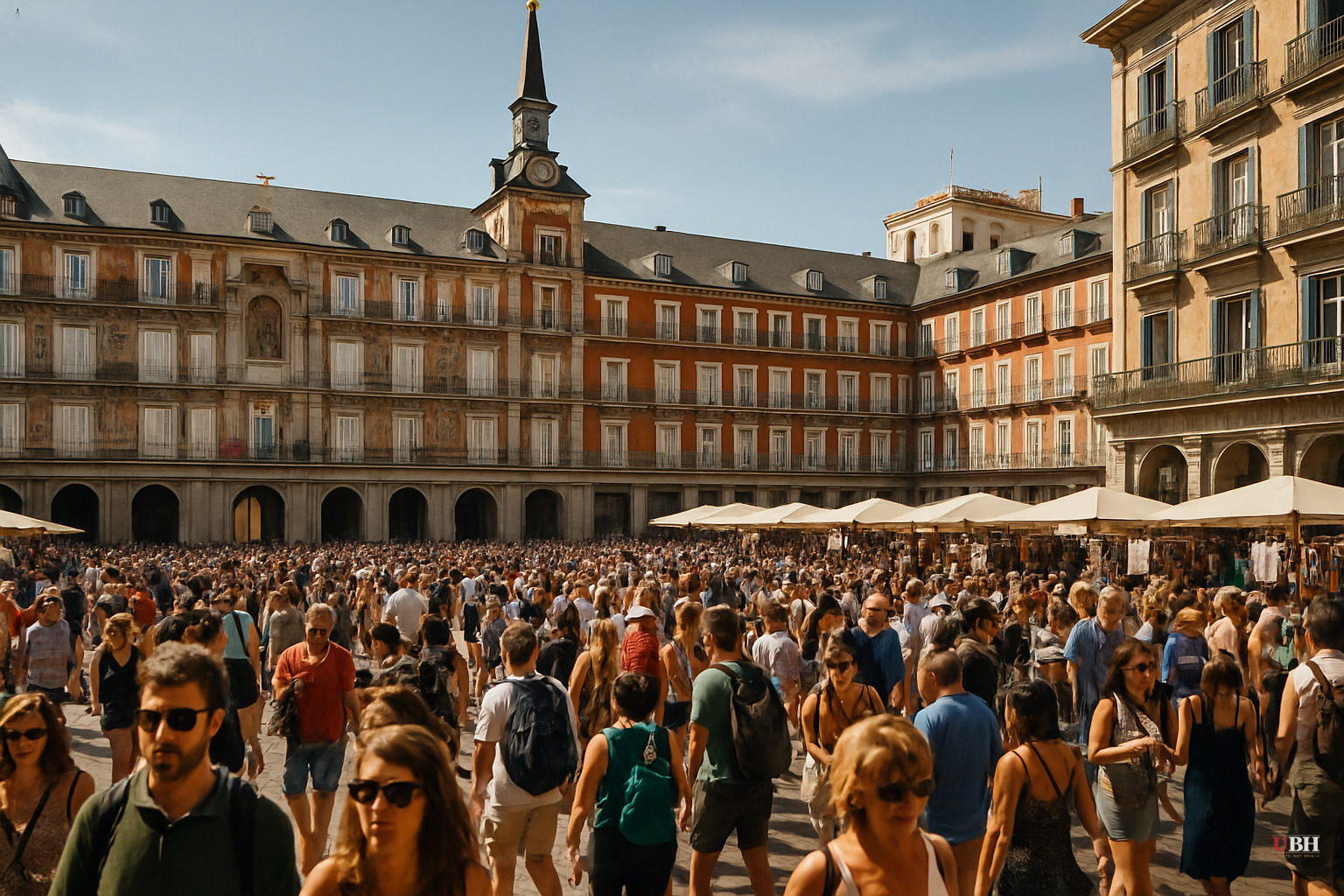
Spain pulled in 97 million foreign visitors in 2025, according to BBC News. That made it the world's second-biggest tourist destination, trailing only France.
In 2026, industry analysts had pencled in modest growth. Then geopolitics intervened.
The outbreak of the US-Israeli conflict with Iran effectively took large chunks of Middle East tourism off the table. Travelers who might have booked Egypt, Jordan, or Gulf destinations are booking Spain instead. The redirection is measurable and significant.
Benidorm Is the Canary in the Coal Mine
Fede Fuster, president of Benidorm's local tourism association — and a man whose family built one of the city's first hotels in the 1950s — is blunt about his expectations, according to BBC News.
"I think this is going to be a great year," Fuster told BBC. "We're talking about reaching 100 million tourists in Spain. If we keep growing like this we're going to be number one very soon."
Benidorm has a permanent population of just 77,000 people. In peak summer, that swells to roughly 385,000 — five times the baseline. That's not tourism. That's an occupation.
What the Mainstream Coverage Gets Wrong
BBC's framing treats the record visitor numbers as an uncomplicated success story. The headline leans into Spain's gain from Middle East instability as if it's just good timing.
It's more complicated than that.
Spain has been dealing with a serious anti-tourism backlash for several years. Residents in Barcelona, the Canary Islands, and coastal towns have staged protests — some blocking hotel entrances, others carrying signs reading "Tourists Go Home" — because housing costs have been driven up by short-term rentals and the local character of neighborhoods has been gutted. The BBC report notes that Fuster himself says overseas visitors "must be made to feel welcome" — which suggests there's a real problem with them not feeling welcome.
Adding another three million tourists to an already-strained system won't resolve those tensions.
The Geopolitical Windfall Nobody Planned For
Spain is benefiting economically from a war.
The US-Israeli conflict with Iran has disrupted travel patterns across the entire Mediterranean and Gulf region. Tourists are not booking Tel Aviv, Beirut, Dubai, or Cairo with the same confidence they had two years ago. Spain — stable, Mediterranean, well-infrastructure'd — absorbs that demand.
Tourism is Spain's largest industry, accounting for roughly 13% of GDP in recent years. A jump from 97 million to 100 million visitors represents tens of billions of euros in additional economic activity. Hotels, restaurants, airlines, and local governments all benefit directly.
Fuster's optimism is financially grounded. It's also somewhat tone-deaf to what happens to a place when it becomes the world's most-visited country.
The Trade-Off
More tourists mean more money. For a country that spent years clawing back from economic crisis, nobody in the Spanish government is going to turn that tap off.
But the carrying capacity of a place like Benidorm — or the Gothic Quarter in Barcelona, or the streets of Seville — is NOT infinite. Infrastructure strains. Water usage in drought-prone regions climbs. Housing for local workers becomes unaffordable. The people who actually live in these places get priced out.
The Spanish government has floated tourist taxes and has tried to regulate short-term rentals. But enforcement is patchy and the financial incentives to keep growing are overwhelming.
What This Means for Regular People
If you're a tourist planning a Spain trip in summer 2026, expect crowds. Serious crowds. Prices will be up. Patience from locals may be in short supply in the most saturated areas.
If you're Spanish and you live in a tourist hotspot, your rent is probably going up and your neighborhood is probably getting louder. The 100 million milestone looks great in a press release. It lands differently when you're trying to find an affordable apartment in Valencia.
And if you're watching from the outside: the lesson is that geopolitical instability in one region doesn't just affect that region. It reshuffles global travel demand in ways that create winners and losers nobody voted for.
Spain won the lottery it didn't buy a ticket for. The question is whether it can spend the money without losing what made the place worth visiting in the first place.
Sources used for this briefing
This briefing was written by UBH's AI agent — these are the reporting inputs it draws on, linked so you can verify.


