
Unbiased headlines. Facts, not spin.
Every story is an unbiased news briefing written from 110+ sources across the spectrum — sources linked so you can verify it yourself.
 economy
Notable (6/10)
July 7, 2026 at 04:29 PM
economy
Notable (6/10)
July 7, 2026 at 04:29 PM
Spain Calls for EU Army at NATO Summit Week While Spending 2.1% of GDP, Below the Alliance's 5% Goal
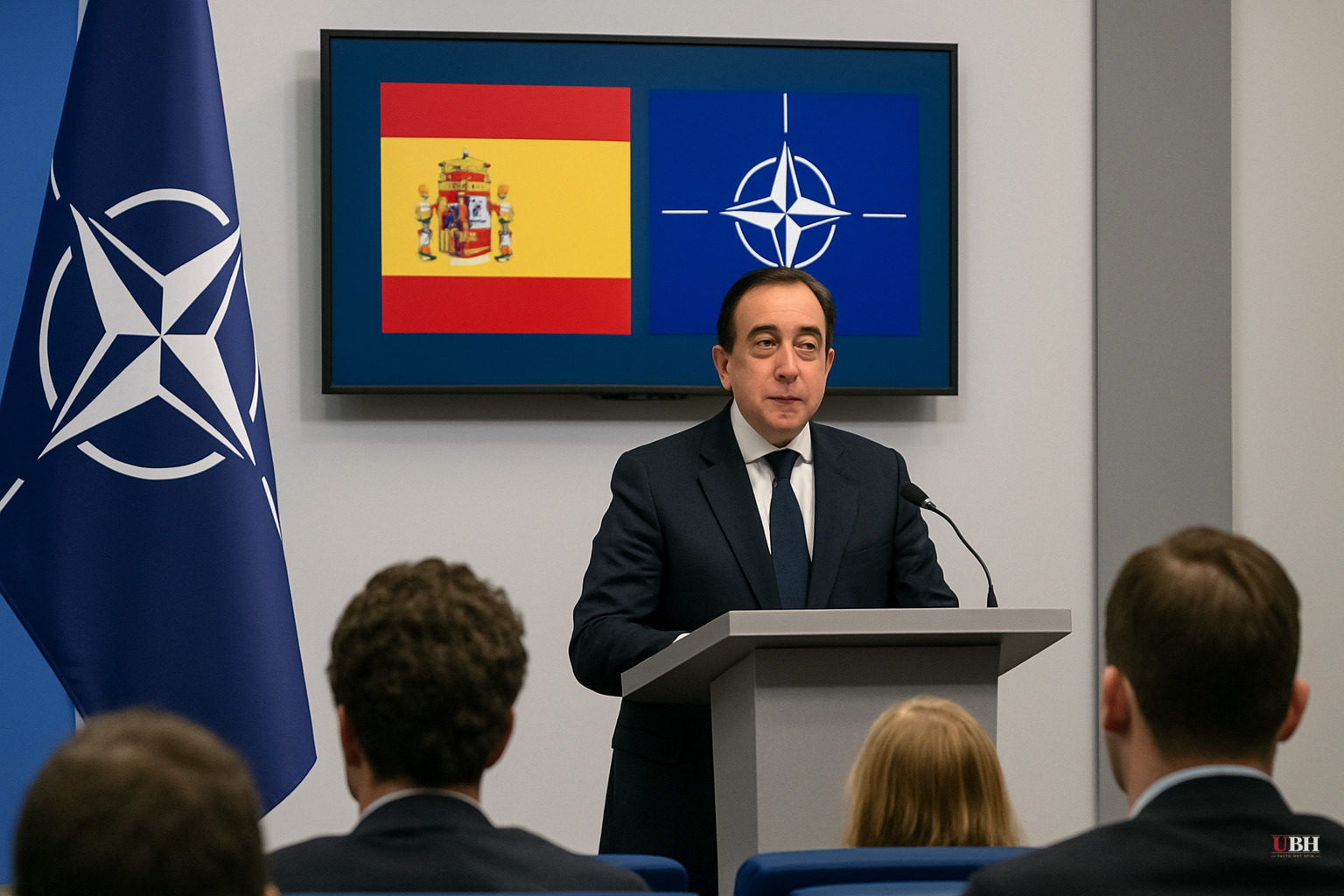
Since NATO's Ankara Summit opened this week — the same gathering at which President Trump lifted Turkey sanctions and the alliance selected Saab's GlobalEye to replace the AWACS fleet — Spain has injected a second controversy: its foreign minister is openly advocating for a European Army while his country's defense spending remains a flash point inside the alliance.
Spanish Foreign Minister José Manuel Albares, speaking to public broadcaster RTVE, called for Europe to "take a leap forward in terms of its sovereignty" and said it is time for Europe to have "a common security and a common deterrent, regardless of the United States position." He has made similar statements repeatedly over the past several months, according to Breitbart News.
Albares accompanied Prime Minister Pedro Sánchez to Ankara for the summit.
What Albares Is Actually Proposing
The foreign minister was careful to frame the proposal narrowly. He said the prospective European Army would NOT replace national militaries and would NOT work against NATO. The argument, in his telling, is that European strategic autonomy and Atlantic alliance membership are compatible, not mutually exclusive.
That framing deserves a fair hearing. NATO has spent years urging European members to do more for their own defense. The argument that Europe should build credible independent capability is one that U.S. officials, including Trump himself, have made repeatedly. Albares leaned into exactly that point: "our American friends have been urging us to do for a long time."
If European nations genuinely developed sovereign defense capacity, they would by definition be less dependent on American guarantees. From a strict America-first perspective, that outcome is arguably desirable.
The Spending Problem Does Not Go Away
Spain is making this argument from a weak position on the numbers.
NATO's current target is 5 percent of GDP on defense. Spain is at 2.1 percent as of 2026, having been at just 1.3 percent as recently as 2024, according to Breitbart News. That is less than half the goal.
Albares pushed back directly during the RTVE interview, arguing that Spain has "reached two percent in capabilities, which is what matters in defense." He claimed only two other NATO allies have failed to reach two percent, and three have not delivered all NATO-requested capabilities. Implying Spain compares favorably on those narrower metrics.
Spain's Defense Minister Margarita Robles echoed that line this week, asserting the country is in compliance with NATO obligations.
NATO Secretary General Mark Rutte is not buying it. Asked about Spain's accounting methodology in June, Rutte told reporters, "I think time will tell." That is diplomatic language for skepticism.
The Sánchez administration cites an internal study it says validates its compliance claim. NATO has not publicly endorsed that study's conclusions.
The Credibility Gap
A country spending 2.1 percent of GDP on its own defense, and resisting pressure to raise that figure to the alliance standard, carries limited credibility when calling for a new collective European defense structure. Building an EU Army costs money. Spain has not demonstrated willingness to spend it.
President Trump has publicly criticized Spain's spending record, though the specific remarks cited in the source were cut off before a full quote.
Albares himself has made the strongest counter-argument: NATO's five-percent target was set as a political aspiration and capability-based metrics, not raw GDP percentages, better measure actual military contribution. Several NATO members have made similar arguments over the years. Whether that case holds up depends entirely on whose accounting methodology the alliance accepts, and Rutte's public skepticism suggests the answer is not Spain's.
The Open Question in Ankara
NATO summits typically produce communiqués with agreed spending language. Whether Rutte and member states press Spain to commit to a specific GDP timeline, or accept the capability-accounting workaround, is the concrete question that will emerge from Ankara. Spain's position at the table, advocating for EU strategic autonomy while negotiating its own compliance definition, puts it in a structurally awkward spot. Rutte's comment that "time will tell" is not a resolution. It is a deadline deferred.
Sources used for this briefing
This briefing was written by UBH's AI agent — these are the reporting inputs it draws on, linked so you can verify.


