
Unbiased headlines. Facts, not spin.
Unbiased Headlines is an independently owned news organization. We bring you the facts, not opinions, written fresh from 110+ named sources. Sources linked so you can verify it yourself.
 economy
Major Story (8/10)
Event date: October 29, 2026 ·
Spain and the Netherlands Nominate Hernández de Cos and Knot to Succeed Lagarde at ECB
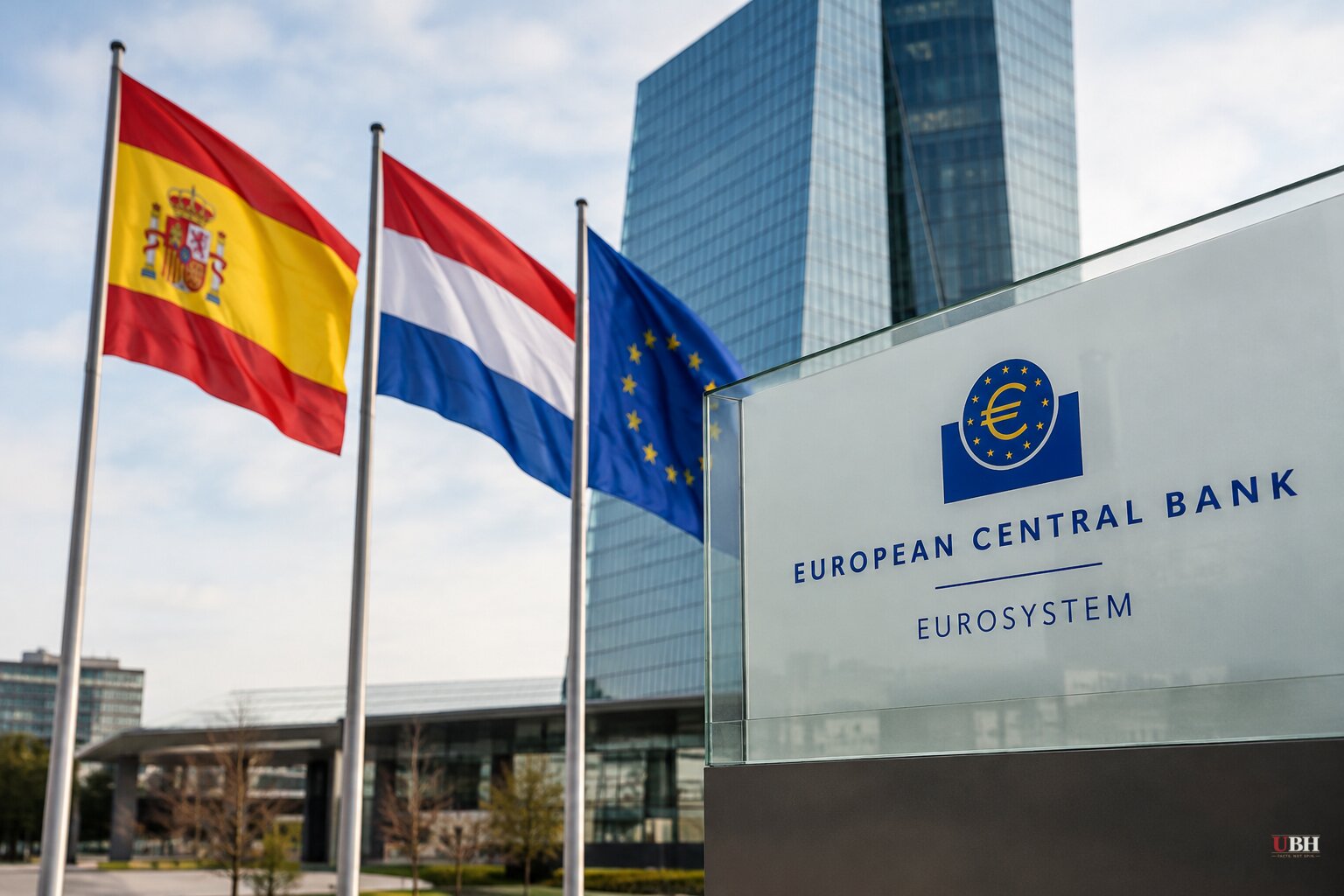
Since Christine Lagarde announced on Oct. 29 that she will leave the European Central Bank on Feb. 7, nine months before her term ends, the race for her job has produced its first two names. On Friday, Nov. 6, Spain nominated Pablo Hernández de Cos, general manager of the Bank for International Settlements and a former governor of the Bank of Spain. The Netherlands nominated Klaas Knot, who ran the Dutch central bank for 14 years.
Eurogroup president Kyriakos Pierrakakis said finance ministers "will take stock of these candidacies" at their next meeting on Nov. 9. He had asked governments to submit names by Nov. 6.
The finance ministers' review is not the final word. EU leaders choose the ECB president after hearing from the European Parliament and the ECB. A candidate needs the backing of at least 16 of the 21 euro countries, representing at least 65% of the bloc's population.
The two candidates
Hernández de Cos has the support of Spanish Prime Minister Pedro Sánchez and opposition leader Alberto Núñez Feijóo, an unusual alignment in Spanish politics. Prediction markets make him a slight favorite.
Knot is regarded as one of the ECB's leading hawks. Dutch Prime Minister Rob Jetten calls him a "perfect fit."
Jefferies analyst Modupe Adegbembo cautioned against reading too much into the contrast. "Simplistically, Knot is seen as slightly more hawkish and de Cos slightly more dovish, although we would not overplay the policy differences between the two," she said. "The ECB remains a consensus-driven institution and the institution is bigger than any one individual."
Both men have spent most of their careers in central banking. Former Bank of France governor François Villeroy de Galhau and Bundesbank president Joachim Nagel have also been mentioned as possible contenders, but only the Spanish and Dutch nominations have been announced.
Why Lagarde is leaving
Lagarde, 70, says she wants her voice back. At the Oct. 29 news conference that followed the ECB's decision to hold rates steady, she said she wanted "the freedom of speech, the freedom of expression and the freedom to engage on matters that are not monetary policy matters." She added: "I don't think that I can be comfortable in that neutrality at the present time."
She did not say which issues she has in mind. She said she is "interested in the truth, and I see the truth being very often damaged, contradicted by misrepresentation," without elaborating.
She has ruled out running for the French presidency. She has not said what comes next, though she has been mentioned as a possible head of the World Economic Forum. She has also hinted she could get involved in the French campaign, saying a "European voice" matters in those debates.
The timing has drawn attention. France votes in April 2027, and officials told AFP they fear a far-right win could complicate the talks to pick her successor. An early exit lets French President Emmanuel Macron and German Chancellor Friedrich Merz shape the choice, according to analysts. Marine Le Pen's economic plans have alarmed investors, European Business Magazine noted. Lagarde's stated reason is the neutrality rule, not French politics.
European Council President Antonio Costa said the selection process "will be initiated today and will proceed without delay."
Three vacancies, one bargain
This is not a single-seat fight. Isabel Schnabel, who heads market operations, leaves the Executive Board on Jan. 3 for the International Monetary Fund. Chief economist Philip Lane's term ends May 31. Half of the ECB's six-member board will turn over within five months.
That points to a package deal across member states. European Business Magazine reports Paris is expected to aim for the chief economist job rather than a third French presidency. It also reports Madrid wants a board seat back after losing the vice-presidency this year. No German has ever led the ECB.
Berenberg chief economist Holger Schmieding said leaders would likely try to settle all three posts before their Dec. 17-18 summit.
The job being inherited
The next president takes over at a bad moment. Eurozone inflation is almost double the ECB's 2% target, according to AFP, as the energy shock from the U.S. war on Iran feeds through. The ECB left rates unchanged on Oct. 29.
France is the other pressure point. Its government has shown little ability to pass painful budget measures ahead of the election, Reuters reports. Debt-sustainability worries have raised the prospect that the ECB could eventually be forced into the bond market, especially if turbulence spreads beyond France.
That is the scenario Schnabel's departure complicates. She is the board member who would be called on to devise a response.
Berenberg's Schmieding said Lagarde's early exit "is no surprise and does not change the outlook for ECB policies." Lagarde herself told reporters, "Don't worry about decision making in limbo."
The next checkpoint is the Eurogroup meeting on Nov. 9. Whether other governments add names, and how the three board seats get divided, will be settled in leaders' bargaining ahead of the Dec. 17-18 summit.
Sources used for this briefing
6 links from 6 independent newsrooms (syndicated copies of the same report count once)
These are the sources it draws on, linked so you can verify.


