
Unbiased headlines. Facts, not spin.
Unbiased Headlines is an independently owned news organization. We bring you the facts, not opinions, written fresh from 110+ named sources. Sources linked so you can verify it yourself.
 economy
Notable (6/10)
Event date: November 4, 2026 ·
China Copper Premiums Hit Multiyear Highs as Smelter Cuts Tighten Spot Supply
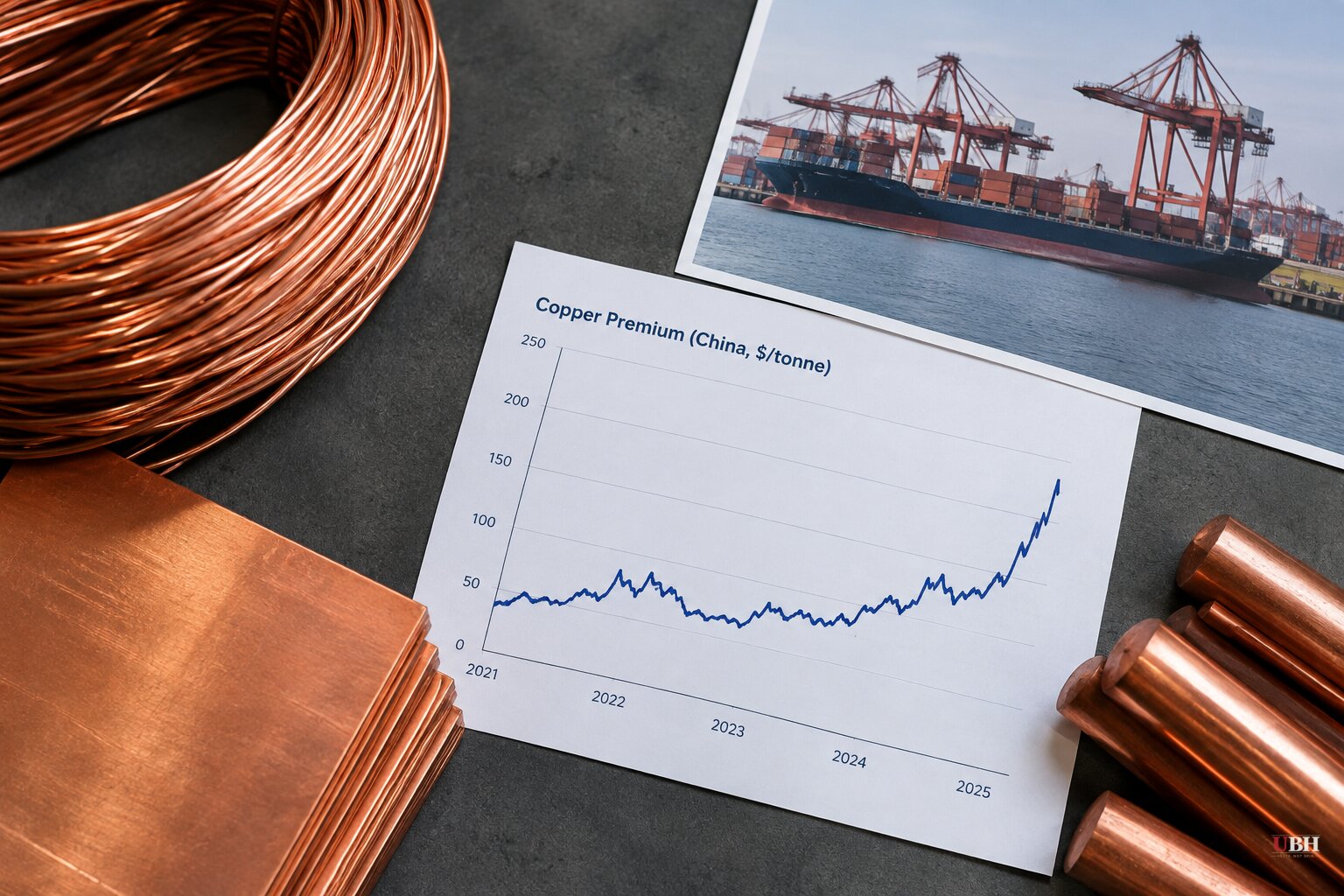
Physical copper in China is getting hard to find, and the price of finding it keeps climbing.
The premium for spot copper rose to about ¥2,100 ($451.33) per tonne over futures on Thursday, according to Shanghai Metals Market. That is the highest since 2021.
The Yangshan copper premium, a key gauge of Chinese import demand, extended its surge to a record US$210 per tonne.
The futures curve shows the same stress. December copper contracts in Shanghai are trading at a US$900 premium to January contracts. That is the steepest backwardation since 2022.
Smelter cuts and thin imports
Zhou Xiaoou, an analyst at Zijin Tianfeng Futures, told Bloomberg the shortage comes from "production cuts at domestic smelters and limited supplies from overseas such as Africa and Russia." Fabricators, he said, are buying hand to mouth.
China is the world's largest copper consumer. When its smelters cut output and imports run thin, buyers pay up for metal they can get immediately.
Trafigura goes shopping
Trafigura Group has been buying large volumes of copper to boost its sales into Asia, according to Bloomberg, citing people familiar with the matter who asked not to be named. Over the past two weeks, the Singapore-based trader has approached several producers and traders in Asia about buying large volumes for November and December, those people said.
Trafigura is one of the biggest traders in the copper market.
Supply, not a demand boom
The obvious assumption is that AI-driven demand is pulling the market tight. The analysts quoted here say that is not what is happening in the physical market.
The latest squeeze is being driven more by limited supply than stronger demand, analysts say. Mysteel noted that buying has improved slightly after the recent price pullback. Much of it, the firm said, comes from large cable manufacturers rebuilding depleted inventories, not from a broad recovery in consumption.
The demand story has also wobbled. Copper prices hit record levels earlier this year, and the rally has eased in recent weeks. Investors are questioning whether the data-center spending boom can last. Those doubts deepened after the U.S. midterm elections, which raised uncertainty over the Trump administration's spending plans.
Wood Mackenzie makes the long-run case for strong demand. In an Oct. 22 release, the consultancy said the global data center pipeline has passed 250 GW. It said transmission networks, substations and dedicated power generation can require three to four times more metal than the facilities they support.
"High prices should trigger investment, yet project sanctioning remains below expectations," said Lindsay Grant, Wood Mackenzie's vice president of metals and mining research. "Without faster approvals and investment commitments, the industry cannot deliver the mine supply needed to support future growth."
How U.S. tariff expectations moved the metal
Washington helped create part of the dislocation. Expectations of U.S. tariffs on refined copper led traders to move large volumes into domestic warehouses earlier this year, draining supply from other markets.
Wood Mackenzie puts numbers on it. U.S. stockpiling has pushed domestic cover above 170 days, while leaving the rest of the world with just 48 days of cover and a 450 kt deficit. The firm put the record price at US$14,759 a tonne.
That is a policy-driven distortion. Chinese buyers are now paying premiums in a market the U.S. helped drain.
Congo, and the fight with China over supply
Africa is one of the supply sources Zhou named as limited. Congo is the world's second-biggest copper producer and top source of cobalt, and Chinese companies currently dominate output there.
Washington is trying to change that. A U.S. veteran-led firm, Virtus Minerals, and India's Lloyds Metals and Energy bought Chemaf SA earlier this year. It was the first deal by an American firm in Congo after Washington and Kinshasa signed a strategic partnership in December.
Chemaf's former owners had first agreed a sale to a unit of Chinese arms maker Norinco Group. That deal was abandoned after Congo withheld approvals amid opposition from U.S. officials.
The purchase price for Chemaf's shares was just $30 million. The buyers also took on its liabilities and must fund completion of the Mutoshi mine and expansion of the Etoile operations.
Lloyds Metals told the Bombay Stock Exchange it estimates a cash settlement of Chemaf's entire debt at $250 million or less, based on "executed" agreements. Borrowings stood at $804 million when the deal closed. That implies a haircut of about 70% for creditors.
Lloyds did not name Trafigura. But the bulk of the debt stems from a $600 million loan Trafigura arranged and syndicated in 2022 to help finance Congo projects that later stalled. Trafigura declined to comment.
Lloyds expects Chemaf's plants to begin producing refined copper next year.
What comes next
Wood Mackenzie projects global mine supply will grow by more than 5% next year, ending three years of stagnant growth, even as Chilean output falls 5.2% in 2026. Relief for Chinese buyers depends on that growth materializing.
Separately, a consortium including the U.S. International Development Finance Corp. and Orion Resource Partners is working to close a purchase of 40% of Glencore's controlling stakes in two large Congolese copper-cobalt mines. Orion CEO Oskar Lewnowski told Bloomberg Television last month that a financing deal for Chemaf "is still possible."
Sources used for this briefing
4 links from 4 independent newsrooms (syndicated copies of the same report count once)
These are the sources it draws on, linked so you can verify.


