
Unbiased headlines. Facts, not spin.
Unbiased Headlines is an independently owned news organization. We bring you the facts, not opinions, written fresh from 110+ named sources. Sources linked so you can verify it yourself.
 economy
Notable (6/10)
Ten Years After Paris, UN Says 1.5°C Goal Is Lost as Coal-Reliant Turkey Prepares to Host COP31
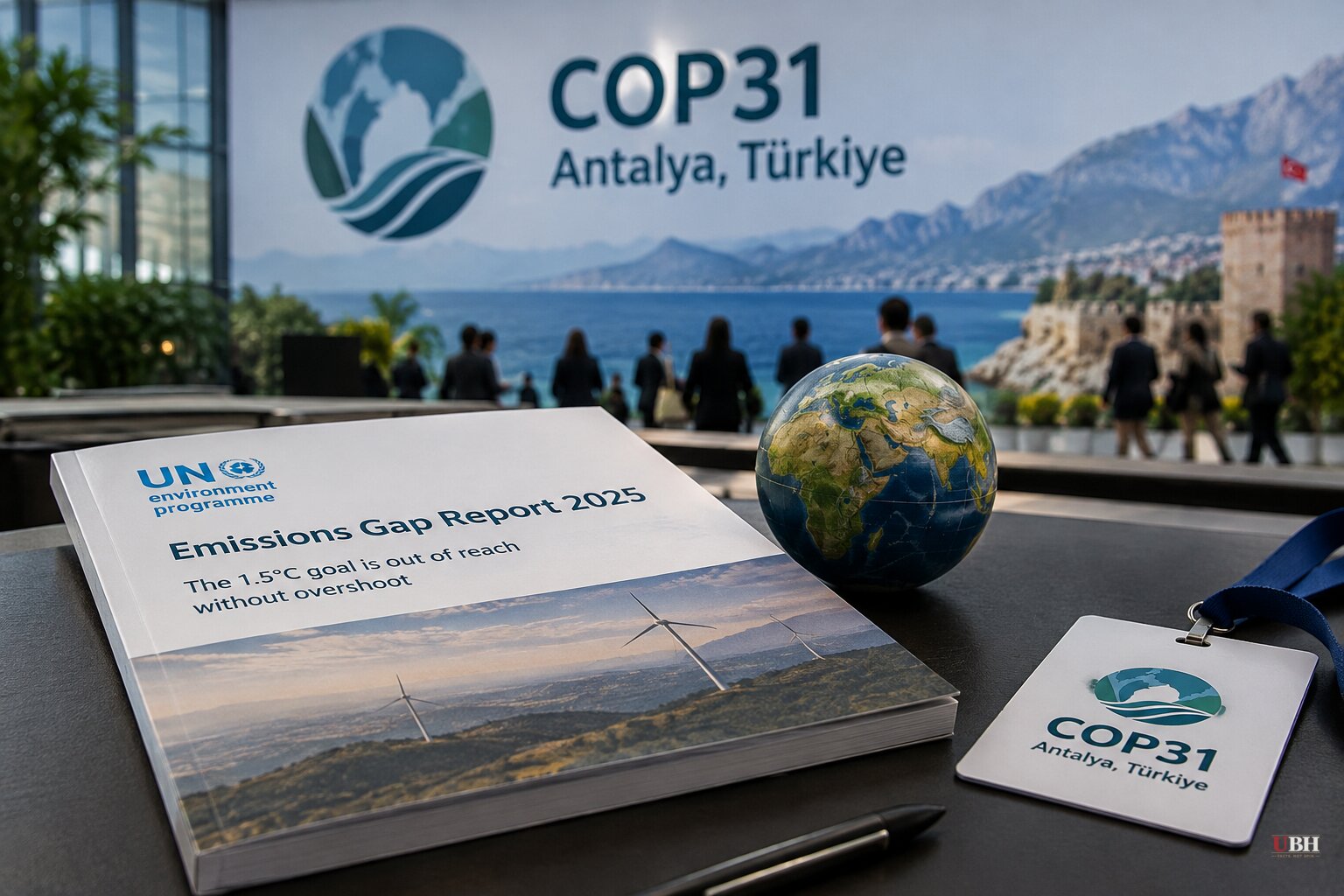
The Paris Agreement entered into force on Nov. 4, 2016. Ten years later, its headline goal has been missed.
The UN Environment Programme said in October that the chance of holding warming to 1.5°C without overshooting it has been lost. UNEP Executive Director Inger Andersen pointed to "deadly floods, heatwaves and wildfires that have plagued many nations this year." The UN's most optimistic estimate now puts warming at about 1.7°C to 1.8°C.
What the numbers show
In 2024, the planet topped 1.5°C above preindustrial levels across a full calendar year for the first time. The three years from 2023 to 2025 were the hottest on record and averaged more than 1.5°C. The long-term average sits near 1.4°C. Scientists expect it to cross 1.5°C around the end of this decade.
The treaty was adopted by 196 parties in Paris on Dec. 12, 2015. Today 194 parties belong: 193 countries plus the European Union.
It is legally binding on paper. It does not force anyone to hit a target. Each government writes its own national plan, called a nationally determined contribution, and submits a new one every five years. The enforcement mechanism is transparency and peer pressure.
Washington is out, again
The United States, the world's second-largest emitter after China, left the agreement in January 2026, a year after President Donald Trump ordered the exit. It is the second time the U.S. has withdrawn on Trump's order. The first exit took effect in November 2020, and President Joe Biden rejoined in February 2021.
The departure shaped last year's summit in Belém, Brazil. The Brazilian hosts took country-by-country emissions plans off the negotiating table. One developing-country diplomat told the Guardian before the summit: "They have decided that there is no appetite for negotiation, with the US out of Paris. Countries won't engage." Another predicted a very short COP because "there is nothing to negotiate." The summit still ended with a deal, though few of the delegates the Guardian spoke with loved it.
Did Paris change anything?
The treaty's defenders point to the trajectory. ESG News.earth cites estimates that unmitigated emissions before 2015 were on track for 4.0°C to 4.2°C of warming by 2100, and that current policies and targets have cut that to between 2.3°C and 2.6°C. Al Jazeera's explainer says the deal helped drive stronger climate policies and a rapid expansion of clean energy, though emissions remain near record highs.
A former Paris negotiator, writing in TIME, argues that no country has followed the U.S. out of the agreement. The author cites 57 countries meeting in Santa Marta, Colombia, in April on moving away from fossil fuels, and a new carbon-market coalition of the E.U., China and Brazil. The author also says electric car sales outside China and the U.S. rose an estimated 45% in the first eight months of 2026 compared with the same period in 2025, as the Hormuz crisis pushed fuel prices up.
The country scorecards are less flattering. In the Climate Change Performance Index 2026, as relayed by ESG News.earth, the U.S. ranks 65th, China 55th and India 23rd. The U.K. is 5th and Chile 7th.
The host is a coal country
COP31 is set for Antalya, Turkey, and world leaders are due to arrive next week. The host has its own exposure. Ember, an energy think tank, calls Turkey Europe's largest coal power generator. The Turkish Energy Ministry says coal was its largest power source last year at 33% of generation, with solar and wind at nearly 23%.
Energy Minister Alparslan Bayraktar unveiled the National Energy Plan 2040 ahead of the summit. He said it targets 36% electrification by 2040, a 40% emissions cut, and a rise in electric cars from around 500,000 to 20 million. The plan is meant to support Turkey's pledge of net zero by 2053.
The price tag is $500 billion over 13 years, Bayraktar said. About $210 billion would come from Turkish public-sector companies and much of the rest from foreign investment.
He was blunt about the limits. "We are looking for a just transition from coal to relatively cleaner sources of energy... but we need coal for security of supply," he said. He noted that coal mining employs 30,000 to 40,000 people and asked how miners would become "AI experts or high-tech experts." "It's not going to be easy," he said.
Bayraktar also put the funding burden on others. "Everyone needs to take some responsibility and provide money for that," he said.
The fight over cost and credibility
That is the tension at the center of the process. Governments that sign up to deep cuts want someone else to fund them. The country hosting this year's summit is asking for foreign money while keeping coal in the grid for supply security.
The Guardian's own question as the summit nears is blunt: "What is the point?" Its answer, from experts it consulted, is that the agreement still works as a moral compass, even with its central temperature goal missed. The paper also describes the negotiating process as "endlessly convoluted."
The next concrete test starts next week in Antalya. Delegates will have to produce the updated national plans the treaty's tenth-year cycle calls for. They will also have to show who pays, since Turkey's $500 billion plan assumes foreign investors will cover much of the bill.
Sources used for this briefing
6 links from 5 independent newsrooms (syndicated copies of the same report count once)
These are the sources it draws on, linked so you can verify.


