
Unbiased headlines. Facts, not spin.
Unbiased Headlines is an independently owned news organization. We bring you the facts, not opinions, written fresh from 110+ named sources. Sources linked so you can verify it yourself.
 economy
Major Story (7/10)
Event date: November 6, 2026 ·
Voters Backed Limits on Data Centers in 40 of 41 Local Ballot Measures on Nov. 3. Harwood, N.D., Was the Exception
The data center industry went 1 for 41 at the local ballot box on Tuesday, Nov. 3.
Ballotpedia counted 41 local measures on data centers that day. Voters favored limiting development in 40 of them. Voters approved 27 measures that restricted data centers or expressed opposition, and they defeated 13 that favored the industry or expressed support. Six earlier local votes this year, before Nov. 3, also went for limits.
Redbud Consulting's tracker, which counts 45 measures in total, shows the same pattern: one pro-data center result.
What voters actually decided
The measures were local and varied. Alhambra, California, and Edgewater, Florida, voted to prohibit data centers within city limits. At least 14 Ohio municipalities passed bans or restrictions, including Sunbury, where Amazon has proposed a $2 million project. Eight Maine municipalities passed temporary moratoriums.
In Emporia, Kansas, voters approved a ban on high-impact data centers after a 1,000-acre, gigawatt-scale project was proposed nearby.
The biggest jurisdiction to vote was Joliet, Illinois, the state's third-largest city. Asked whether the city council should approve construction of AI data centers, nearly 80% said no. In Illinois's Morgan County, 88.3% backed more regulation, the largest restrict margin of the cycle, according to Redbud's data as reported by the Epoch Times.
Some races were tight. In Sprigg Township, Ohio, 52.6% favored the stricter zoning rule.
The one town that said no to the limits
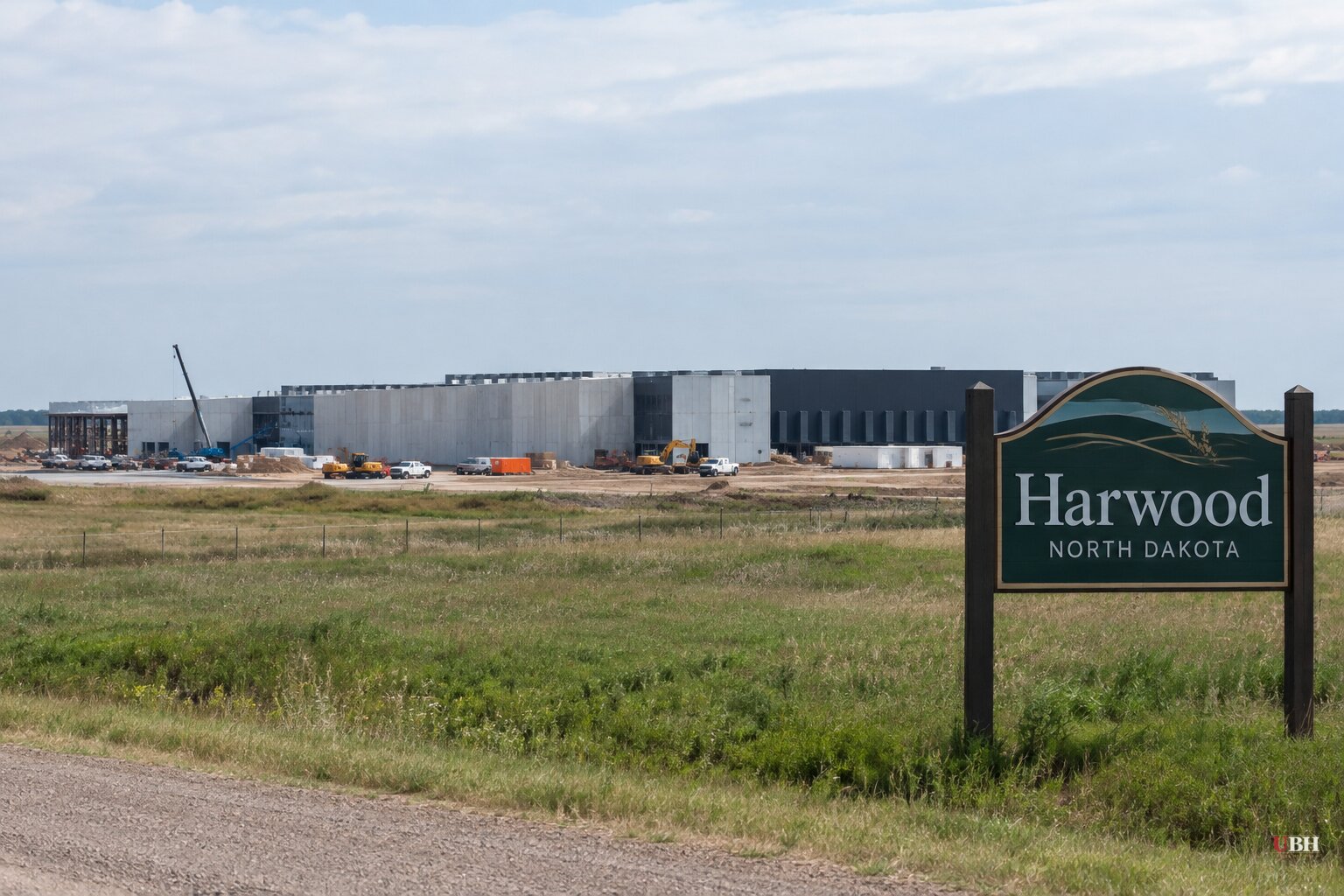
Harwood, North Dakota, sits about 10 miles from Fargo and has fewer than 1,000 residents. Of 430 votes cast, 325 opposed a Home Rule Charter amendment. That is roughly 75%.
The amendment would have required independent reviews, public hearings and written findings before the city approves large industrial projects. Applied Digital Corp. is building a 160-acre data center there with Oracle as the end user. It is scheduled to be fully operational next year and could expand to 900 acres.
So Harwood did not exactly vote for data centers. It voted against an extra layer of process on a project already under construction.
Michael Swartz, a software developer who has lived in Harwood nearly 20 years and led the petition, told Fortune the town's relationship with data centers is less clear-cut than the result suggests. "Long term, there's some really serious implications that I don't think have been fully fleshed-out, or vetted," he said. He also said local authorities hampered the initiative.
Swartz said residents learned of the project about three weeks before construction began in September 2025. The Fargo Forum reported that then-Fargo Mayor Tim Mahoney and Harwood Mayor Blake Hankey signed nondisclosure agreements with Applied Digital in July of that year. His wife, Amanda, described the news as "like being hit between the eyes with a sledgehammer."
Applied Digital's Nick Phillips, executive vice president of external affairs, told Fortune the company picked Harwood for its cooler climate, energy access and "pro-business landscape," and cited job creation and economic benefits for the community.
Washington is on the other side
President Donald Trump has gone the opposite direction from the voters. He argues data centers are needed to compete with China. Last month he posted on Truth Social that they are "GREAT FOR THE U.S.A."
Candidates in both parties spent the fall distancing themselves from the buildout. Michigan Republican Senate candidate Mike Rogers proposed a data center moratorium. Ohio Sen. Jon Husted tried to advance a bill targeting data center-related utility increases. Texas Gov. Greg Abbott backed away from his earlier welcome of the industry. Daily Wire reported all three lost to Democrats.
That does not show data centers decided those races. Other issues were on the ballot, and the sources tie no outcome to this one. Democrats gained a net 262 state legislative seats, according to Ballotpedia's count as of 3 p.m. on Nov. 5.
Still, the industry is treating the results as a threat. Wall Street analyst Dan Ives said they will slow the pace of the buildout. He called the Texas governor's race the "biggest worry of the night" for AI investors, because Texas accounts for an estimated 25% to 30% of data center capacity. Ives said Democratic Gov.-elect Gina Hinojosa, who campaigned on moratoriums and more community input, is a known critic of the industry.
Elon Musk posted on X: "Data centers in space looking pretty appealing right now."
Why voters are pushing back
Polling points the same direction. Pew Research Center found the share of Americans calling data centers "mostly bad" for the environment rose to 54% in August from 39% in January. About 60% said they do not want one near their neighborhood. Rising utility bills have fueled the opposition.
The 41 contests are not a random sample of the country. They are places where residents or officials put the question on a ballot, many near proposed or existing projects. Pew says most data centers now sit in urban areas, but much of the planned expansion is in rural parts of the South and Midwest.
The tally is also not final. Epoch Times reported that as of Nov. 5, some measures were still leading rather than called.
The next tests are in December. Voters in Clarksville, Arkansas, will decide two data center measures, and Mandan, North Dakota, will decide one.
Sources used for this briefing
7 links from 6 independent newsrooms (syndicated copies of the same report count once)
These are the sources it draws on, linked so you can verify.


