
Unbiased headlines. Facts, not spin.
Unbiased Headlines is an independently owned news organization. We bring you the facts, not opinions, written fresh from 110+ named sources. Sources linked so you can verify it yourself.
 economy
Low Interest (3/10)
Buttigieg on $15 Minimum Wage and Small Business Harm: 'I'm Not Interested in Who It Hurts'
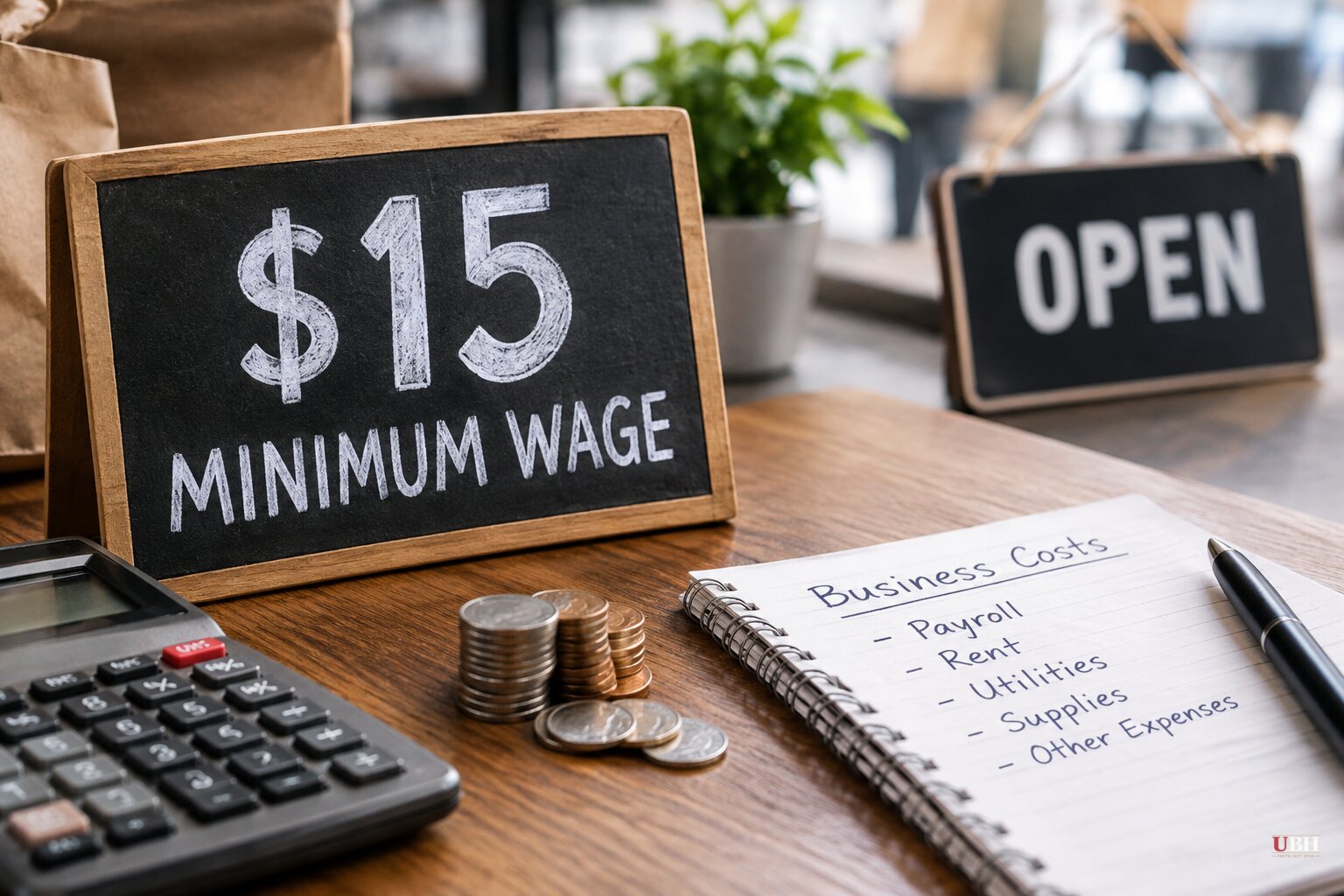
Pete Buttigieg was asked a simple question about small businesses and a $15 minimum wage. His answer was short.
"I'm not interested in who it hurts. I'm interested in who it helps."
The former Transportation Secretary said it on the PBD Podcast, in an episode released Friday. The interview, hosted by entrepreneur Patrick Bet-David, also covered taxes, economic policy and the future of the Democratic Party.
The challenge
Bet-David argued that a federal wage floor of $15 an hour lands unevenly. Amazon, Walmart and Target, he said, can absorb it.
"The guy that can't afford it is that small shop in Hope, Arkansas," Bet-David said. "Amazon's across the street, Walmart's across the street, and Joey's Place that's been there for six years is out of business." Joey's Place is a hypothetical. Bet-David used it to illustrate his point.
He concluded that a higher wage floor "doesn't hurt the Fortune 500 companies at all."
Buttigieg's answer
Buttigieg did not dispute that some employers carry heavier burdens than others. He argued the country has the experience to manage it.
"We have enough experience now, both as a country and states doing it on their own, that we know you can do it gradually enough that it doesn't kill the small business owners," he said.
His position is about pacing. A gradual phase-in, he argued, avoids the closures Bet-David described. He did not offer a specific state, study or business example in the exchange as quoted.
Democrats have said this before
Buttigieg's framing echoes what other Democrats have said. In February 2021, Rep. Ro Khanna (D-CA) was asked on CNN about small businesses that could not afford $15. "We don't want low-wage businesses," he said. "I don't want small businesses that are underpaying employees."
The party has since pushed for more than $15. In April 2025, Rep. Bobby Scott (D-VA) and Sen. Bernie Sanders (I-VT) introduced legislation to raise the federal minimum wage to $17 by 2030. Scott's pitch: "Raising the minimum wage is good for workers, good for business, and good for the economy."
Republicans who objected
The objections to that approach come from officials with their own records on the issue.
In March 2025, then-Virginia Gov. Glenn Youngkin, a Republican, vetoed a bill that would have raised the state minimum wage to $15 by January 2027. He argued a uniform statewide requirement overlooked differences in local economies and living costs. He called the proposal "detrimental" to small businesses.
Sen. Bill Cassidy (R-LA) raised a similar warning during an April 2025 Senate debate on the $17 proposal. "Increasing the wage by more than 230 percent even over 5 years will destroy jobs, impacting rural areas and low-margin small businesses that cannot afford such an increase," Cassidy said. "A law mandating a higher minimum wage doesn't mean much to a worker who loses his or her job because of this."
Those are the positions of the two men who made them. Buttigieg's reply is that gradual increases have been tried and the small-business wipeout has not followed.
Where the two sides disagree
Both camps agree on the mechanism. A higher wage floor raises labor costs for every employer. They disagree on whether a small, thin-margin shop can absorb that cost, and on how much a slow phase-in changes the answer.
Buttigieg's line drew attention because he declined to weigh the harm at all. Supporters of his position say the workers who would get a raise are the point of the policy. Critics, including Bet-David, say the owners who might lose their businesses, and the employees who might lose jobs with them, belong in the accounting too.
The $15 figure Bet-David used is also no longer the high-water mark in Washington. The Scott and Sanders bill would go to $17 by 2030, which is the number Cassidy attacked.
What remains unresolved is whether a gradual phase-in protects a rural, low-margin employer in a market where Walmart or Amazon sits down the road. Cassidy and Youngkin say no. Buttigieg says the record from states shows it can be done.
Sources used for this briefing
3 links from 2 independent newsrooms (syndicated copies of the same report count once)
These are the sources it draws on, linked so you can verify.


