
Unbiased headlines. Facts, not spin.
Unbiased Headlines is an independently owned news organization. We bring you the facts, not opinions, written fresh from 110+ named sources. Sources linked so you can verify it yourself.
 economy
Notable (6/10)
China's Central Bank Adds 830,000 Ounces of Gold in October, 24th Straight Month of Buying
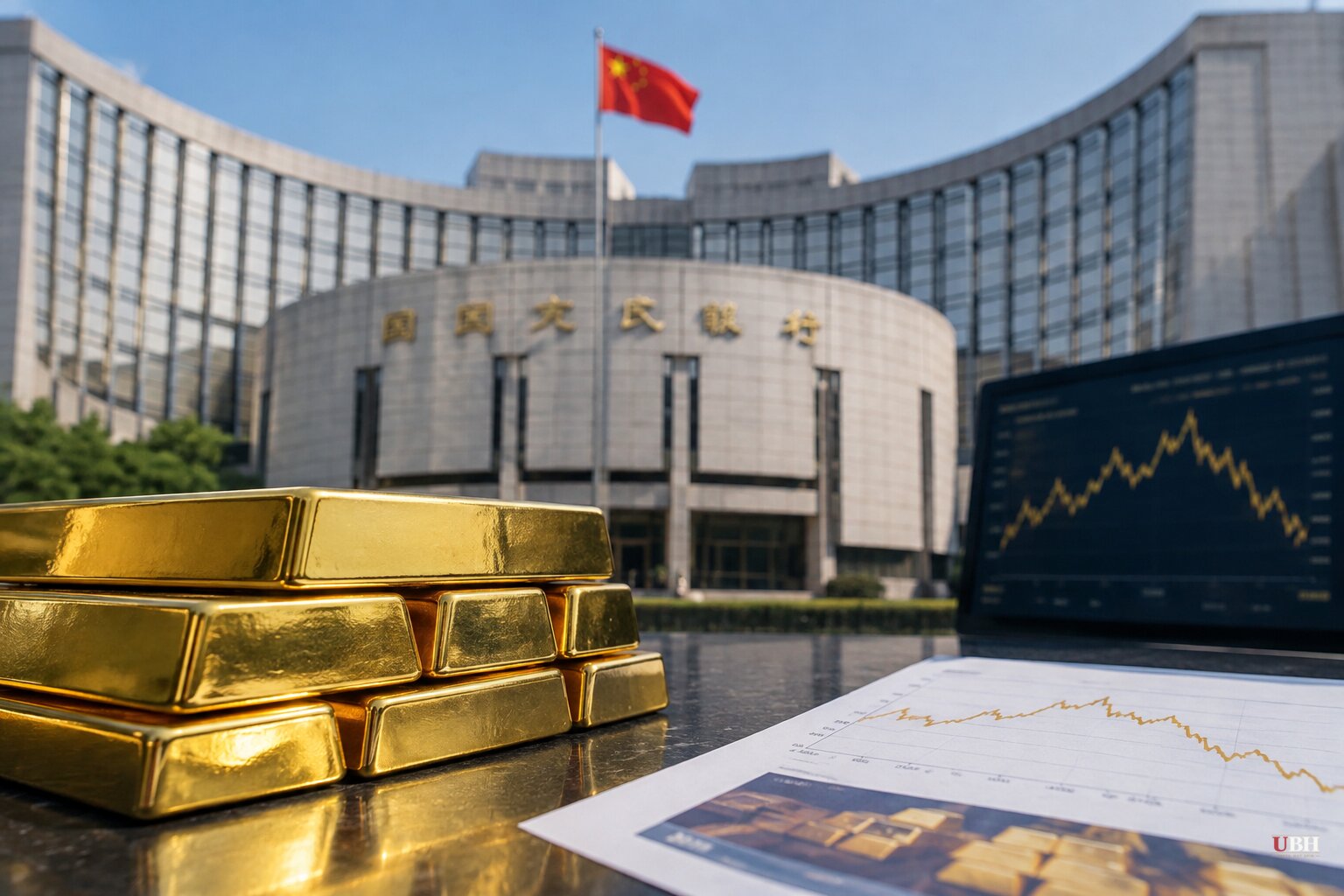
The People's Bank of China added 830,000 ounces of gold to its reserves in October, about 25.8 metric tons. That is the 24th consecutive monthly increase, a streak that reaches back two years.
The data came out Saturday, Nov. 7. Total holdings stand at 78.30 million ounces, up from 77.47 million at the end of September.
The buying came as gold fell almost 7% in October and finished the month below the $4,000-an-ounce level that traders watch as support.
The numbers behind the streak
The pace has picked up in the second half of the year. The PBOC added 2.22 million ounces from July through October. That is more than half of the 4.11 million ounces it has added since holdings stood at 74.19 million at the end of January. Bloomberg puts the increase for the first 10 months of 2026 at around 129 metric tons.
Lower prices cut the dollar value of the stockpile. The gold was worth $306.41 billion at the end of October, down from $323.52 billion a month earlier. That is a drop of about $17.1 billion, even though the bank held more metal.
The State Administration of Foreign Exchange (SAFE) reported that China's total foreign exchange reserves rose $4.9 billion, or 0.14%, to $3.405 trillion. SAFE attributed the rise to currency translation and asset price changes, with a stronger U.S. dollar in the mix.
Reserves remain below the end-of-August level of $3.438 trillion. They have moved within a range of $3.342 trillion to $3.442 trillion all year.
Part of a wider central-bank buying wave
China is not alone. The World Gold Council said Nov. 3 that third-quarter central bank demand rose 42% from a year earlier to 321 tons. That is the highest quarterly total since the end of 2024 and well above the five-year quarterly average of 227 tons. The PBOC led, followed by the National Bank of Poland.
Through the first nine months, official-sector buying totaled 675 tons, up 6% from the same period last year. The Council raised its 2026 forecast and now expects at least the 848 tons bought last year.
The Council's figure and the publicly reported reserve changes differ. Reported net purchases for January through September came to 228 tons, down 7% from a year earlier. The Council's broader estimate includes activity that is not captured in publicly reported reserve changes.
In that reported data, September was the strongest month of the year at 61 tons. Poland added 25 tons and China 23. Poland leads for the year with 123 tons, followed by China at 103. They are the only two central banks above 100 tons.
On the selling side, Turkey cut its reserves by 82 tons through September. Russia sold 62 tons.
Who is not buying
The official sector is carrying demand while others hold back. Total gold demand fell 1% in the third quarter to 1,369 tons. Bar-and-coin demand dropped 19% to 268 tons and jewelry fell 17%.
Louise Street, senior markets analyst at the World Gold Council, said retail investors were waiting for a "clearer price trend to emerge." Gold averaged $4,262 an ounce in the quarter.
"The third quarter was a mixed bag for gold demand," Street said. She added that gold ETF inflows "came roaring back, with geopolitical risk and concerns around fiscal discipline driving institutional interest, in contrast to retail investors who held back amid uncertainty over the gold price outlook."
Physically backed gold ETFs took in 211 tons, a record $31 billion in quarterly inflows. Their holdings hit an all-time high of 4,256 tons.
The Council is an industry body funded by major gold miners. It described the quarter's central-bank buying as driven by "portfolio diversification and risk management."
What comes next
Higher interest rates are a headwind for gold. They raise the opportunity cost of holding bullion that pays no yield. A retreat in prices has not slowed the PBOC so far.
The Council's forecast of at least 848 tons for 2026 will depend on whether central-bank buying holds up through the rest of the year.
Sources used for this briefing
5 links from 5 independent newsrooms (syndicated copies of the same report count once)
These are the sources it draws on, linked so you can verify.


