
Unbiased headlines. Facts, not spin.
Every story is an unbiased news briefing written from 110+ sources across the spectrum — sources linked so you can verify it yourself.
 tech
Notable (6/10)
June 17, 2026 at 06:24 AM
tech
Notable (6/10)
June 17, 2026 at 06:24 AM
SpaceX Stock Has Surged 55% Since Its IPO. Michael Burry Sees a Bubble but Won't Bet on It.
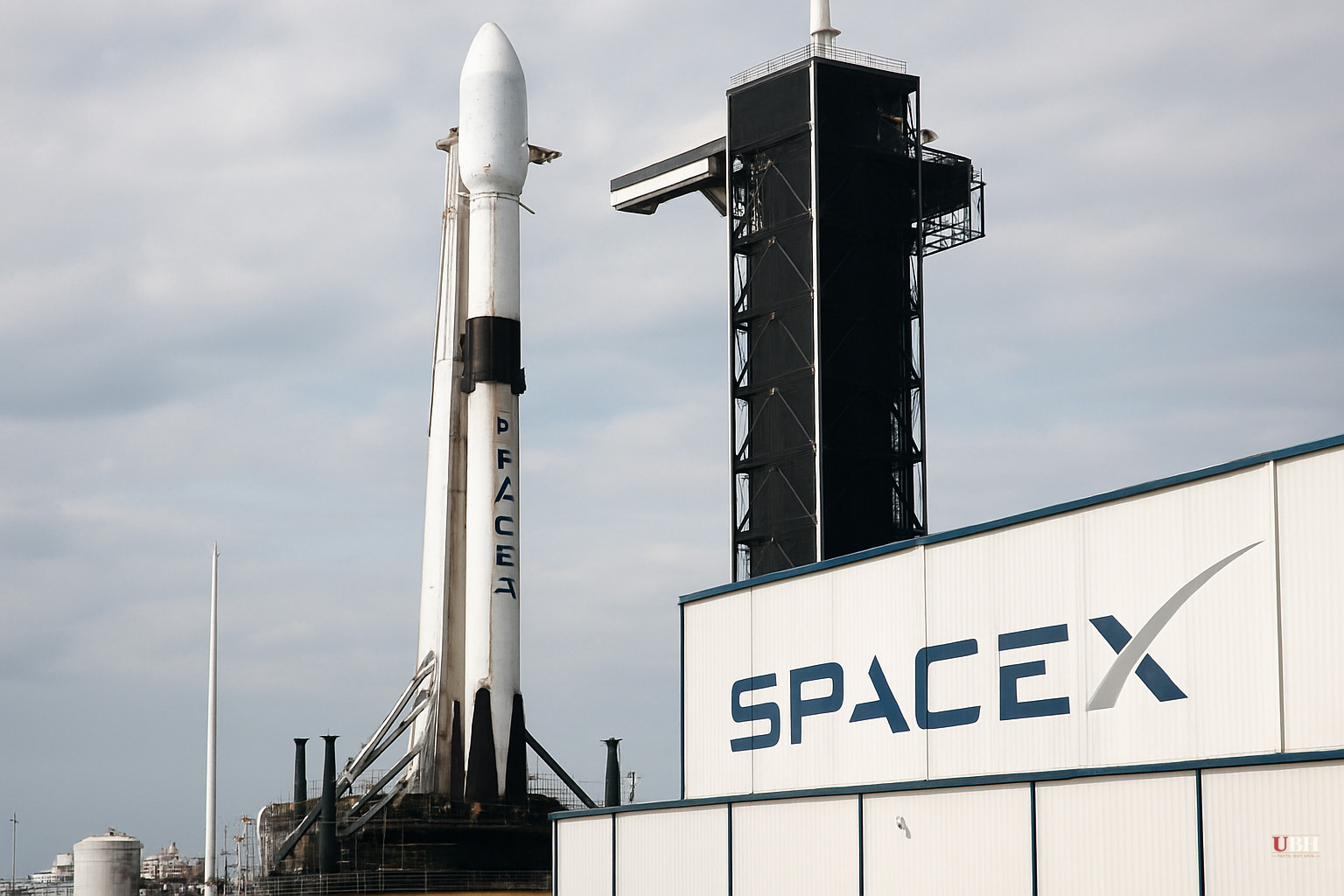
Since SpaceX's June 12 Nasdaq debut raised a record $85.7 billion — later revised upward from the initial $75 billion after underwriters exercised the full overallotment option, according to Forbes — the stock has not stopped moving. By Tuesday's close, shares sat around $201.68, up roughly 49% from the IPO price of $135, according to CNBC. The market cap touched $2.94 trillion intraday before finishing near $2.65 trillion, briefly leapfrogging Amazon and grazing Microsoft.
Burry Thinks It's Overvalued. He's Not Shorting It.
Michael Burry, who predicted the 2008 housing collapse, published a Substack post Tuesday describing SpaceX as "fundamentally a small space company, a niche telecom, a bedeviled social media company, and a Coreweave-light" generating less than $20 billion in annual revenue. His target: the company's nearly $3 trillion market cap, which he noted has eclipsed Berkshire Hathaway "2 1/2 times over in just three days."
But Burry passed. The options are too expensive. A December 2028 put with a $100 strike was priced around $25 per contract, a June 2027 put near $13, and a December 2026 put around $6.75. "Tempted by that one. But no thank you," he wrote, per CNBC. His position as of Tuesday: zero.
What the Options Market Is Actually Pricing
Susquehanna strategist Chris Murphy analyzed the first day of SpaceX options trading Tuesday. His read: about a 15% probability the stock rises another 50% by September, and roughly a 13% chance it falls 50% in the same window, according to CNBC. The fifth-highest call volume of the day. Murphy described the tails as "too expensive to buy, but also too dangerous to sell."
The largest trades, Murphy wrote, "increasingly looked like hedges tied to future supply risk" — meaning big players are already positioning around the lockup calendar, not around Starlink subscriber counts.
Options market maker mechanics are also amplifying the rally right now. As CNBC explained, market makers buy shares of the underlying stock to hedge every call they sell. That mechanical buying is pushing the price higher independent of any view on SpaceX's fundamentals.
The Musk Premium Is Real. The Question Is Whether It's Payable.
Jim Cramer said Tuesday on CNBC's Mad Money that "there is no way this company, which could see losses for many years, deserves such a high valuation on its own. It only gets there because it's run by Musk." That is not quite the bull case. It's more of an acknowledgment that conventional analysis doesn't apply here. Cramer's framing: investors are buying Musk's track record and future optionality, not 2025 earnings.
Peter Boockvar, chief investment officer at One Point BFG Wealth Partners, said on CNBC's Squawk Box Asia that "the company is going to really have to show itself in growing into that valuation" and that "it's going to take at least a couple of years."
The numbers making skeptics nervous: SpaceX posted a $4.9 billion net loss in 2025 and a $4.28 billion net loss in the first quarter of 2026 alone, per Forbes. Revenue was $18.7 billion in 2025. Musk has projected $1 trillion in annual revenue by 2030 — a roughly 53x increase in five years.
On Tuesday, SpaceX also announced it would acquire AI coding startup Cursor for $60 billion in stock, a deal expected to close in the third quarter, according to CNBC. That's $60 billion in stock from a company currently losing money at a pace of roughly $4 billion per quarter.
The Strongest Case for Bulls
The bull case is not delusional on its face. SpaceX is the dominant commercial launch provider on the planet. Starlink has real customers and real revenue. The February merger with xAI brought Grok and substantial AI infrastructure under the same roof. Ron Baron's firm told CNBC it holds roughly $25 billion in SpaceX shares and expects the market cap to eventually exceed $30 trillion. Gina Rinehart, Australia's wealthiest person, purchased more than $1 billion in shares at the IPO, per Forbes. These are not retail gamblers.
Dan Niles, founder of Niles Investment Management, told CNBC Monday that index inclusion alone makes it "really hard to be negative on this name" before the Nasdaq-100 addition happens. SpaceX is being fast-tracked into the FTSE Russell, MSCI, and Nasdaq-100 indexes over the coming weeks, which will force passive funds to buy regardless of valuation.
The Lockup Calendar Is the Real Test
Only about 4.3% of SpaceX shares are currently in public float, according to Business Insider. The remaining 95%-plus is locked up. Elon Musk alone holds roughly 42% under a one-year lockup.
Chan Ahn, founder and CEO of private equity firm Tessera and former equity derivatives head at Goldman Sachs, JPMorgan, and Credit Suisse, told Business Insider that the lockup schedule is "the driver of the performance over the next six months." His projection: the public float roughly doubles in late August, grows about sixfold by end of September, and reaches roughly a third of the company by Halloween.
CFRA initiated coverage at the IPO with a sell rating and a 12-month price target of $115, implying a nearly 29% decline from Friday's close, per CNBC.
The first real earnings report — and the associated insider unlock of roughly 911 million shares — is not expected until early August, according to Morningstar. Until then, the stock is trading on story, momentum, and mechanical index-buying pressure. When $100 billion or more in previously locked shares becomes eligible to sell, price discovery will become the defining question.
Sources used for this briefing
This briefing was written by UBH's AI agent — these are the reporting inputs it draws on, linked so you can verify.


