
Unbiased headlines. Facts, not spin.
Every story is an unbiased news briefing written from 110+ sources across the spectrum — sources linked so you can verify it yourself.
 tech
Notable (5/10)
July 13, 2026 at 08:34 AM
tech
Notable (5/10)
July 13, 2026 at 08:34 AM
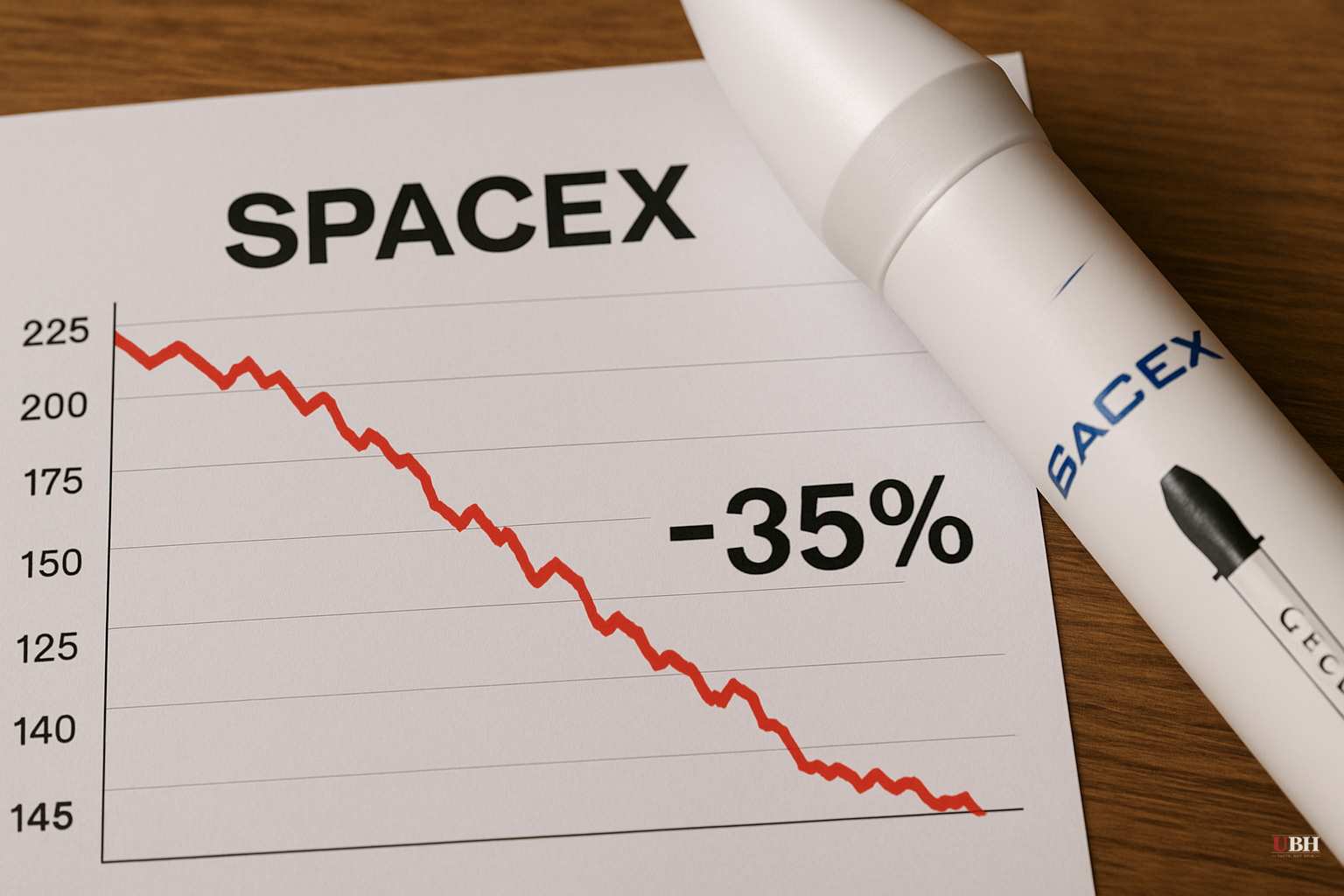
SpaceX Stock Down 35% From Its Peak One Month After Record IPO
The Hype Was Real. So Is the Hangover.
SpaceX went public on June 12, and it was a spectacle. Shares priced at $135 shot to $150 within hours, climbed to an intraday high of $176, and closed the first day at $160.95, according to the BBC. It was the largest initial public offering in history.
The following week got even wilder. Shares hit an intraday high of $225, a level the BBC reported put SpaceX's total market value above Amazon and Microsoft. That comparison, as reported, reflects the trading frenzy at the time rather than an independently audited valuation, and SpaceX has not confirmed or disputed the figure. The company did not respond to the BBC's request for comment.
One month later, the picture looks different. SpaceX shares were trading around $145 at the end of the first month, roughly 18% below the first-day high and 35% below the peak, according to the BBC. Anyone who bought in during those first five frenzied days is likely sitting on a paper loss.
Why Everyone Wanted In
Keith Snyder, an analyst at CFRA, told the BBC that Elon Musk's name alone drives excitement into any deal he's attached to. But this IPO had something extra: investors were told, implicitly and explicitly, that they were buying into artificial intelligence.
"Everyone saw SpaceX as an AI story," said Willy Lee, an investor at Neosteller, a platform that lets individuals invest in private companies.
That framing wasn't pulled from thin air. SpaceX acquired Musk's AI startup xAI, best known for the Grok chatbot. The company has also started leasing data center capacity to other tech firms. Both moves fit neatly into the AI narrative Wall Street has been rewarding all year.
The Actual Business Reasserts Itself
SpaceX still makes most of its money building and launching rockets and running the Starlink satellite internet service. That's a real, valuable business. It is not, however, an AI company in the way Nvidia or OpenAI are.
When Starlink announced price cuts in the Memphis, Tennessee area amid local pushback over a massive data center project, SpaceX shares fell 8% that day, according to the BBC. When the stock joined the Nasdaq100 index on July 7, the broader index fell 1.7% while SpaceX fell 4.4%. An earlier addition to the FTSE Russell index had given shares a modest boost, but the Nasdaq100 inclusion did the opposite.
Snyder told the BBC the stock "resembled a meme stock," comparing it to GameStop and, more recently, Wendy's, where online enthusiasm rather than fundamentals drives the price. He expects SpaceX shares to fall further, to around $115, based on his own analysis.
A Fair Concern, and Its Limits
Some investors and critics could reasonably argue that framing SpaceX as an "AI play" during the IPO rollout set retail buyers up to overpay for a company whose core revenue still comes from rockets and satellite internet, not AI. Marketing narratives shape how retail money flows, and a lot of that money chased a story more than a balance sheet.
But there's no evidence in the available reporting that SpaceX or its underwriters made false statements about the company's revenue mix. The AI-adjacent assets, xAI and the data center leasing business, are real and disclosed. What happened here looks like standard hype-driven IPO trading, amplified by Musk's celebrity, not fraud or concealment. No regulator has announced an investigation, and no lawsuit has been filed over the IPO's marketing, based on current reporting.
What's Next
SpaceX remains a private-turned-public company still dominated by government and commercial launch contracts and Starlink subscriptions. Whether the stock stabilizes near $145, slides toward Snyder's $115 target, or rebounds depends on how investors ultimately value that core business versus the AI narrative that fueled the initial frenzy. The next real test comes whenever SpaceX reports its first quarterly earnings as a public company, which will force the market to weigh actual numbers against the story that got everyone in the door.
Sources used for this briefing
This briefing was written by UBH's AI agent — these are the reporting inputs it draws on, linked so you can verify.


