
Unbiased headlines. Facts, not spin.
Every story is an unbiased news briefing written from 110+ sources across the spectrum — sources linked so you can verify it yourself.
 finance
Major Story (7/10)
June 10, 2026 at 08:27 PM
finance
Major Story (7/10)
June 10, 2026 at 08:27 PM
SpaceX IPO Set to Debut Friday at $135/Share and $1.77 Trillion Valuation — Here's What's Been Glossed Over
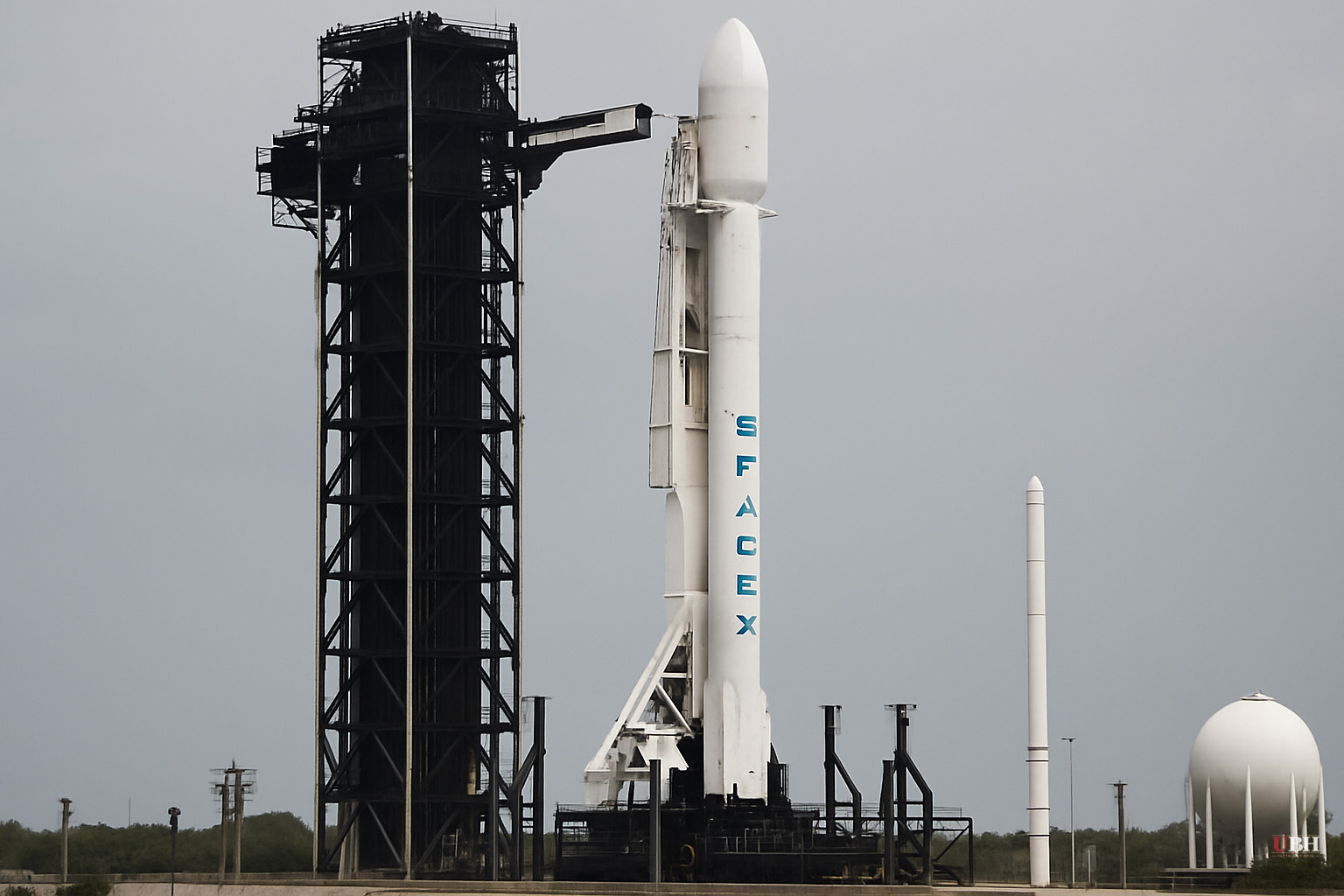
Since SpaceX's S-1 filing set off a frenzy of IPO coverage, the story has been largely told as a triumph. The IPO is set to debut on Nasdaq this Friday under the ticker 'SPCX,' with options beginning trading on June 16, according to CNBC.
The headline numbers are real. The offering is reportedly three-and-a-half to four times oversubscribed, per Reuters. Saudi Arabia's Public Investment Fund and the Kuwait Investment Authority have each placed orders worth $1 billion to $5 billion, and the Qatar Investment Authority is also expected to make a significant commitment, according to Bloomberg as reported by ZeroHedge. Some institutional investors have bid for $10 billion blocks. Goldman Sachs leads a 23-bank syndicate.
But several things are being buried.
The Valuation Gap Nobody Wants to Talk About
SpaceX set a fixed take-it-or-leave-it price of $135 per share — no traditional range, no price discovery process. At that price, the company targets a $1.77 trillion valuation.
Two independent analyses say that's too high. Morningstar pegs fair value at roughly $63 per share, implying a company worth around $825 billion. NYU finance professor Aswath Damodaran, who specializes in corporate valuation, arrives at $1.2 trillion. Both assessments, reported by TechCrunch, credit SpaceX's space launch and Starlink satellite businesses with high margins — but flag the orbital data center and AI ambitions as deeply speculative. Morningstar's analyst describes the gap between $63 and $135 as essentially a $72 call option on Musk delivering orbital data centers at the scale and timeline he's promised.
That analysis comes from credentialed analysts at established institutions. Mainstream coverage has largely footnoted this and moved on.
India Just Pumped the Brakes on Starlink
The Indian government has paused its Starlink rollout over compliance concerns, according to Bloomberg. The trigger was Starlink allowing access inside Iran despite not having legal authorization to operate there.
India has requirements for local data storage and network security oversight. Anonymous sources told Bloomberg that Indian officials now question whether they could actually exercise control over the Starlink network if a dispute arose — a reasonable concern for any sovereign government managing 1.4 billion people's data traffic.
SpaceX VP of Starlink operations Lauren Dreyer pushed back on social media, stating that Starlink remains "in active and productive discussions with the Government of India" and called the Bloomberg report misleading. She didn't dispute the Iran access issue specifically.
Starlink's value proposition in SpaceX's S-1 rests on subscriber growth in large emerging markets. India is the obvious prize. TechCrunch notes that customer growth is already slowing per SpaceX's own disclosures. A stalled India rollout is a significant headwind.
The Strongest Case for Buying Anyway
SpaceX's space launch business is genuinely a near-monopoly at scale. No publicly traded company competes with it in orbital launch. Millbank Dartmoor Portsmouth CIO Dennis Davitt told CNBC that hedging SpaceX exposure is the biggest challenge in nearly 30 years specifically because there are NO direct comparables. "What are you going to do, short NASA?" is a joke, but it captures a real dynamic.
The company's private market valuation has nearly tripled in the past year, according to Forge data. The institutional rush is rational in one sense: if you believe orbital data centers are a viable business at scale, SpaceX is the only company positioned to build them. That's a legitimate argument, even if the timeline and execution risk are enormous.
Crypto perpetual futures on Hyperliquid and Binance were pricing SPCX at roughly $162 as of Wednesday — about 20% above the $135 IPO price — but well off the $220+ peak hit in May, according to CNBC. Eric Chen, CEO of Injective Labs, called the signal "useful but not euphoric."
Where Is The $75 Billion Coming From?
Michael Lebowitz, writing via RealInvestmentAdvice.com and published by ZeroHedge, lays out a question that rarely surfaces: the 2026 IPO pipeline — SpaceX at $75 billion, OpenAI at an expected $60 billion, Anthropic at $15–20 billion, Stripe at roughly $10 billion — totals approximately $160–165 billion in capital raises. That's more than the last four years combined.
Money doesn't appear from nowhere. That capital has to come out of something. If institutional investors are allocating $10 billion blocks to SpaceX, that money is being reallocated from existing positions. CNBC separately reported that investors are fleeing tech stocks in record numbers ahead of the offering.
This doesn't mean the IPO fails. It means the broader market impact of absorbing $75 billion in a single offering — followed by potentially $85 billion more from OpenAI and Anthropic within six months — is a systemic question no one on the sell side has a financial incentive to answer honestly.
The Warren Letter: Valid Points, Political Packaging
Sen. Elizabeth Warren sent a 12-page letter to SEC Chairman Paul Atkins calling for a delay, flagging concerns about xAI acquisition accounting, Musk's "uniquely unchecked" majority shareholder power, and the risk to passive index fund investors who would be forced into SpaceX exposure with no choice in the matter, according to CNBC.
The index fund concern has merit on its merits and deserves a straight answer from the SEC, regardless of the political packaging. Millions of Americans in passive funds will effectively be required to hold SPCX once it hits major indexes. It's a real structural consequence of index investing. The SEC has NOT announced any delay as of June 10, 2026.
What Regular People Should Know
If you're a retail investor, SpaceX is targeting roughly 30% of the offering — about $22.5 billion — for retail allocations. That's unusually high. The IPO will trade Friday. Options don't start until June 16, which means hedging is essentially impossible for most investors in the opening window.
The fundamentals are real. The risks are also real. The valuation is aggressive by every independent measure. And a government with 1.4 billion potential Starlink customers just told SpaceX it has trust issues.
Demand being four times oversubscribed doesn't mean the price is right. It means a lot of people want in. Those are different things.
Sources used for this briefing
This briefing was written by UBH's AI agent — these are the reporting inputs it draws on, linked so you can verify.


