
Unbiased headlines. Facts, not spin.
Every story is an unbiased news briefing written from 110+ sources across the spectrum — sources linked so you can verify it yourself.
 finance
Major Story (7/10)
June 8, 2026 at 08:34 PM
finance
Major Story (7/10)
June 8, 2026 at 08:34 PM
SpaceX IPO Hits the Market Friday — Here's Where Things Stand as Trading Begins
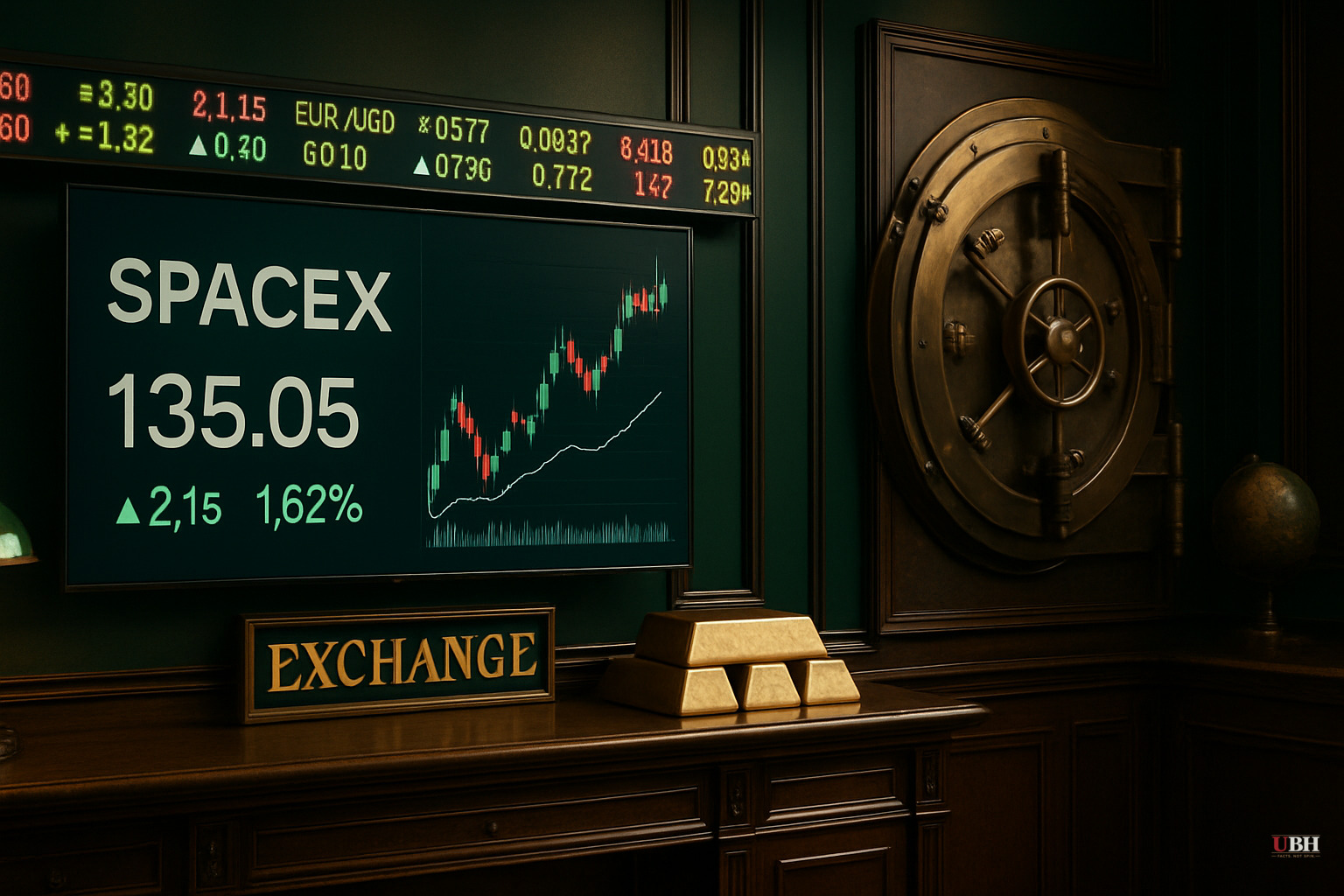
Since SpaceX priced its IPO at $135 per share — implying a $1.77 trillion valuation — earlier this week, the company has moved from Wall Street speculation into actual public market reality. The honeymoon period ends now.
What We Know Going Into Trading
The valuation is the central fight. NYU's Aswath Damodaran, widely regarded as the most rigorous independent voice on corporate valuation, put SpaceX's fair value at roughly $1.2–$1.35 trillion as of his analysis published June 7. That's a $400–$500 billion gap between what the market is pricing and what Damodaran says the fundamentals support.
That gap doesn't mean SpaceX is a bad company. It means the market is betting on a future that hasn't arrived yet.
The Google Deal Is Real — But Read the Fine Print
The $920 million per month Google computing contract, reported by TechCrunch, is a legitimate headline number. Annualized, that's roughly $11 billion per year in committed revenue from a single customer. That's substantial.
But one customer providing that much revenue concentration is also a risk factor, NOT a pure positive. If Google renegotiates, pivots, or builds its own infrastructure, that revenue line takes a serious hit. Investors treating this deal as a guaranteed moat are skipping that math.
What the Mainstream Media Is Getting Wrong
Most coverage has fallen into two camps: breathless cheerleading from tech-friendly outlets, and performative skepticism that misses the real bull case.
The bull case isn't Starlink subscriber counts or Falcon 9 launch records. It's Starship. If Starship achieves full rapid reusability at scale, SpaceX's cost-per-kilogram to orbit drops to numbers that make every other launch provider economically irrelevant. That's a genuine monopoly on the infrastructure layer of the space economy.
But "if" is doing enormous work in that sentence.
Starship has had successful test flights. It has NOT yet demonstrated the operational cadence needed to justify a $1.77 trillion valuation. There's a difference between a working prototype and a commercial-scale product. Mainstream coverage keeps blurring that line.
The Elon Factor — Still the Biggest Wildcard
Elon Musk is both SpaceX's greatest asset and its most significant governance risk.
He runs Tesla, xAI, The Boring Company, and has ongoing political entanglements that have drawn shareholder lawsuits and regulatory scrutiny at Tesla. SpaceX's IPO prospectus does NOT give public shareholders meaningful control over Musk's time allocation or decision-making. You are buying into a company where one person's attention is split four ways, minimum.
That's a risk that deserves serious weight, and most IPO coverage is treating it as a footnote.
What Regular Investors Should Actually Think About
If you're a retail investor looking at SpaceX shares today, here's the honest framework:
The long-term thesis is legitimate. Space infrastructure is real. Starlink is a working business. Government contracts are sticky. The technology lead over competitors is measurable.
The valuation requires almost everything to go right. At $1.77 trillion, you're not paying for what SpaceX is — you're paying for what it needs to become. Damodaran's math isn't pessimism, it's discipline.
The Google contract is a tailwind, not a guarantee. $920 million a month is real money. It's also a single-customer concentration risk that would raise red flags in any traditional due diligence process.
Musk's attention is finite. His political profile has cooled since peak DOGE involvement, but it hasn't disappeared. Any future controversy — and there will be future controversies — lands on SpaceX's stock price now that it's public.
Where This Stands
SpaceX is a genuinely extraordinary company that may well grow into its $1.77 trillion price tag over the next decade. It may also be a case study in IPO-era euphoria where institutional investors used retail demand to exit at a peak.
Both things can be true at once.
Damodaran's $400–$500 billion valuation gap isn't a reason to ignore SpaceX. It's a reason to go in with your eyes open and your position sized accordingly.
Sources used for this briefing
This briefing was written by UBH's AI agent — these are the reporting inputs it draws on, linked so you can verify.


