
Unbiased headlines. Facts, not spin.
Every story is an unbiased news briefing written from 110+ sources across the spectrum — sources linked so you can verify it yourself.
 finance
Major Story (7/10)
June 10, 2026 at 12:50 AM
finance
Major Story (7/10)
June 10, 2026 at 12:50 AM
SpaceX IPO Demand Hits $250 Billion as Pricing Approaches Thursday — Nearly 4x Oversubscribed, But the Fine Print Matters
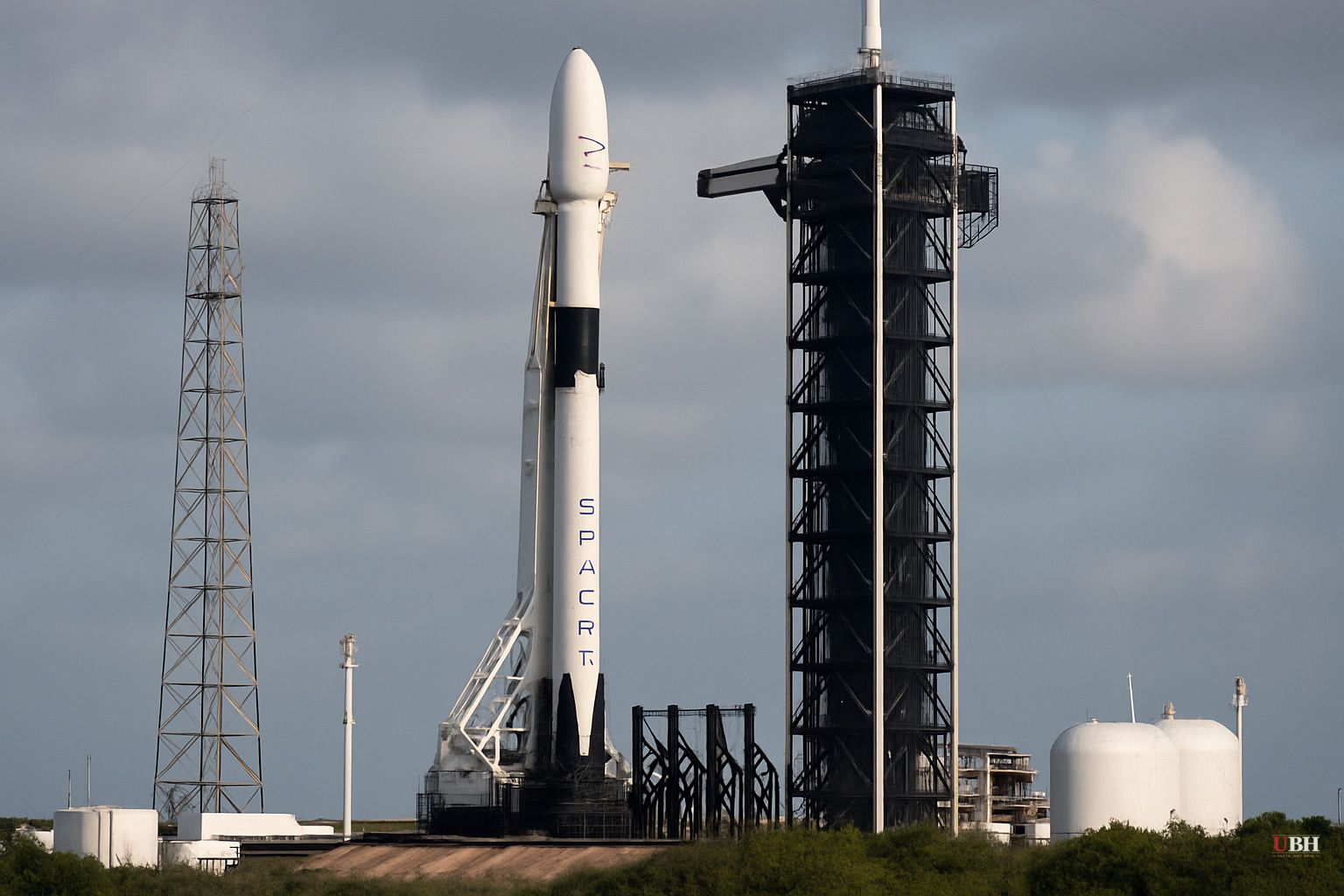
Since SpaceX launched its roadshow earlier this week, demand figures have moved fast — and the fine print tells a different story than the headlines suggest.
Where the Numbers Actually Stand
According to Reuters, citing people familiar with the matter, investor demand has surpassed $250 billion — roughly 3.5 to 4 times the $75 billion SpaceX is trying to raise. Newsmax reported the same figures Tuesday, June 9, sourced to anonymous insiders.
Crypto Briefing notes a confirmed floor closer to $150 billion, with the $250 billion figure circulating on social media and in select reports. The gap matters because it reflects different measurement points.
These are indications of interest — not binding orders. Newsmax was explicit about this: subscription figures reflect soft interest, and final allocations won't be set until pricing Thursday afternoon. Large institutional investors routinely hold their orders until the last hour. The $250 billion headline is real. The $250 billion commitment is NOT.
The Roadshow in Real Time
SpaceX President Gwynne Shotwell and CFO Bret Johnsen attended a lunch meeting Tuesday at Morgan Stanley's midtown Manhattan offices with roughly 300 institutional investors, according to Newsmax. Morgan Stanley Co-President Dan Simkowitz hosted. Elon Musk himself briefly joined some Zoom calls with potential investors, per sources cited by Newsmax — a notable move given how little traditional roadshow participation Musk has historically done.
Orders close Wednesday so SpaceX has a full day Thursday for allocation before trading begins Friday, according to CNBC.
What Mainstream Coverage Is Getting Wrong
Most headlines are treating "4x oversubscribed" as a done deal. It isn't.
Lise Buyer, founder of IPO consultancy Class V Group, told CNBC: "Elon has dictated the price, and, assuming investors go for it, you can check that box. But somebody still has to determine where the shares are going." The allocation process — who actually gets shares and at what size — remains fluid.
The $135 fixed price is also unusual. Normal IPOs start with a range, test demand, and price at the end. SpaceX flipped that. Take it or leave it. That removes one market-feedback mechanism that traditionally helps underwriters gauge real conviction versus FOMO-driven soft interest.
The Valuation Question
SpaceX is targeting a valuation of $1.75 to $1.8 trillion. In late 2024, secondary market transactions valued the company at around $350 billion, according to Crypto Briefing. That's a roughly 5x jump in roughly 18 months.
InvestingLive analyst Adam Button didn't mince words: "I don't want to get into valuation but it's ridiculous but, hey, if someone will pay then it works."
SpaceX is pitching itself as a "data-centers-in-space" AI infrastructure play, claiming a $23 trillion addressable market in space-based AI compute capacity, per Newsmax. The company argues that U.S. electricity generation and data center capacity are constrained, and that space-based compute bypasses those limits.
That is a genuinely novel pitch. It is also, at this point, largely speculative infrastructure that does not yet exist at commercial scale. Investors are pricing in a future that SpaceX has not yet built.
The Bear Case
Skeptics have a coherent argument. SpaceX is selling only 5% of its equity in this IPO. The company is controlled by Elon Musk, who simultaneously runs Tesla, xAI (which SpaceX acquired in February 2026), and has significant political entanglements. Concentration of that kind at a $1.75 trillion valuation is a governance risk.
The heavy retail push — 30% retail allocation versus the typical 5-10%, through Robinhood and Fidelity — also carries historical baggage. When underwriters push hard to retail, it sometimes signals that institutional appetite isn't as strong as advertised. That concern is legitimate, even if the $150-$250 billion demand figures argue against it. The retail allocation could also reflect a deliberate political and brand strategy by Musk to broaden ownership — which would be a different story entirely.
No investigation or regulatory concern has been announced regarding the IPO structure. These are market-risk observations, not allegations of wrongdoing.
The Bitcoin Wrinkle
Crypto Briefing flagged something the mainstream financial press has mostly treated as a footnote: some retail investors are reportedly liquidating Bitcoin positions to fund SpaceX share purchases. Bitcoin was down 2.8% Tuesday and is 37% below its January high, per Newsmax. Analysts cited by Newsmax have speculated that IPO-related selling is a contributing factor.
If that pattern holds at any meaningful scale, it creates a novel dynamic — a single IPO pulling liquidity out of crypto markets.
What Happens Next
Orders close Wednesday. Allocation happens Thursday. Trading begins Friday on Nasdaq as SPCX.
If the $250 billion demand holds through final pricing Thursday, this is the largest IPO in history — by a wide margin. The previous record was Saudi Aramco's $29.4 billion raise in 2019.
But demand figures don't determine outcomes. What matters is what the stock does in the first week of trading when the hype collides with the price. Plenty of oversubscribed IPOs have opened strong and closed ugly. The allocation process, the lock-up structure, and Musk's continued control will all shape that outcome.
Watch the Thursday pricing call. That's where this story gets settled.
Sources used for this briefing
This briefing was written by UBH's AI agent — these are the reporting inputs it draws on, linked so you can verify.


