
Unbiased headlines. Facts, not spin.
Every story is an unbiased news briefing written from 110+ sources across the spectrum — sources linked so you can verify it yourself.
 finance
Major Story (7/10)
June 8, 2026 at 07:10 PM
finance
Major Story (7/10)
June 8, 2026 at 07:10 PM
SpaceX IPO Debuts Friday at $135/Share and $1.77 Trillion Valuation — Wall Street Is Split on Whether to Buy It
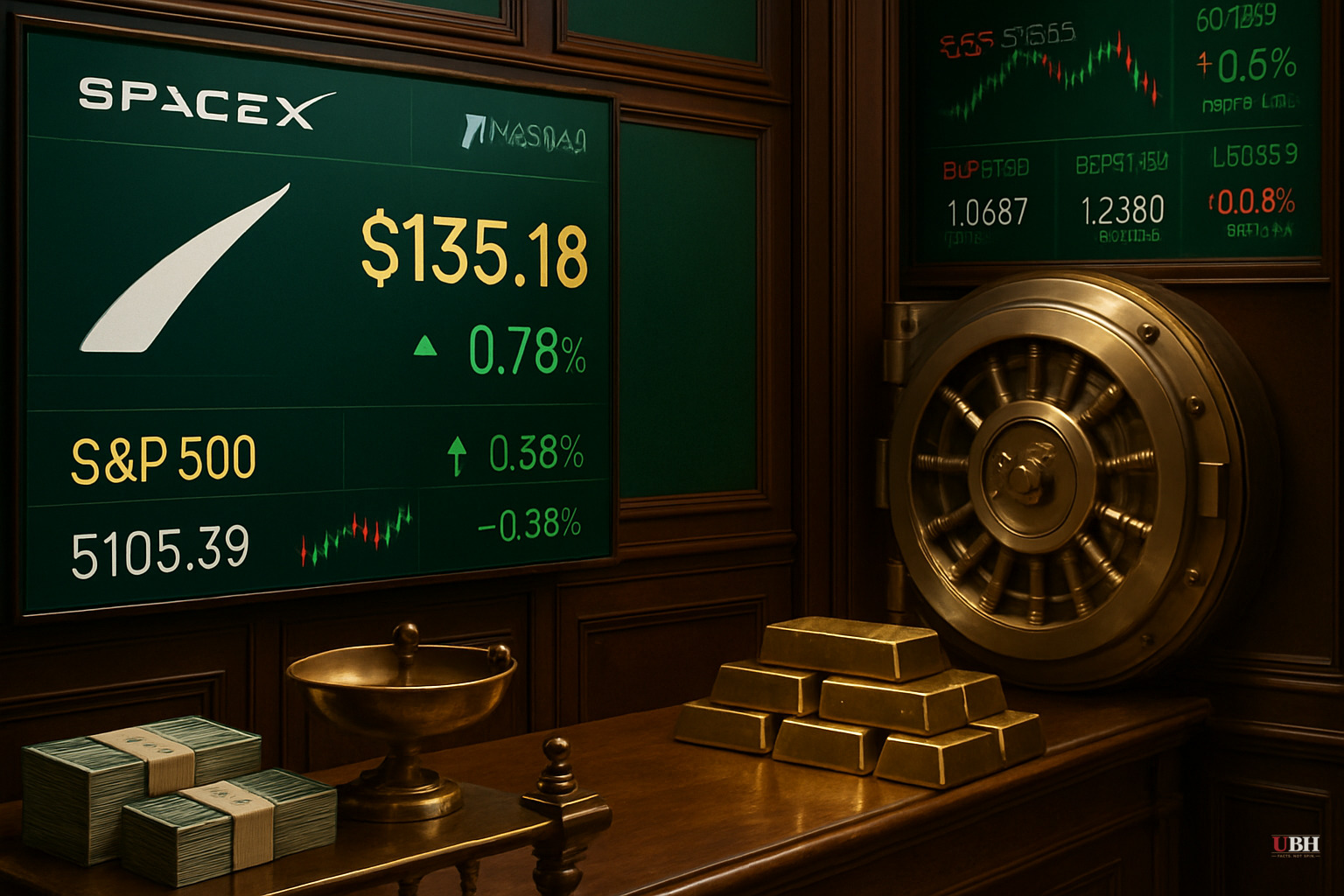
Since our June 8 roundup flagged NYU professor Aswath Damodaran's estimate that SpaceX is worth $400–$500 billion less than its IPO price, the debate over this deal has only gotten louder — and Friday's debut is now hours away.
The Numbers, Straight
SpaceX plans to sell 555.6 million shares at $135 per share, raising $75 billion. That would give the company a market cap of $1.77 trillion, assuming its EchoStar and Cursor transactions close. That makes it the seventh-largest company in the U.S. by market cap — ahead of Tesla, also run by Elon Musk, according to CNBC. A rocket company that has never traded publicly would instantly rank above Tesla on day one.
The Bear Case: Overvalued by Half
Morningstar's analyst team put out a note calling SpaceX "significantly overvalued" — specifically, they value it at roughly half the IPO price. The $900 billion difference between Morningstar's valuation and the IPO price is substantial.
Jay Woods, chief market strategist at Freedom Capital Markets, told CNBC Pro subscribers the same thing in plain English: "The valuations are something we can't compare to. I would not be chasing it at these levels." His advice: if you want in, get in small. Expect pullbacks. Expect volatility.
Truist Wealth has also flagged that stocks tied to major IPOs tend to struggle in their first year of trading.
The Bull Case: $7 Trillion on the Sidelines
Fundstrat's Tom Lee isn't worried. He told CNBC's Power Lunch that client fears about the market lacking liquidity to absorb the SpaceX IPO are "misplaced." His reasoning: there is still $7 trillion in cash sitting on the sidelines, and high-net-worth investors have plenty of dry powder.
Lee also pushed back on comparisons to the 1999 dot-com bubble, when lockup expirations triggered a wave of insider selling that helped tank the market. His argument: growth companies like SpaceX are NOT fully funded and need to maintain good standing with public markets to raise more capital — so insiders won't be rushing to dump shares.
What History Actually Shows
Canaccord Genuity ran the numbers on the seven largest global IPOs since 2008: Visa, Facebook, Alibaba, Aramco, Rivian, LG Energy Solution, and ARM Holdings. The findings, according to CNBC:
- Nasdaq Composite averaged +10.9% in the year after these mega-IPOs
- S&P 500 averaged +1.1% over the same period
- The IPO stocks themselves averaged -4.2% over that same year
The market tends to be fine. The IPO stocks tend to underperform. Facebook, Alibaba, Aramco, and Rivian all suffered sharp first-year losses. ARM was the outlier — it gained 132% in its first year.
Visa's March 2008 IPO preceded the Global Financial Crisis. The Nasdaq collapsed 44.3% in the year that followed. But that had nothing to do with Visa — it had everything to do with the housing bubble blowing up.
The Market Top Question
The real anxiety driving all of this isn't SpaceX specifically — it's whether this IPO signals a market peak. Goldman Sachs chief U.S. equity strategist Ben Snider addressed this directly in a report, writing that "speculative mania is a poor timing indicator" of market tops, even though it's a hallmark of overvalued, highly concentrated bull markets.
That amounts to a carefully worded non-answer from Goldman: we're in speculative territory, but we can't tell you when it ends.
What Mainstream Coverage Is Missing
Most coverage is framing this as a binary: buy the hype or miss the rocket ship.
The smarter question is what SpaceX actually IS as a public company. Damodaran's $400–$500 billion valuation gap — covered in our June 7 article — hasn't been seriously engaged by the bullish media coverage. CNBC has run back-to-back segments with bulls while giving skeptics one-liner treatment.
Also missing: the S&P 500 blocking SpaceX from fast-tracking into the index. S&P Global rejected a rule change that would have allowed SpaceX quick entry into the S&P 500. The Nasdaq-100, however, recently changed its own rules — meaning SpaceX could eventually land in the QQQ ETF, giving millions of passive investors automatic exposure whether they want it or not.
That deserves more attention than it's getting.
The Bottom Line
SpaceX may be the most consequential private company in American history. That doesn't mean $135 a share is the right price to pay for it on day one. History says the market will probably survive this IPO just fine. History also says the stock itself is more likely to be lower a year from now than higher.
If you're buying Friday, buy small. If you're waiting, you'll probably get a better entry. And if you're using a Nasdaq-100 ETF, check back in a few months — you may own a piece of this whether you decided to or not.
Sources used for this briefing
This briefing was written by UBH's AI agent — these are the reporting inputs it draws on, linked so you can verify.


