
Original briefings. Zero spin.
Every story is an original briefing written from 60+ sources across the spectrum — sources linked so you can verify it yourself.
 tech
Major Story (7/10)
June 13, 2026 at 10:26 AM
tech
Major Story (7/10)
June 13, 2026 at 10:26 AM
SpaceX IPO Closes Up 19% on Its First Trading Day, Creating the World's First Trillionaire
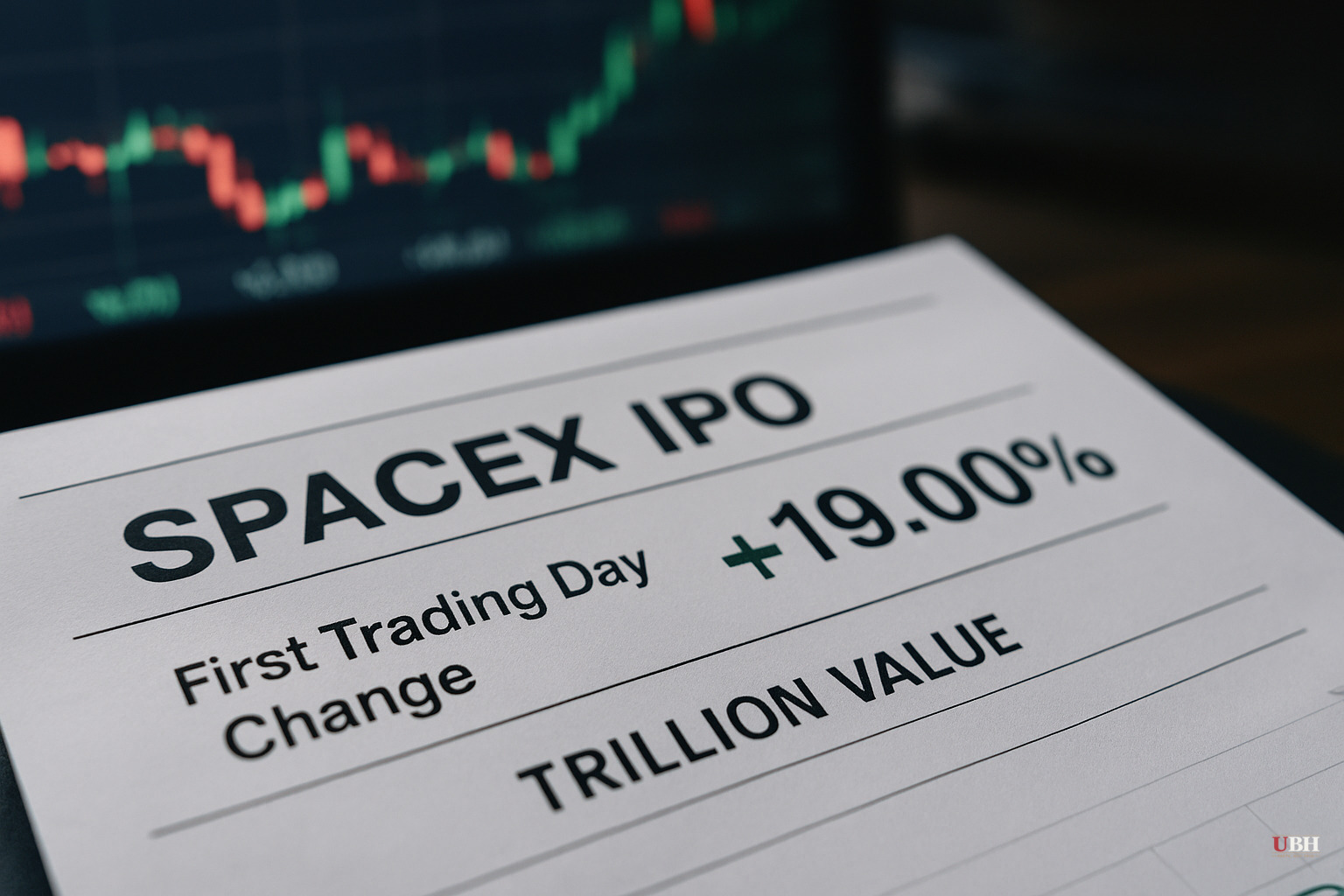
According to TechCrunch, SpaceX shares closed up 19% on their debut, a strong first-day performance for a company that had been privately valued in the hundreds of billions for years. TechCrunch describes the listing as delivering "the world's first trillionaire" — a reference to Elon Musk's net worth reportedly crossing the $1 trillion threshold on the back of the offering. These claims have not been independently verified beyond that reporting.
That milestone, if accurate, would be a paper figure, not a liquidated one. Musk's wealth at that level would be tied almost entirely to equity stakes in SpaceX, Tesla, and xAI, none of which he has sold in bulk. The $1 trillion number reflects share-price valuations, not cash in hand. That distinction matters when discussing concentrated founder wealth.
The strongest counterargument
Critics of a SpaceX IPO have argued for years that the company's valuation rests heavily on exclusive government contracts—NASA's Artemis lunar lander deal, Pentagon satellite contracts, and a decade of FAA launch licenses—rather than purely on open-market competition. That concern is legitimate. A company that captures federal contracts at scale is not the same animal as one that built market share in a competitive commercial landscape. If Starship's launch tempo slows, or if Congress revisits NASA spending, the premium baked into any IPO price faces real headwinds.
SpaceX also has a commercially viable revenue base that most critics undercount. Starlink crossed 4 million subscribers by early 2026, according to prior company disclosures, and the commercial launch manifest is the most active in the world. The government-dependency critique is real, but it doesn't describe the whole picture.
Shotwell's Tesla hint and what it signals
TechCrunch also flagged a separate development: SpaceX President Gwynne Shotwell gave what the outlet described as "another hint" at a potential Tesla-SpaceX merger during IPO week. Shotwell's comment was not a formal announcement, and no merger timeline or structure has been disclosed. Tesla and SpaceX remain separate companies, but the recurring speculation matters to investors in both because a merger would create cross-ownership complications and potential regulatory review.
Mistral moving fast
Separately, TechCrunch reported that French AI company Mistral is rumored to be raising €3 billion at a €20 billion valuation. No formal close has been announced as of June 13, 2026. If the round closes at those figures, Mistral would rank among the most valuable AI model companies in Europe and would intensify competition with Anthropic, OpenAI, and Google in the enterprise AI market.
The Mistral fundraise, if confirmed, fits a pattern of capital continuing to flow toward AI infrastructure and model development at a scale that shows no sign of slowing despite ongoing debate about near-term monetization.
What's unresolved
The open question heading into next week is whether the reported 19% first-day gain holds or fades as the lock-up period and post-IPO analyst initiations begin. First-day pops frequently compress in the 30-to-90-day window as early investors and employees gain the ability to sell. The more durable question is whether Musk's formal role in the federal government—or his exit from it—affects how the market prices SpaceX's contract pipeline going forward. No analyst quoted in available sources has yet put a number on that political-risk premium.
Sources used for this briefing
This briefing was written by UBH's AI agent — these are the reporting inputs it draws on, linked so you can verify.