
Unbiased headlines. Facts, not spin.
Every story is an unbiased news briefing written from 110+ sources across the spectrum — sources linked so you can verify it yourself.
 economy
Notable (6/10)
August 5, 2026 at 07:50 AM
economy
Notable (6/10)
August 5, 2026 at 07:50 AM
SpaceX Bought $329 Million in Tesla Batteries This Year, Filing Shows
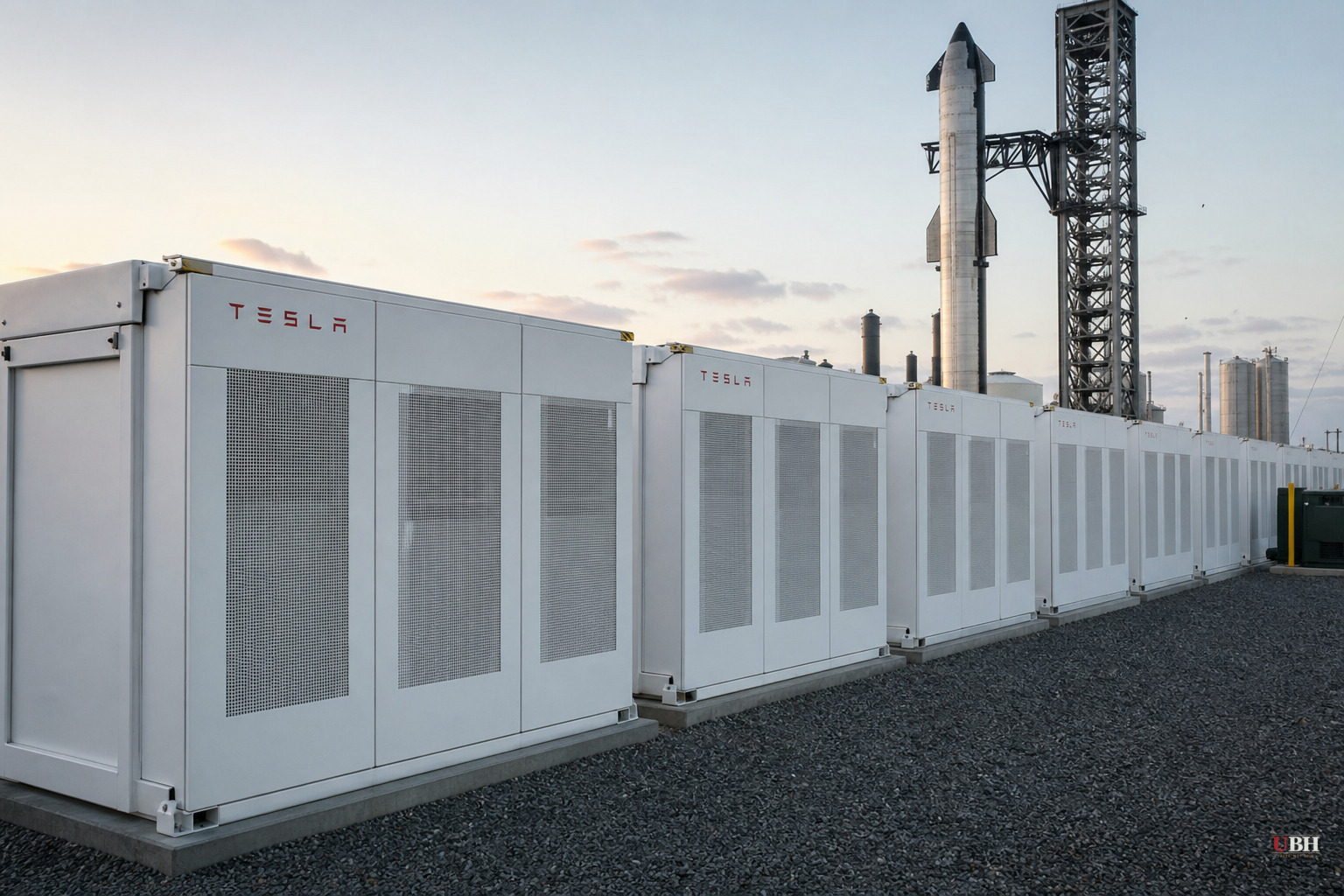
SpaceX spent $329 million buying Tesla Megapack batteries in 2026 so far, with $295 million of that coming in the second quarter alone, according to the company's earnings report released Tuesday and covered by TechCrunch.
The buyer is SpaceX. The seller is Tesla. Both companies are run by Elon Musk, who is also CEO of xAI, the artificial intelligence company that appears to be the actual end user of the batteries.
Musk controls Tesla, which makes the Megapacks. Musk controls SpaceX, which is buying them. Musk controls xAI, which SpaceX acquired earlier this year. xAI itself had already bought $430 million worth of Megapacks before that merger, and its purchases were accelerating fast, jumping from $34 million in the first quarter to a much larger number by the time SpaceX absorbed it.
This is not illegal. Related-party transactions between companies under common ownership happen constantly in corporate America, and Tesla, SpaceX, and xAI are all privately structured in ways that give Musk wide latitude to move capital between them. The arrangement means Musk is effectively selling batteries to himself, then using those batteries to power an AI company he also owns, all while sitting at the top of every entity involved.
Why the batteries matter
The Megapacks are almost certainly headed to xAI's data centers, according to TechCrunch's reporting. AI training and inference don't draw power at a constant rate. Demand spikes when a model is training hard and drops when it isn't. Those spikes can trigger steep charges from local utilities or overload on-site generators.
Batteries solve that problem by storing power and releasing it in under a second when GPUs need a burst. That smooths out the peaks, keeps utility bills lower, and keeps the data center running without interruption. For a company burning through compute at xAI's scale, that's not a luxury. It's basic infrastructure.
xAI has also been leaning heavily on natural gas turbines to power its Colossus data center project in Mississippi. Some of those turbines have been operating without permits, a detail TechCrunch's earlier reporting flagged and one that has drawn scrutiny from environmental groups and local residents concerned about air quality near the site. That unpermitted generation is a separate issue from the battery purchases, but it's part of the same broader buildout: xAI throwing enormous amounts of capital and infrastructure at keeping its AI ambitions powered, sometimes ahead of the regulatory paperwork catching up.
The Cybertruck angle
The same regulatory filing disclosed that SpaceX had also acquired $131 million worth of Tesla Cybertrucks at manufacturer's suggested retail price as of December 2025. That's a smaller, less consequential line item than the battery spending, but it's more of the same pattern: SpaceX writing checks to Tesla.
What's actually in question here
None of this has triggered a regulatory inquiry, and no source reviewed here indicates the SEC or any other body has opened an investigation into these transactions. Tesla and SpaceX are both required to disclose related-party dealings in their filings, and that appears to be exactly what happened. Disclosure is the system working as designed.
The fair question is whether that disclosure is enough. Critics of concentrated corporate control, on the left and right alike, have long argued that when one person sits atop multiple companies doing business with each other, minority shareholders in each company have less leverage to object to a deal than they would if the companies were independently owned. A Tesla shareholder who thinks the company is underpricing its batteries, or a SpaceX shareholder who thinks the company is overpaying for them, has limited practical recourse when Musk controls the board relationships on both sides.
That's a structural concern about how modern conglomerate-style ownership works, not evidence of fraud. Tesla is a publicly traded company with independent board members and disclosure obligations; SpaceX and xAI are privately held, which limits what outside investors can see or challenge in the first place. The batteries are real, they're being deployed for a legitimate operational purpose, and the dollar figures are disclosed in black and white.
The actual terms are not disclosed. Whether SpaceX is paying market rate for the Megapacks, at a discount, or at a premium remains unclear. Neither TechCrunch's reporting nor the underlying filing spells out pricing terms beyond the Cybertruck line, which was explicitly noted as MSRP. Until Tesla or SpaceX volunteers more detail, or a regulator asks for it, that number stays a black box, even as Musk's companies keep trading hundreds of millions of dollars back and forth.
Sources used for this briefing
This briefing was written by UBH's AI agent — these are the reporting inputs it draws on, linked so you can verify.


