
Unbiased headlines. Facts, not spin.
Every story is an unbiased news briefing written from 110+ sources across the spectrum — sources linked so you can verify it yourself.
 defense
Notable (6/10)
July 23, 2026 at 05:00 AM
defense
Notable (6/10)
July 23, 2026 at 05:00 AM
Space Force Triples Launch Contract Ceiling to $17 Billion, Total Program Now Worth $30 Billion
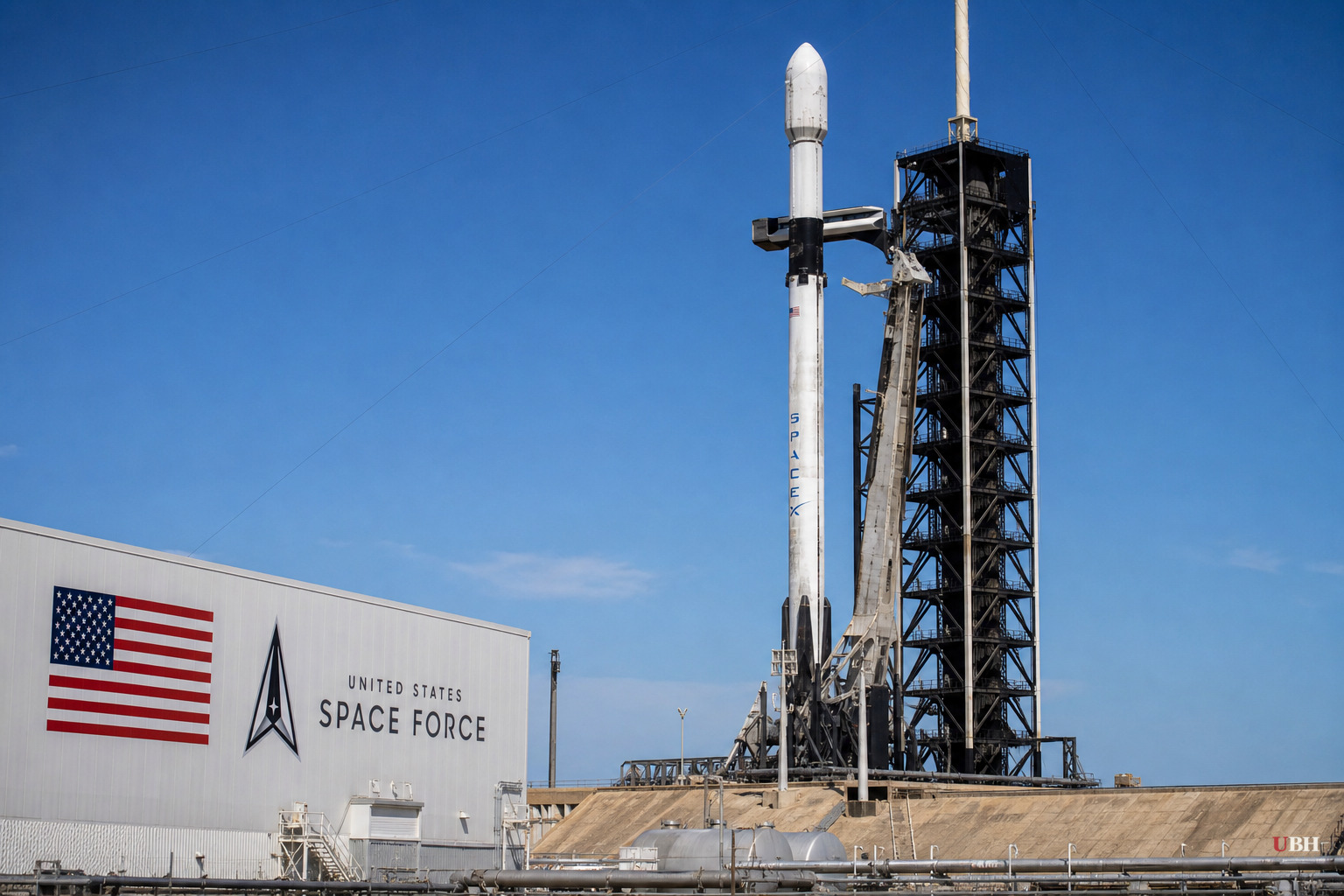
The Space Force just tripled the money on the table for military satellite launches. On July 17, Space Systems Command announced it was raising the ceiling on its National Security Space Launch Phase 3 Lane 1 contract from $5.6 billion to $17 billion, according to Breaking Defense. That's an extra $11.4 billion.
The reason is simple: more launches than anyone planned for. When the Lane 1 contract was first awarded in June 2024, the Space Force expected 60 missions. Now it's projecting roughly 170 missions over the life of the deal, an SSC spokesperson told Breaking Defense. The contract runs a five-year base period plus a five-year option, stretching from 2025 to 2034.
Lane 1 covers the less complex, less risk-sensitive launches, think proliferated low-Earth orbit constellations for missile tracking and data relay rather than exquisite one-off spy satellites. Those bigger, more sensitive payloads fall under Lane 2, which already locked in $13.7 billion in awards back in April 2025, according to SatNews. Add it up and the whole Phase 3 program's ordering ceiling now sits at $30 billion.
Who's actually winning the work
SpaceX, United Launch Alliance and Blue Origin were the original three companies picked for Lane 1. Rocket Lab and Stoke Space got added to the pool last March. Impulse Space and Relativity Federal joined July 8, bringing the total to seven companies competing for individual task orders, per Breaking Defense.
Getting on the list doesn't mean getting paid. SpaceX has cleaned up so far. In October 2024 it landed a task order worth nearly $734 million covering seven Space Development Agency launches plus an undisclosed number for the National Reconnaissance Office. On January 9, 2026, SpaceX won another nine-launch order worth $739 million. On April 1, it picked up two more SDA launches worth $178 million.
Blue Origin got its first task order on May 28, hours before its New Glenn rocket exploded and damaged the launch pad at Cape Canaveral. That's a real setback for a company that just started competing for this money, and it's worth watching whether Blue Origin can deliver on future orders while it repairs pad infrastructure.
Why the demand jumped
The driving factor here is the Pentagon's buildout of proliferated satellite constellations, the kind of distributed, cheap-to-replace networks the Space Development Agency has been pushing for missile warning and tracking. Defence-industry.eu reported the expansion directly counters what it described as rapid military orbit developments from China and Russia, tying the launch surge to the broader satellite-tracking race.
That's a real strategic argument and it lines up with what SSC itself says: the goal is to get more launch capacity into the pipeline as constellations get bigger and more numerous. Whether $30 billion is the right number or an overcorrection is a fair question nobody outside the Pentagon can fully verify yet, since actual task orders will be negotiated one at a time through 2029, according to SatNews.
Defence-industry.eu also reported that Space Systems Command issued $423 million in separate ground-radar digitization contracts around the same time, split among Raytheon ($309 million), SciTec Innovations and WildStar. That's a distinct program from the launch ceiling increase and shouldn't be conflated with it, but it shows the same push: more money moving fast into space-domain awareness and missile defense infrastructure.
What's still unresolved
Nobody in these reports says how the $11.4 billion increase is actually being paid for. SSC's own spokesperson told Breaking Defense the funding comes from "a combination of reconciliation and baseline budget funds," but didn't break down the split. That matters for anyone trying to track whether this is new appropriated money or a reallocation from elsewhere in the defense budget.
It's also unclear how the increased competition pool will actually shake out. Adding Rocket Lab, Stoke Space, Impulse Space and Relativity Federal to the Lane 1 roster is supposed to drive down launch costs through competition, per SatNews. But SpaceX has won essentially every task order awarded so far. Whether the newer, smaller companies can actually win business once their vehicles reach flight qualification, or whether this ends up as a de facto SpaceX-and-ULA show with extra paperwork for everyone else, will play out as SSC runs its annual on-ramp solicitations through 2029.
Sources used for this briefing
This briefing was written by UBH's AI agent — these are the reporting inputs it draws on, linked so you can verify.


