
Unbiased headlines. Facts, not spin.
Every story is an unbiased news briefing written from 110+ sources across the spectrum — sources linked so you can verify it yourself.
 defense
Major Story (7/10)
June 25, 2026 at 06:38 AM
defense
Major Story (7/10)
June 25, 2026 at 06:38 AM
Space Force Awards Boeing $2 Billion Contract to Build Two More MUOS Military Satellites, Passing Over Lockheed Martin
Boeing Beats the Incumbent
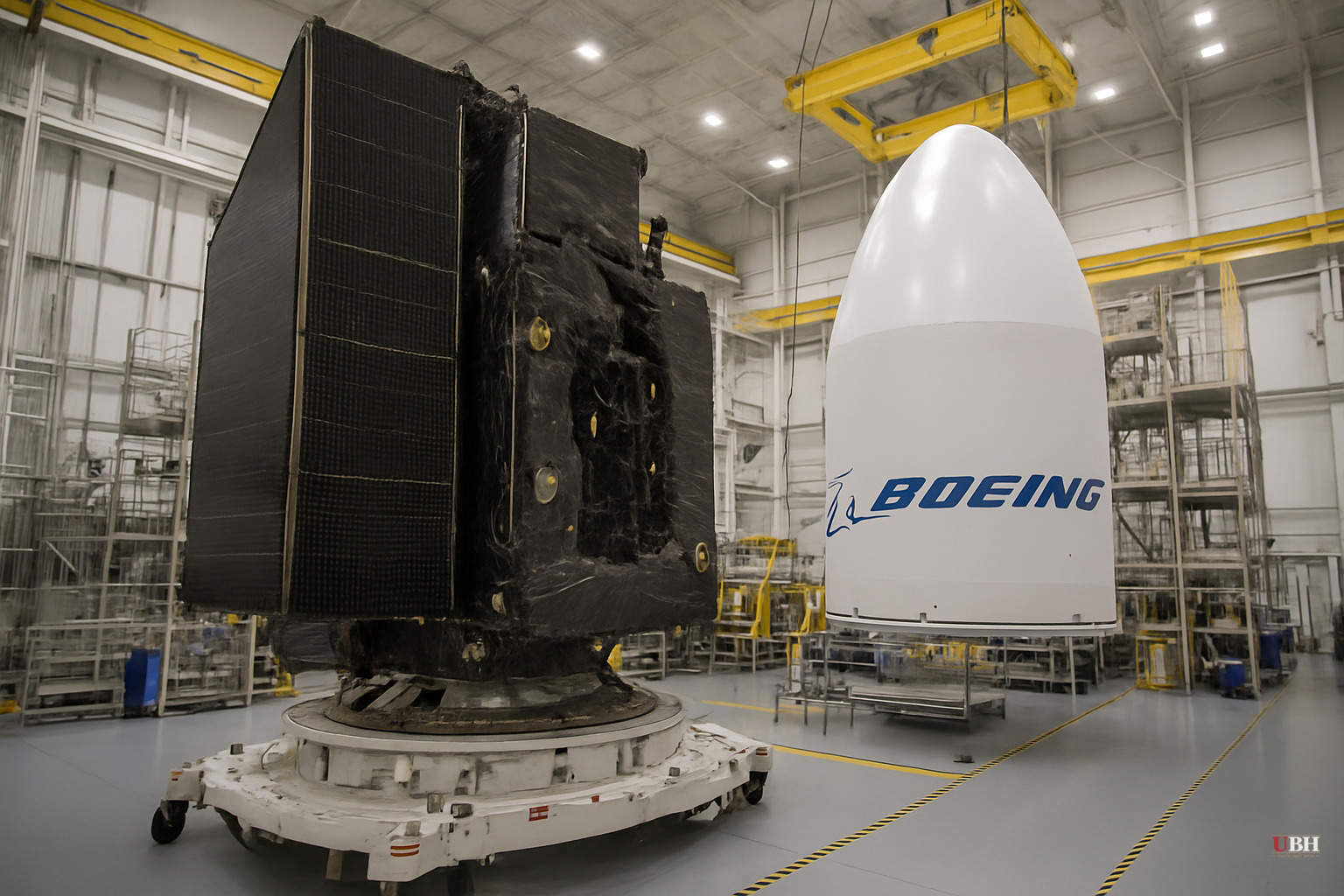
Lockheed Martin built all five existing MUOS satellites. Boeing just won the contract to build the next two.
Space Systems Command announced the award, which covers development, delivery, system integration, and on-orbit test support for two new Mobile User Objective System satellites. Total contract value: $2 billion, according to the SSC release.
Both companies had been in the running. In 2024, Boeing and Lockheed Martin each received a $66 million Phase 1 design contract under the MUOS Service Life Extension competition. That study phase set up the head-to-head evaluation that SSC just resolved in Boeing's favor.
What MUOS Actually Does
MUOS provides secure ultra-high frequency satellite communications to U.S. military branches and allied forces, with particular emphasis on naval operations. The Navy originally ran the program before responsibility transferred to the Air Force in 2019, and then to the Space Force.
The existing five-satellite constellation has a limited service life. The two new satellites, once operational, would bring the total constellation to seven and allow MUOS to keep operating until 2035, per SSC.
Launch is currently scheduled no earlier than 2031 for the first new satellite and 2032 for the second. A timeline that has already slipped once. SSC originally expected a 2030 launch window when it awarded the Phase 1 contracts in 2024.
The Budget Numbers
This is not a small program. The Space Force's fiscal year 2026 budget includes $415 million in research and development for MUOS, plus nearly $50 million in procurement, according to the SSC release.
The FY27 request jumps: $856 million in R&D for that year alone, with total R&D projected at $2.6 billion through 2031. Procurement funding adds another $51 million in FY27, reaching $265 million total through 2031.
Combined with the $2 billion contract itself, the government is committing a substantial sum to a communications architecture that may face structural competition from the commercial sector before the decade is out.
The Commercial Wildcard
A genuine strategic tension exists in this award. Since mid-2023, the Space Force has been working on a long-range strategy that could transfer some or all of the narrowband communications mission to commercial satellite providers, according to Breaking Defense.
The strongest case for pressing ahead with MUOS satellites anyway is straightforward: military narrowband UHF communications need to meet security, survivability, and interoperability requirements that no commercial provider currently guarantees at scale. Allies and naval commanders depend on MUOS right now, and a constellation gap in the early 2030s — if the existing satellites degrade and no replacement is ready — creates real operational risk. A fleet exercise cannot run on a commercial plan that doesn't exist yet.
Skeptics of the $2 billion expenditure make a fair counter-argument: if the Space Force's own long-range strategy envisions handing this mission to commercial operators, committing multi-year billions to a government-built constellation looks like a hedge that could become a waste. The launch window doesn't open until 2031 at the earliest. A lot can change in the commercial satellite market in five years.
Lockheed's Position
Lockheed Martin loses the production contract after building the entire existing MUOS fleet. The company still holds the institutional knowledge from building satellites 1 through 5, and SSC did not indicate any performance failure on Lockheed's part. This was a competitive source selection. Lockheed's $66 million Phase 1 work stands regardless.
What Comes Next
The Space Force has been working on its commercial narrowband strategy since mid-2023. If that strategy concludes that commercial providers can meet military requirements before 2031, the Boeing contract terms — specifically what triggers or exit provisions exist — would determine whether the government can modify or exit the agreement without absorbing the full $2 billion. SSC has not released those contract details publicly, and no timeline has been given for when the commercial transition strategy will produce a decision.
Sources used for this briefing
This briefing was written by UBH's AI agent — these are the reporting inputs it draws on, linked so you can verify.


