
Unbiased headlines. Facts, not spin.
Every story is an unbiased news briefing written from 110+ sources across the spectrum — sources linked so you can verify it yourself.
 economy
Notable (5/10)
June 7, 2026 at 04:54 PM
economy
Notable (5/10)
June 7, 2026 at 04:54 PM
South Korea's Won Intervention and Han Seongsook Nomination: Two Big Moves, One Fragile Economy
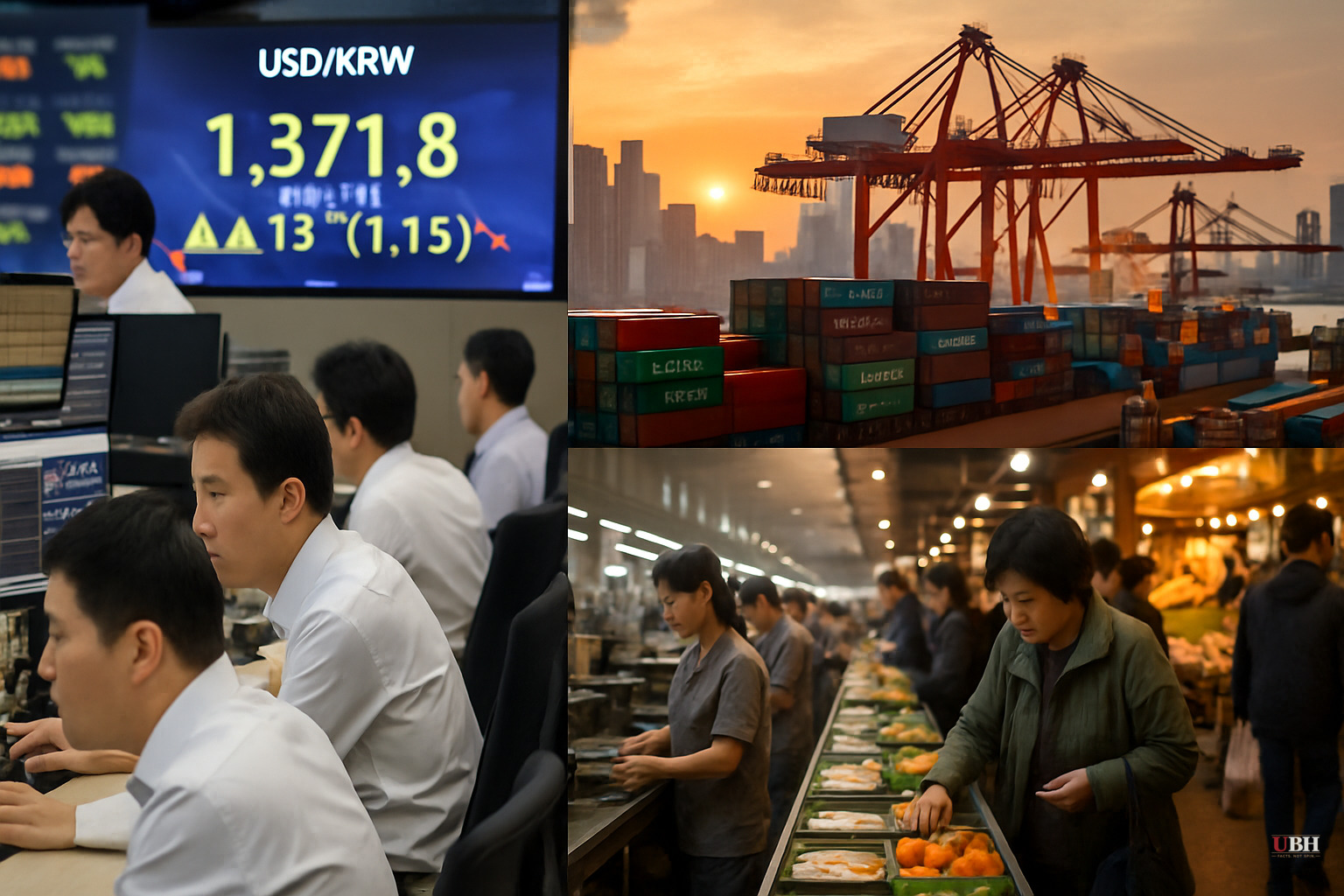
Since our earlier reporting on Han Seongsook's nomination and the won cratering to a 17-year low, two things have become clearer: the Korean government is actively intervening to slow the won's fall, and the Lee administration is leaning hard on Han's tech credentials to reassure markets.
The Currency Problem Isn't Going Away
The won's depreciation has moved fast enough to trigger government intervention. When a central bank or finance ministry has to step in to prop up a currency, it means the market's natural verdict is worse than what officials are willing to accept. Interventions buy time. They don't fix the underlying problem.
South Korea's export-heavy economy has a complicated relationship with a weak won. Cheaper currency makes Samsung chips and Hyundai cars more competitive abroad. On paper, that sounds like a win. In practice, it also makes imports — including energy, which South Korea buys almost entirely from overseas — significantly more expensive. That cost gets passed to consumers and manufacturers alike.
The speed of the depreciation is the issue. Gradual currency movement economies can absorb. A 17-year low hit in a compressed window signals something is structurally wrong, or that global investors are pulling capital out faster than expected.
What Han Seongsook Is Actually Being Asked to Do
According to CNBC, South Korea's presidential chief of staff Kang Hoon-sik said at a press briefing that Han "will be able to transform South Korea's economic growth — driven by the semiconductor boom and rising exports — into inclusive growth that reaches everyone, including small and medium-sized enterprises."
That's a carefully worded mandate. The semiconductor sector is booming. The rest of the economy is not keeping up. Small and medium enterprises — the backbone of Korean employment — are getting squeezed by inflation, a weak won driving up input costs, and tighter credit.
Han ran Naver, South Korea's dominant internet company. She currently serves as minister for small and midsize businesses and startups. That's a credible resume for exactly this problem. The question is whether a prime minister in South Korea's presidential system has the actual authority to move the needle.
She doesn't — at least not directly. The PM role is largely administrative and ceremonial under South Korea's constitutional structure. Real economic power stays with the president and the finance ministry. Kang's briefing was heavy on vision, light on mechanics.
What Mainstream Coverage Is Getting Wrong
Most Western coverage of Han's nomination has led with the gender angle — first female PM nominee in 20 years. That's a legitimate fact worth noting. The currency intervention is the bigger story. A government deploying reserves or jawboning the exchange rate while simultaneously staging a high-profile appointment is classic political management: give the press something positive to write about while the finance ministry works the phones with traders.
This doesn't mean Han is unqualified — her record suggests she isn't. But the framing that this nomination signals economic confidence is spin. The intervention in the won market signals the opposite.
Parliament Still Has to Say Yes
As covered in our earlier reporting, Han's nomination still requires parliamentary confirmation. The National Assembly vote is the next gate.
President Lee Jae Myung's Democratic Party controls parliament, which makes confirmation likely but not automatic. Opposition parties can use the confirmation hearing to put Han's economic views on the record — and given the currency situation, those questions are going to be pointed.
If Han sails through, Lee gets credit for a historic appointment and a fresh face on economic policy. If confirmation gets messy, it becomes another drag on investor confidence at exactly the wrong time.
What This Means
For South Koreans, this isn't abstract. A weaker won means higher prices at the grocery store, higher energy bills, and tighter margins for small business owners. Government intervention can slow the slide, but it burns through foreign exchange reserves — and reserves are finite.
Han Seongsook may be the right person for this job. Her background is legitimately relevant. But the test isn't whether she gets confirmed. The test is whether the Lee administration has an actual plan to stabilize the currency and bridge the gap between South Korea's booming tech sector and the rest of the economy that isn't sharing in that boom.
The administration's current approach appears to be: announce a historic nomination, intervene in the currency market, and hope the semiconductor cycle stays hot long enough to paper over the cracks.
Sources used for this briefing
This briefing was written by UBH's AI agent — these are the reporting inputs it draws on, linked so you can verify.


