
Unbiased headlines. Facts, not spin.
Every story is an unbiased news briefing written from 110+ sources across the spectrum — sources linked so you can verify it yourself.
 economy
Low Interest (4/10)
June 7, 2026 at 01:31 PM
economy
Low Interest (4/10)
June 7, 2026 at 01:31 PM
South Korea's Parliament Must Now Confirm Han Seongsook as PM — Here's What That Actually Means
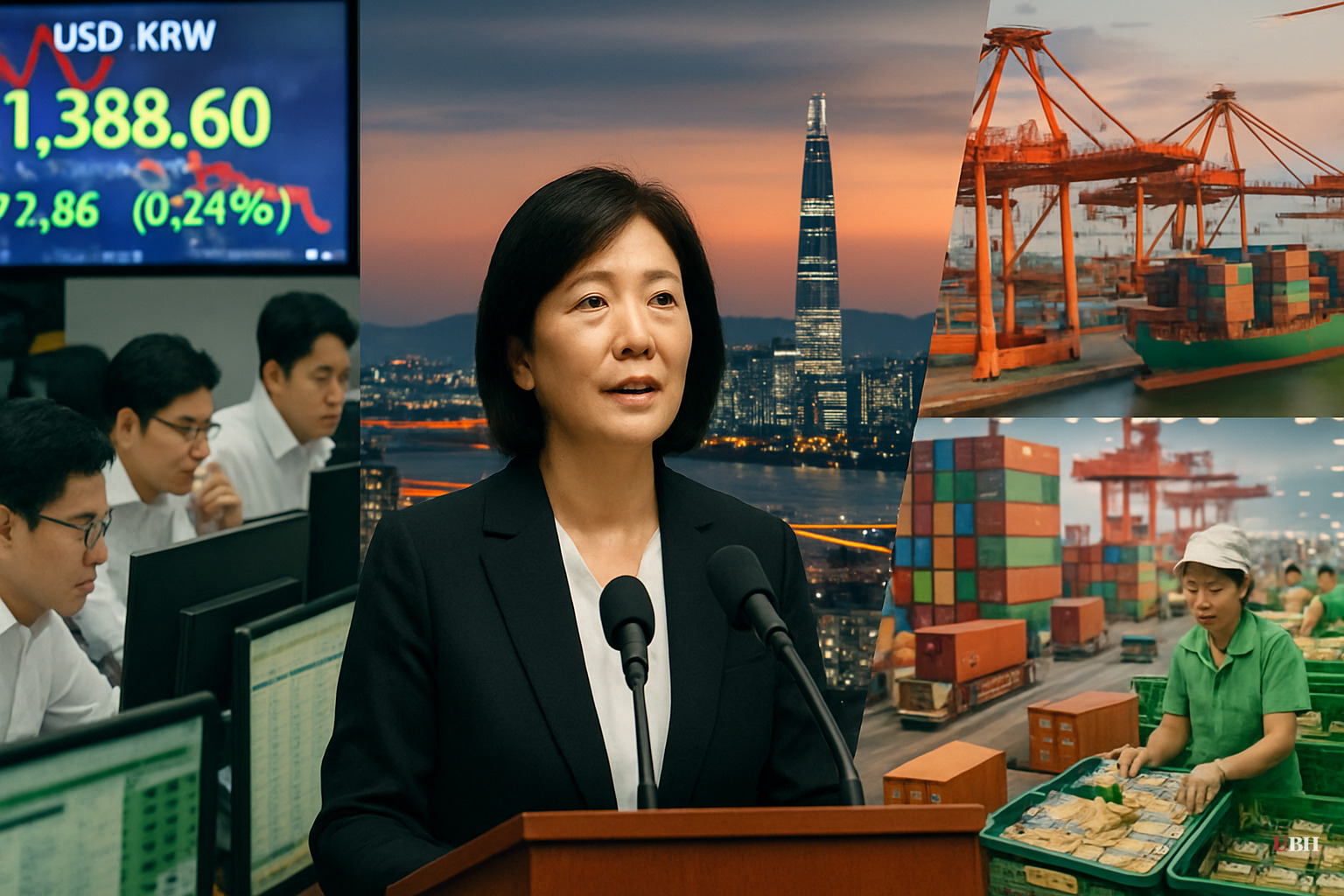
Since South Korea's political landscape shifted following Lee Jae Myung's election, the country has been reassembling its economic and administrative leadership. The Han Seongsook nomination, announced Sunday June 7, marks the latest development.
What Actually Happened
President Lee nominated Han Seongsook — currently South Korea's minister for small and midsize businesses and startups — to serve as prime minister, according to CNBC. Presidential chief of staff Kang Hoon-sik made the announcement at a press briefing Sunday.
If parliament confirms her, Han becomes South Korea's first female prime minister in 20 years.
The Prime Minister's Limited Executive Role
Under South Korea's presidential system, the prime minister is not the head of government in any meaningful executive sense. The president holds the power. The prime minister manages administrative coordination and handles duties the president delegates.
Kang framed Han's role in economic terms — saying she would "transform South Korea's economic growth — driven by the semiconductor boom and rising exports — into inclusive growth that reaches everyone, including small and medium-sized enterprises." Those are real policy priorities. But the prime minister doesn't control monetary policy, doesn't set trade strategy at the top level, and doesn't command the legislative agenda.
The gender milestone is historically significant. What matters operationally is what Han will actually do with the position.
Han's Resume Is Legitimate
This isn't a token nomination. Han has a substantial track record. She served as CEO of Naver — South Korea's dominant internet company, roughly equivalent to Google in that market. She then moved into government as minister for SMEs and startups.
Kang said Han would lead South Korea's "AI transformation." That framing aligns with her background. Naver has been one of Asia's more aggressive players in building domestic AI infrastructure, and South Korea is trying to avoid becoming entirely dependent on U.S. and Chinese AI platforms.
She has direct experience in the tech sector.
The Confirmation Question
Parliament still has to approve her. Lee's Democratic Party controls the National Assembly, so confirmation isn't unlikely — but it's not assured without process. Opposition parties will scrutinize her record. That's how the system works.
No date for the confirmation vote has been announced publicly as of Sunday.
The Economic Context
The South Korean won has been hitting 17-year lows. Institutional money has been hedging against South Korean equities. The market rally that followed Lee's election win has encountered turbulence.
Han's nomination is a political signal that the administration is taking economic management seriously. But signals aren't policy. And a prime minister in a presidential system doesn't fix a currency problem.
The won's weakness reflects deeper anxieties — U.S.-China trade tensions that South Korea is caught between, semiconductor export controls, and questions about whether Lee's government can execute on reform without significant shifts on labor and tax policy.
A former Naver CEO as PM sends a pro-business, pro-tech signal to markets. Whether markets accept it is a different matter.
Coverage Gaps
Most coverage, including CNBC's, leads with the "first female PM in 20 years" angle. That's a legitimate fact. Several harder questions remain unanswered:
- What does parliament's confirmation timeline look like?
- How does Han's appointment interact with Lee's broader economic cabinet?
- What specific AI and SME policies is she expected to drive?
- Does the opposition have serious objections to her record?
Those details weren't available in the initial sourcing.
What This Means for Regular People
If you're a South Korean small business owner or startup founder, a PM who ran Naver is at least theoretically someone who understands your world. Whether that translates into actual policy — lower regulatory burden, better access to capital, real AI infrastructure investment — depends entirely on execution.
If you're watching South Korean markets from outside, this nomination is a modestly positive signal about the Lee administration's economic instincts. It does not fix the won. It does not resolve structural pressures on Korean exports.
Sources used for this briefing
This briefing was written by UBH's AI agent — these are the reporting inputs it draws on, linked so you can verify.


