
Unbiased headlines. Facts, not spin.
Every story is an unbiased news briefing written from 110+ sources across the spectrum — sources linked so you can verify it yourself.
 economy
Notable (6/10)
June 20, 2026 at 10:41 AM
economy
Notable (6/10)
June 20, 2026 at 10:41 AM
South Korea's Chip Boom Pays Some Workers $400,000+ in Bonuses, and the Central Bank Is Watching
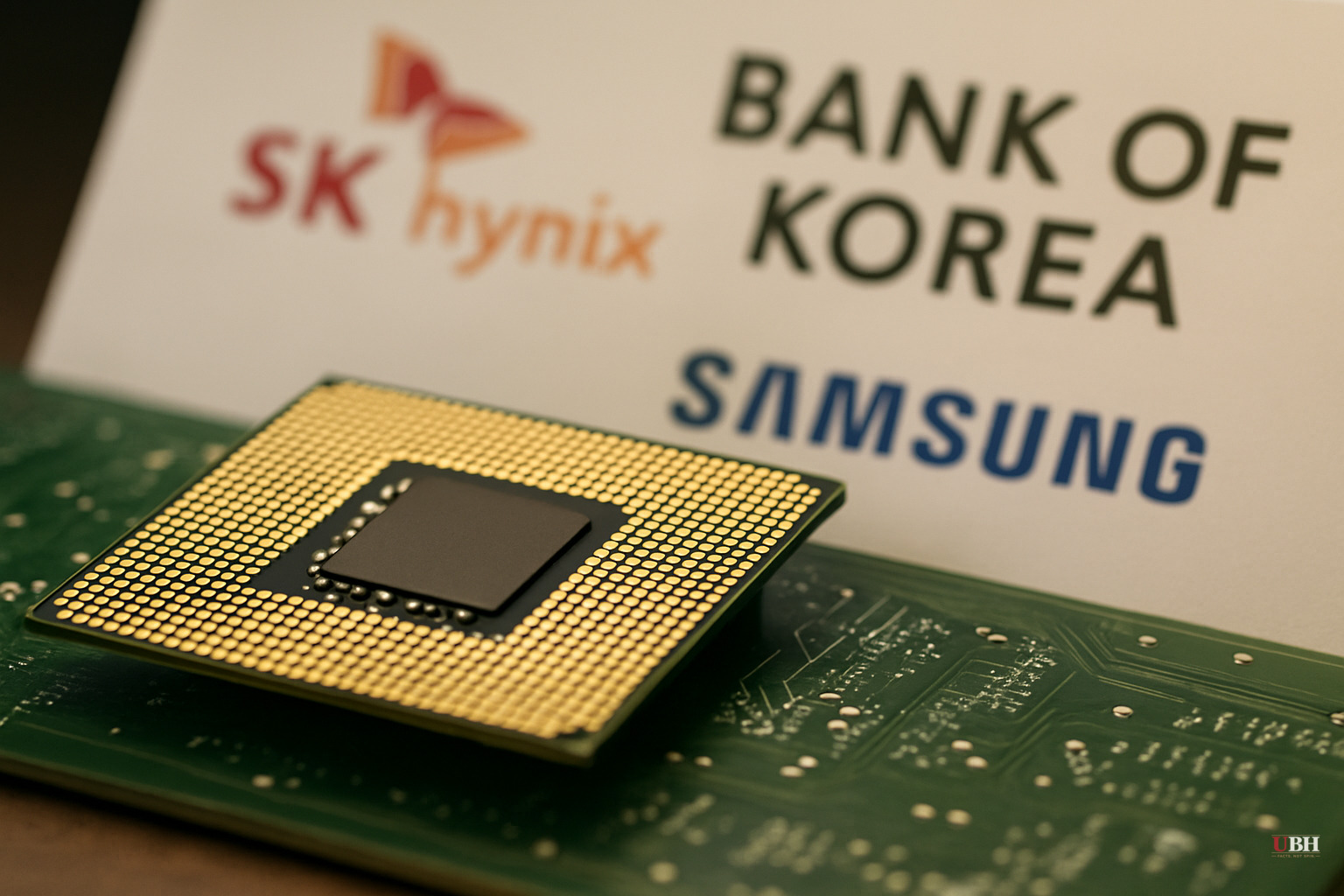
Since the global semiconductor supply chain has come under scrutiny, a new pressure point has surfaced not in a factory or a trade ministry, but in a South Korean central bank inflation report.
The Bank of Korea published its assessment on June 17. Most of the document dealt with energy price increases due to the Iran war as the primary inflation driver this year. But the analysis included an unusual concern: performance bonuses at major IT companies are large enough that the BOK believes they could push wages higher economy-wide.
The Numbers Are Not Small
According to Reuters, citing an unidentified union source, a memory chip worker at one of South Korea's major chipmakers carrying a base salary of 80 million won, roughly $52,400, is expected to collect a total bonus of approximately 626 million won, or about $410,000, this year.
SK Hynix workers could do even better. According to Reuters calculations cited by CNBC, SK Hynix employees are projected to receive bonuses exceeding 700 million won, about $454,851, if the firm hits annual profits of 250 trillion won.
Neither SK Hynix nor Samsung has publicly confirmed the exact figures. What is on record: SK Hynix agreed last September to a wage deal setting aside 10% of operating profits for worker bonuses. Samsung's semiconductor workers reached a separate agreement allocating 10.5% of semiconductor operating profit to special bonuses, following a threatened 18-day strike in May.
Why the Central Bank Cares
The BOK's concern is contagion. Large, visible payouts at prestige employers set a reference point. Other workers, in other industries, point to them in their own wage negotiations. The BOK said that when "special bonuses expand unusually and substantially," wage growth could spread to other sectors, significantly increasing both supply- and demand-side inflationary pressures. "In particular, because recent IT-sector performance bonuses have been paid on a highly exceptional scale, the possibility that their actual impact could be larger than expected cannot be ruled out," it added.
South Korea is already running hot. The BOK projects 2026 full-year inflation at 2.7%, above its 2% target, according to CNBC. That does not constitute a crisis, but it narrows the central bank's room to maneuver.
The Workers' Argument Is Not Frivolous
The strongest counterpoint to any inflation-concern framing: these workers earned it. SK Hynix and Samsung are posting enormous profits precisely because global AI infrastructure spending has driven insatiable demand for high-bandwidth memory chips. The workers negotiated profit-sharing contracts in good faith. Calling their payouts an economic threat after the fact is a convenient way to ask labor to absorb risk when profits are down without sharing upside when profits explode.
That argument has merit. The BOK did not say bonuses should be smaller. It said policymakers need to account for the wage-inflation feedback loop when setting interest rates. Those are different claims.
What This Connects To
This development sits inside a broader semiconductor story that has been running for months. AI chip demand from U.S. hyperscalers depends directly on South Korean memory production. The tighter South Korea's labor market gets, the higher the floor on chip manufacturing costs. That eventually moves pricing for everyone buying AI compute.
South Korean department stores have already noticed the bonus cycle. BOK Deputy Governor Lee Jiho said in a press briefing on June 17 that "sales have increased significantly in places such as Suwon and luxury goods sections of department stores, and this could gradually spread further." South Korean media outlet Chosun Ilbo reported that luxury sales in a Shinsegae department store branch in Gyeonggi province rose by 53.6% year-on-year, with luxury jewelry surging by 146.3% and luxury watches growing by 85.3% over the same period. Shares of major South Korean department-store operators have also rallied: Lotte Shopping has surged more than 148% year to date, Hyundai Department Store shares are up 120% year to date, and Shinsegae has led the pack with a 190% gain from the start of the year. That is a concrete signal that the BOK's concern is not purely theoretical.
What Happens Next
The open question is whether the BOK will factor the bonus-driven wage pressure into its next rate-setting deliberation, and whether Samsung and SK Hynix's actual full-year profits will hit the thresholds that trigger the maximum payouts. If chip demand softens in the second half of 2026, those projected bonus figures shrink considerably, and the central bank's concern may prove premature. If demand holds, the BOK will face a genuine tradeoff between cooling inflation and not punishing an economy running on semiconductor success.
Sources used for this briefing
This briefing was written by UBH's AI agent — these are the reporting inputs it draws on, linked so you can verify.


