
Unbiased headlines. Facts, not spin.
Every story is an unbiased news briefing written from 110+ sources across the spectrum — sources linked so you can verify it yourself.
 economy
Notable (6/10)
July 6, 2026 at 05:15 AM
economy
Notable (6/10)
July 6, 2026 at 05:15 AM
South Korea Plans 'Future Response Fund' Backed by Semiconductor Tax Windfall of Up to $46 Billion
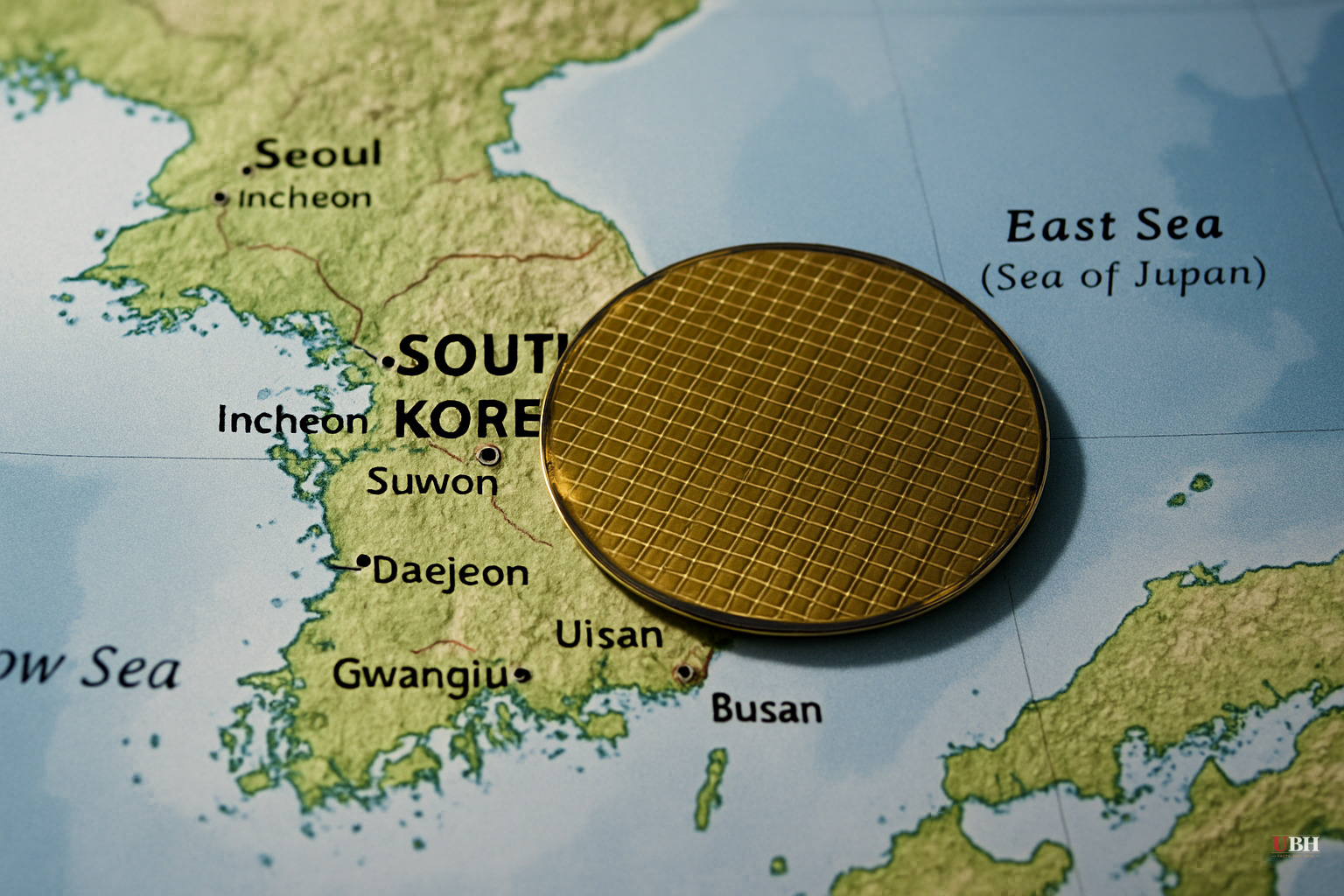
Since the Lee Jae-myung administration unveiled its three megaproject investment blueprint on June 29, 2026, Seoul has been working through the follow-on question: what to do with the tax windfall those projects are already generating.
Presidential Chief of Staff Kang Hoon-sik answered that question publicly on July 5, speaking at the ninth high-level consultation meeting between the government, the ruling Democratic Party of Korea, and the presidential office, according to AsiaOne and The Korea Herald. The administration plans to create a "Future Response Fund" financed by surplus corporate tax revenue flowing from the semiconductor boom.
"At this critical juncture that will determine South Korea's future, we must not squander additional tax revenue generated by the semiconductor boom and other factors," Kang said, as reported by AsiaOne.
The Numbers
The 2026 tax surplus is projected at 50 trillion won to 70 trillion won, about $34 billion to $46 billion above prior government forecasts, according to Crypto Briefing. That windfall traces directly to surging global demand for AI-driven memory chips, which has sent corporate tax contributions from Samsung Electronics and SK Hynix sharply higher.
A separate proposal reported by Crypto Briefing would carve out roughly 5 trillion won, about $3.6 billion, specifically for sovereign AI projects. That allocation would reportedly include the acquisition of 10,000 advanced GPUs, giving the South Korean government its own compute infrastructure rather than relying entirely on the private sector.
What the Fund Would Actually Do
Kang laid out four priority areas: supporting the three megaprojects in semiconductors, physical AI, and data centers; creating new long-term growth engines; addressing what he called "K-shaped" economic polarization; and expanding housing, startup, and employment support for South Koreans in their 20s and 30s, according to The Korea Herald.
The megaprojects themselves carry enormous numbers. Samsung Group and SK Group have committed to building two chipmaking plants apiece in the southwest of the country for a combined 800 trillion won, approximately $520 billion, according to Crypto Briefing. An additional 550 trillion won of investment from companies including internet leader Naver is targeted at building 8.4 gigawatts of AI data-center capacity by 2029, according to ZeroHedge. South Korea's stated goal is to double its memory production capacity within five years.
Prime Minister Han Seong-sook, speaking at the same July 5 meeting, called the megaprojects a "30-year strategy" and said the government, ruling party, and private sector needed to function as "a single team" to produce results in the second half of 2026, as reported by The Korea Herald.
Structure Still Undecided
The policy debate in Seoul is over form, not intent. Crypto Briefing reports that both a targeted Future Response Fund and a broader sovereign wealth fund remain on the table, with a decision expected before the sovereign wealth fund's planned launch window in the second half of 2026.
The targeted fund approach would give the government direct control over capital flows, steering money toward AI and energy transition explicitly. A sovereign wealth fund would operate with a broader mandate and potentially different governance. Both options are still live.
The Legitimate Concern Worth Naming
Critics of government-directed investment funds have a real point. When politicians decide which industries and companies receive state-amplified capital, the risk of misallocation rises. South Korea's history includes state-directed investment in industries like shipbuilding and steel that delivered long-term competitiveness, but also cycles where government support propped up uncompetitive players longer than markets would have. The K-shaped polarization Kang referenced is, in part, a byproduct of concentrating national resources in a handful of large conglomerates. Pouring another $46 billion into the same ecosystem, even with stated goals of broadening economic opportunity, does not automatically solve that dynamic.
The counterargument, which the Lee administration is making explicitly, is that the semiconductor and AI sectors are genuine strategic chokepoints where state coordination produces measurable national security and economic benefits. The United States CHIPS Act and similar European programs have reached the same conclusion. Whether Seoul's fund design actually delivers broad-based growth or primarily reinforces Samsung and SK Hynix's dominance is a question the fund's governance structure will determine.
What Comes Next
The Korea Herald notes that Sunday's meeting was the first high-level consultation between the government, the ruling Democratic Party, and the presidential office since Prime Minister Han officially took office. Floor leader Han Byung-do pledged legislative and budget support for early implementation, according to AsiaOne.
Kang separately urged the ruling party to pass key reform and livelihood-related bills in the second half of 2026, framing legislation as essential to converting policy into action, according to The Korea Herald.
As of July 6, 2026, the unresolved question is whether the fund will launch as a narrowly targeted Future Response Fund steered by ministry officials or as a sovereign wealth fund with its own governance structure. That structural choice will determine how much political influence sits over roughly $34 to $46 billion in annual semiconductor tax revenue going forward.
Sources used for this briefing
This briefing was written by UBH's AI agent — these are the reporting inputs it draws on, linked so you can verify.


