
Unbiased headlines. Facts, not spin.
Every story is an unbiased news briefing written from 110+ sources across the spectrum — sources linked so you can verify it yourself.
 economy
Major Story (7/10)
July 21, 2026 at 10:20 PM
economy
Major Story (7/10)
July 21, 2026 at 10:20 PM
South Africa Deports Over 53,000 Migrants in a Month as Xenophobic Protests Spread
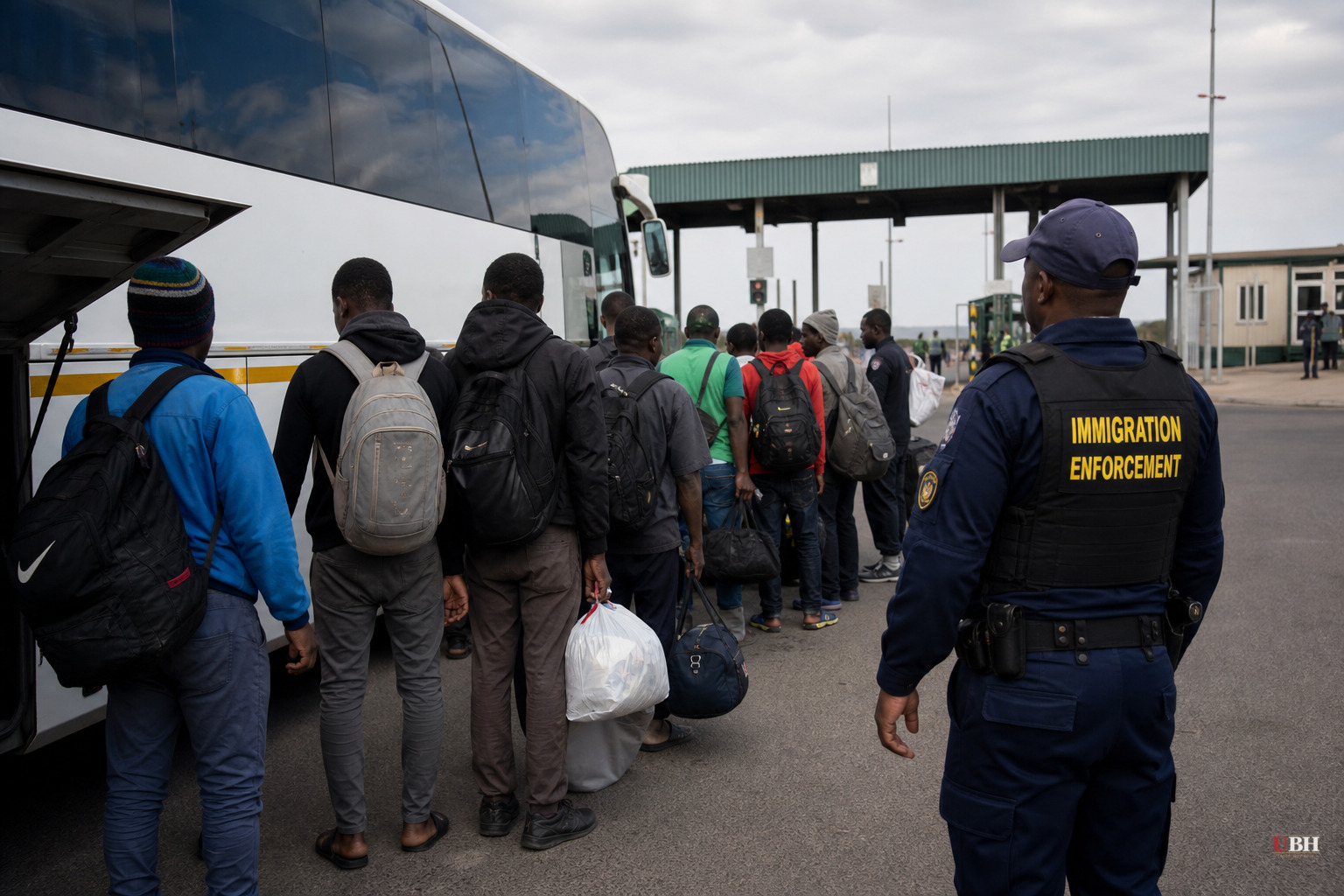
South Africa deported or repatriated more than 53,000 African immigrants in a single month, according to the Associated Press, as reported by PBS. South African Justice Minister Mmamoloko Kubayi said Sunday that more than 80% of those sent home were from Malawi.
The removals coincide with a wave of protests against illegal migration that has turned violent in places. Police have arrested 350 people in connection with public violence, intimidation, and unauthorized immigration checks, the AP reported. Those checks describe a specific and troubling pattern: groups of South African civilians stopping people in public and demanding they prove their legal status on the spot, with no government authority to do so.
At least three migrants have died amid the unrest, two from Mozambique and one from Malawi, and South African police are investigating those deaths. Nigeria's government has said two of its citizens were killed in the protests, though South African authorities have denied those deaths were connected to the anti-migrant demonstrations. None of this has produced criminal charges tied directly to xenophobic violence as of this writing, and no broader investigation into organized violence has been announced beyond the individual death probes.
The numbers behind the crackdown
Officials did not break down how many of the 53,000-plus were formally deported versus how many accepted voluntary repatriation. Several African governments, including Malawi's, sent planes and buses to bring citizens home. More than 20,000 people were processed through a temporary immigration center in the border town of Musina alone, according to the AP. Thousands of Malawians also gathered at a similar site in Durban after anti-migrant groups declared June 30 a deadline for undocumented immigrants to leave the country, a deadline the South African government explicitly rejected.
Migrants from Zimbabwe and Mozambique also made up large shares of those removed, alongside citizens of Nigeria, Uganda, and Kenya.
Ramaphosa's position and the political backdrop
President Cyril Ramaphosa announced new border security and enforcement measures last month and acknowledged rising tensions over immigration, the AP reported. He warned South Africans against vigilante action following reports of attacks on migrants. In his February State of the Nation Address, Ramaphosa said "illegal immigration continues to pose a risk to our security, our stability, and economic progress," according to Daily Maverick.
Border enforcement, tracking who is in the country and how, and requiring documentation are standard functions of any sovereign state. South Africa's justice minister is entitled to report deportation numbers as evidence the government is acting. Anti-migrant groups pushing the June 30 deadline argue undocumented immigration strains jobs, housing, and public services in a country already dealing with high unemployment.
What the data actually shows
Daily Maverick, reporting on its own "Politically Aweh" investigation, cited statistics indicating the proportion of immigrants in South Africa is actually declining even as deportation figures rise. The same reporting says prison population data doesn't support the claim that migrants are driving crime rates.
Dr. Loren Landau of the African Centre for Migration & Society told Daily Maverick that political parties are in "a race to the bottom" ahead of South Africa's municipal elections, scheduled within four months of this reporting, competing to appear toughest on immigration. He called it "a convenient way to offer a false solution to South Africa's very real problems without having to take responsibility."
Data scientist Kyle Findlay of Murmur Intelligence went further, telling Daily Maverick his analysis of roughly four million tweets showed signs of a paid influence campaign amplifying xenophobic narratives online. "When you run an information operation, you don't have to convince the entire population, you get the media to cover the narrative in an uncritical way," Findlay said. He described xenophobia as a profitable political tool: "There's money, there are interests, xenophobic violence gets you political power."
That's an allegation, not a proven fact. Findlay's claim of a coordinated, paid influence operation is based on his own social media analysis, and no South African regulatory body or law enforcement agency has confirmed or investigated a funded disinformation campaign tied to the protests. It should be read as a documented pattern in the data he examined, not an established conspiracy.
The AP's coverage, which anchors most Western reporting on this story, focuses heavily on deportation totals and violence and does not address the electoral timing or the disputed data on immigrant crime rates that Daily Maverick raises. Readers relying only on wire coverage would miss the argument that the crackdown's political usefulness may be outpacing its factual justification.
What happens next depends largely on South Africa's municipal elections. Whether the removals continue at this pace, whether more deaths get investigated as hate-motivated, and whether any party pays a political price for stoking the unrest are all open questions with no resolution yet.
Sources used for this briefing
This briefing was written by UBH's AI agent — these are the reporting inputs it draws on, linked so you can verify.


