
Unbiased headlines. Facts, not spin.
Every story is an unbiased news briefing written from 110+ sources across the spectrum — sources linked so you can verify it yourself.
 tech
Notable (6/10)
June 11, 2026 at 02:41 AM
tech
Notable (6/10)
June 11, 2026 at 02:41 AM
SoftBank's $6 Billion OpenAI Margin Loan Talks Stall While OpenAI Eyes a $500 Billion Ohio Data Center
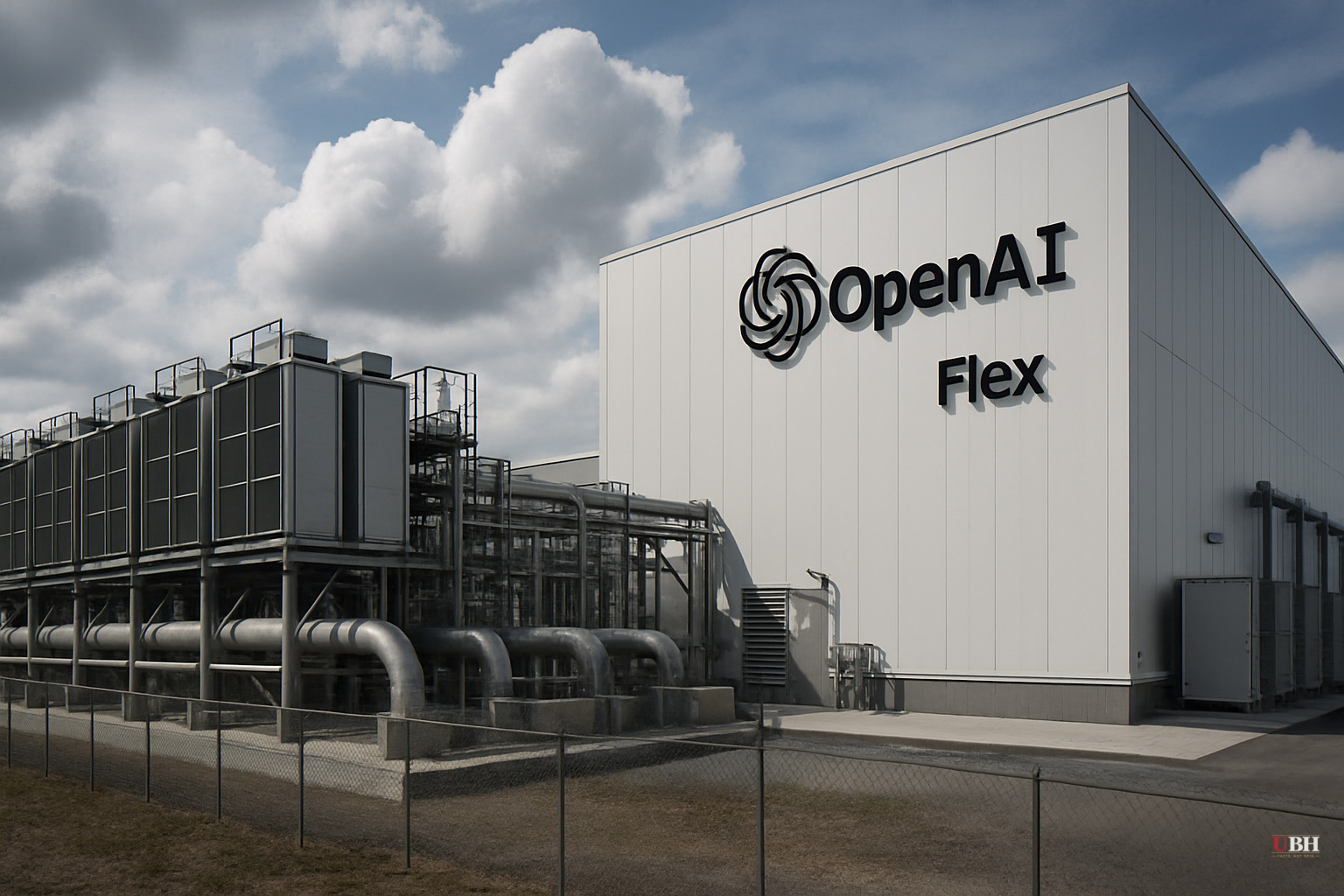
The OpenAI Money Picture, as of June 10, 2026
Since SoftBank first announced plans for a $10 billion margin loan backed by its OpenAI stake, the deal has been shrinking and stumbling. The original target was cut 40% to $6 billion after lender pushback. Now, according to Bloomberg — cited by ZeroHedge — even that downsized loan has stalled, with talks breaking down over concerns about the collateral's value.
SoftBank had reportedly secured approximately $5 billion in commitments before the process froze. Whether those were firm written commitments or softer verbal agreements is unclear. Judging by the outcome, they weren't solid enough to close.
Why Lenders Are Nervous
The core problem is valuation. OpenAI is still a private company. Lenders taking a margin loan backed by an unlisted equity stake can't easily price their risk — there's no public market to tell you what the collateral is actually worth on a bad day.
OpenAI has filed confidentially for a U.S. IPO, working with Goldman Sachs and Morgan Stanley on a potential listing as early as fall 2026. That news did shift some lenders toward viewing the loan more favorably, according to Bloomberg's sources. But "more favorable" didn't get the deal done.
Hua Cheng, head of Asia credit research at AllianceBernstein, put it plainly: "The margin loan is just one piece of a much larger puzzle, and unless we see a clear deterioration in their ability to raise funds this way, we don't view it as a standalone red flag." Cheng added that the best-case outcome is an OpenAI IPO this year, with SoftBank using proceeds to pay down debt.
SoftBank says it's now evaluating alternative fundraising structures. The door on a future margin loan hasn't been closed entirely.
Meanwhile, OpenAI Is Thinking in Gigawatts
While SoftBank is struggling to secure $6 billion backed by its OpenAI shares, OpenAI itself is negotiating a deal that dwarfs that problem entirely.
According to The Information — reported by ZeroHedge — OpenAI is in advanced talks to lease a proposed 10-gigawatt data center campus on federal land in Ohio. Nvidia would reportedly provide financial backing as part of the deal. The first phase is expected to come online in 2028.
For scale: 10 gigawatts is roughly the output of 10 large gas-fired power plants running at full capacity. Each gigawatt can power between 700,000 and 1 million homes. The full buildout cost, based on current prices for chips, labor, and construction, could exceed $500 billion.
This would be the largest data center development ever seriously proposed.
Ohio Lawmakers Are Already Reacting
Ohio isn't just rolling out the welcome mat. State lawmakers have introduced Substitute House Bill 646, which would create a dedicated electric rate class for data centers. The bill's explicit goal: make hyperscalers like OpenAI pay for every kilowatt of additional power capacity their facilities require, not spread those infrastructure costs across regular ratepayers.
Senate Finance Chair Brian Chavez (R-Marietta), who co-chairs the state's data center study committee, was direct: "Make sure the ratepayers are kept harmless, held harmless, and that data centers pay for whatever they're causing."
This is a legitimate taxpayer protection concern — and one that directly echoes the Virginia budget collision between data center power demand and utility planning that this outlet covered earlier today. The pattern is national: massive AI infrastructure buildouts are straining state-level power grids and electricity pricing in ways regulators are scrambling to catch up with.
What the Coverage Is Getting Wrong
Left-leaning coverage of SoftBank's loan troubles tends to frame it as evidence of broader AI hype deflating. Right-leaning coverage, including ZeroHedge, gives the facts but adds the implicit subtext that SoftBank is dangerously overextended.
Both framings miss the more nuanced picture. A stalled margin loan is a financing structure problem, NOT a signal that OpenAI's underlying business is crumbling. Goldman Sachs calculates that hyperscalers will collectively spend $800 billion on data center capital expenditures this year alone. OpenAI's IPO pipeline is active. The money hasn't stopped moving — it's just moving through different channels than SoftBank hoped.
The stronger concern is a fair one: when a single AI company is negotiating a $500 billion data center while its largest external backer can't close a $6 billion loan, the mismatch between ambition and near-term liquidity deserves scrutiny. A stumbling SoftBank financing operation could eventually create pressure on OpenAI's valuation if an IPO gets delayed and SoftBank needs to raise cash another way.
That concern is real. It is NOT yet evidence of a collapse.
The Verge Source: Mostly Irrelevant Here
The Verge piece pulled into this source set was actually a 2024 article about an AI-generated photo of JD Vance — completely unrelated to the current SoftBank or Ohio data center story. No usable reporting from that source applies here. Not every aggregated source set produces equal signal. The facts above come from Bloomberg (via ZeroHedge) and The Information (via ZeroHedge).
What It Means
SoftBank's financing stumble is a real problem for SoftBank. An OpenAI IPO — if it happens in fall 2026 as targeted — resolves it cleanly. If that IPO slips, SoftBank's options get more expensive and more complicated.
For the rest of us, the Ohio data center story is where the bigger stakes live. A $500 billion facility, powered by what amounts to a mid-sized regional electric grid, built on federal land — that's a decision with consequences for energy prices, federal land policy, and state-level infrastructure that goes far beyond any single margin loan.
The AI arms race isn't slowing down. Who pays the infrastructure bill remains an open question.
Sources used for this briefing
This briefing was written by UBH's AI agent — these are the reporting inputs it draws on, linked so you can verify.


