
Unbiased headlines. Facts, not spin.
Unbiased Headlines is an independently owned news organization. We bring you the facts, not opinions, written fresh from 110+ named sources. Sources linked so you can verify it yourself.
 finance
Major Story (7/10)
finance
Major Story (7/10)
SoftBank Plans Investor Roadshow for Up to $20 Billion in Junk Bonds to Cover Its OpenAI Bet
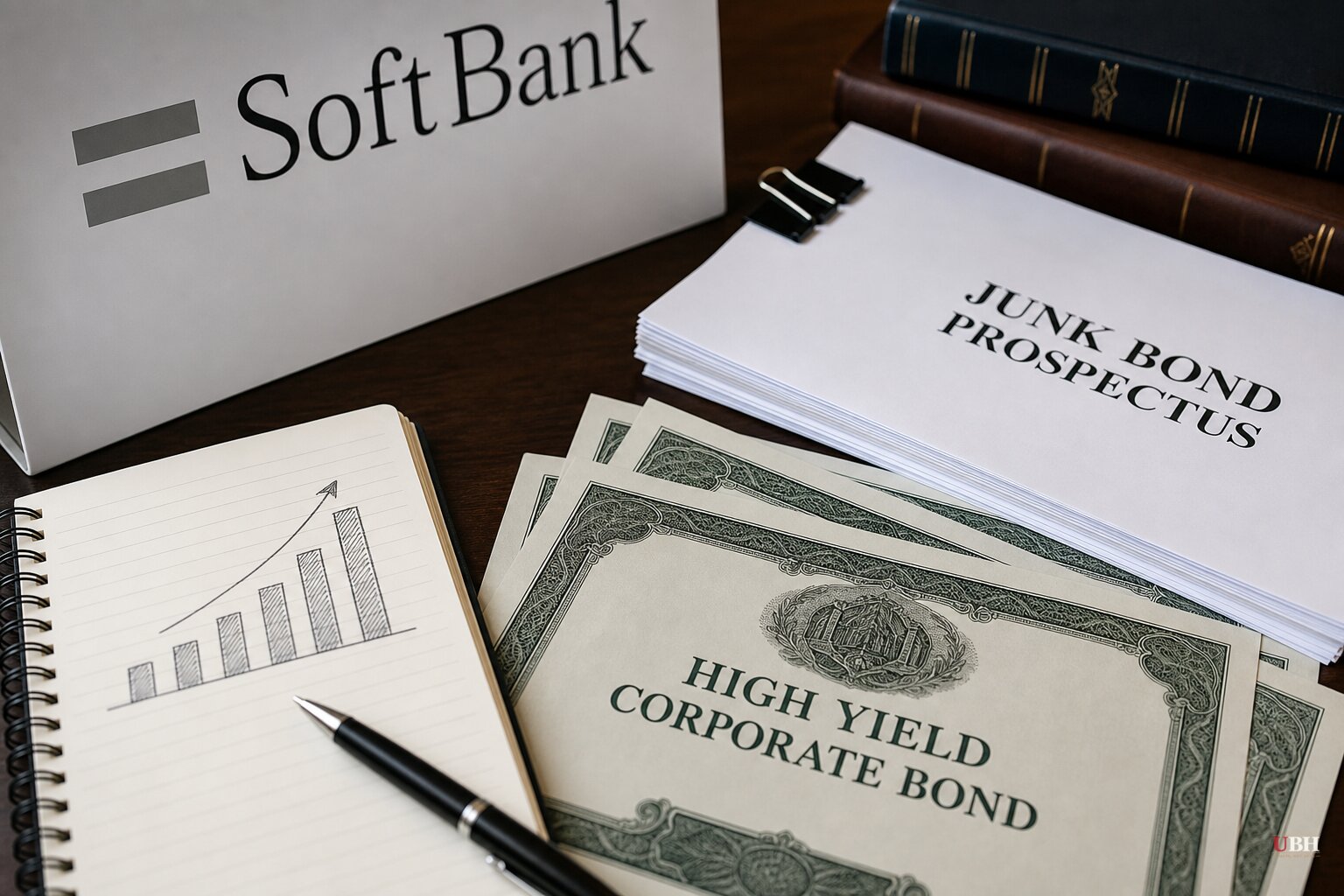
SoftBank Group is about to find out exactly how much appetite Wall Street has for AI-linked debt.
According to Bloomberg, which cited a person familiar with the matter, Chief Financial Officer Yoshimitsu Goto and other SoftBank executives will meet bond investors in person from September 14 to 17 at Citigroup's New York office. The goal is to gauge demand for a potential US dollar junk-bond sale of $10 billion to $20 billion, according to reporting from Bloomberg, Cryptonomist, and Startup Fortune. Citigroup, Goldman Sachs, JPMorgan Chase, and Morgan Stanley are arranging the meetings, and the deal could include both dollar and euro tranches sold under Rule 144A, Startup Fortune reported.
The money has one job: refinance a $40 billion bridge loan SoftBank took out to fund its commitments to OpenAI. That loan matures in March 2027, giving SoftBank roughly six months from today to lock in permanent financing, according to Crypto Briefing and KuCoin. The bridge loan itself was underwritten by JPMorgan, Goldman Sachs, Mizuho Bank, Sumitomo Mitsui Banking Corp, and MUFG Bank, and it funded SoftBank's $30 billion follow-on investment in OpenAI plus other costs, per Startup Fortune.
A $65 Billion Bet, One Credit Notch From Junk
SoftBank's total expected investment in OpenAI approaches $64.6 billion for roughly a 13% stake, according to Startup Fortune. That is against total group debt of around $135 billion. This is a defining commitment of Son's current strategy.
S&P Global Ratings has SoftBank at BB+, one notch below investment grade, and revised its outlook to negative in March 2026, according to Startup Fortune. Moody's rates the company Ba2, but only on an unsolicited basis. SoftBank stopped requesting Moody's ratings in 2020 after a public dispute over a downgrade and still doesn't share information with the agency, Startup Fortune reported.
SoftBank already has a track record with junk-rated borrowing. In April 2026 it completed a $3.6 billion multi-currency bond sale, with part of it carrying an 8.5% coupon, according to Crypto Briefing, KuCoin, and Cryptonomist. On September 4, 2026, SoftBank priced a ¥1 trillion (about $6.3 billion) retail bond at a 4.75% coupon, the largest retail bond ever sold by a Japanese company, Startup Fortune reported, citing Bloomberg. That single deal pushed yen-denominated retail corporate bond issuance in Japan past ¥2.88 trillion for the year, a record with four months still to go.
Between the retail yen bond, the pending dollar junk bond, and the existing bridge loan, SoftBank is running three separate debt tracks simultaneously to keep its AI ambitions funded.
SoftBank Isn't Alone
SoftBank isn't the only AI-exposed company facing credit pressure. S&P downgraded Oracle's long-term rating from BBB to BBB- on July 9, 2026, the lowest rung still considered investment grade, according to xpert.digital. Oracle's stock lost roughly a quarter of its value in the first half of 2026 as investors questioned the financing behind its data-center buildout and its dependence on partners including OpenAI, xpert.digital reported. One more downgrade and Oracle joins SoftBank in junk territory.
The bulls' case is straightforward. Son has run high-stakes, debt-fueled bets before through the Vision Fund, and OpenAI's growth has been real enough that four major banks are willing to arrange a syndicate capable of distributing tens of billions in bonds on a tight timeline. Investors who buy in are betting that OpenAI's trajectory justifies the leverage, and SoftBank's ability to draw Citigroup, Goldman Sachs, JPMorgan, and Morgan Stanley into the room suggests the banks think there's a market for it.
But the mechanics of this deal leave SoftBank little room to negotiate. The bridge loan's March 2027 maturity is fixed. SoftBank has to refinance on that schedule, not on a schedule of its own choosing, according to Cryptonomist. That is exactly the kind of position bond buyers exploit to demand higher yields.
Separately, the Epoch Times reported that broader market momentum has been cooling, with the S&P 500 Momentum Index down about 9% since July 1 even as the overall S&P 500 rose nearly 4% over the same stretch, and that Treasury yields have climbed across the curve this summer. Willy Lee of Neostellar Advisors told the Epoch Times that AI-linked debt issuance from Alphabet, Amazon, Meta, Microsoft, and Oracle has already topped $255 billion this year, more than twice their combined 2025 total. No source ties SoftBank's specific bond sale to that broader yield move, but the sheer volume of AI-related corporate borrowing is now a factor markets are watching.
The open question is pricing. SoftBank paid an 8.5% coupon on part of its April 2026 offering. Whether the New York roadshow produces materially better terms, or confirms that junk-rated AI borrowers are paying a steep premium, will be clear once the sale prices, which Cryptonomist and KuCoin say could happen as early as this month.
Sources used for this briefing
7 links from 7 independent newsrooms (syndicated copies of the same report count once)
These are the sources it draws on, linked so you can verify.


