
Unbiased headlines. Facts, not spin.
Every story is an unbiased news briefing written from 110+ sources across the spectrum — sources linked so you can verify it yourself.
 economy
Major Story (7/10)
July 16, 2026 at 05:05 PM
economy
Major Story (7/10)
July 16, 2026 at 05:05 PM
Social Security's Trust Fund Runs Dry in 2032. Senators Elected This November Will Be in Office When It Happens.
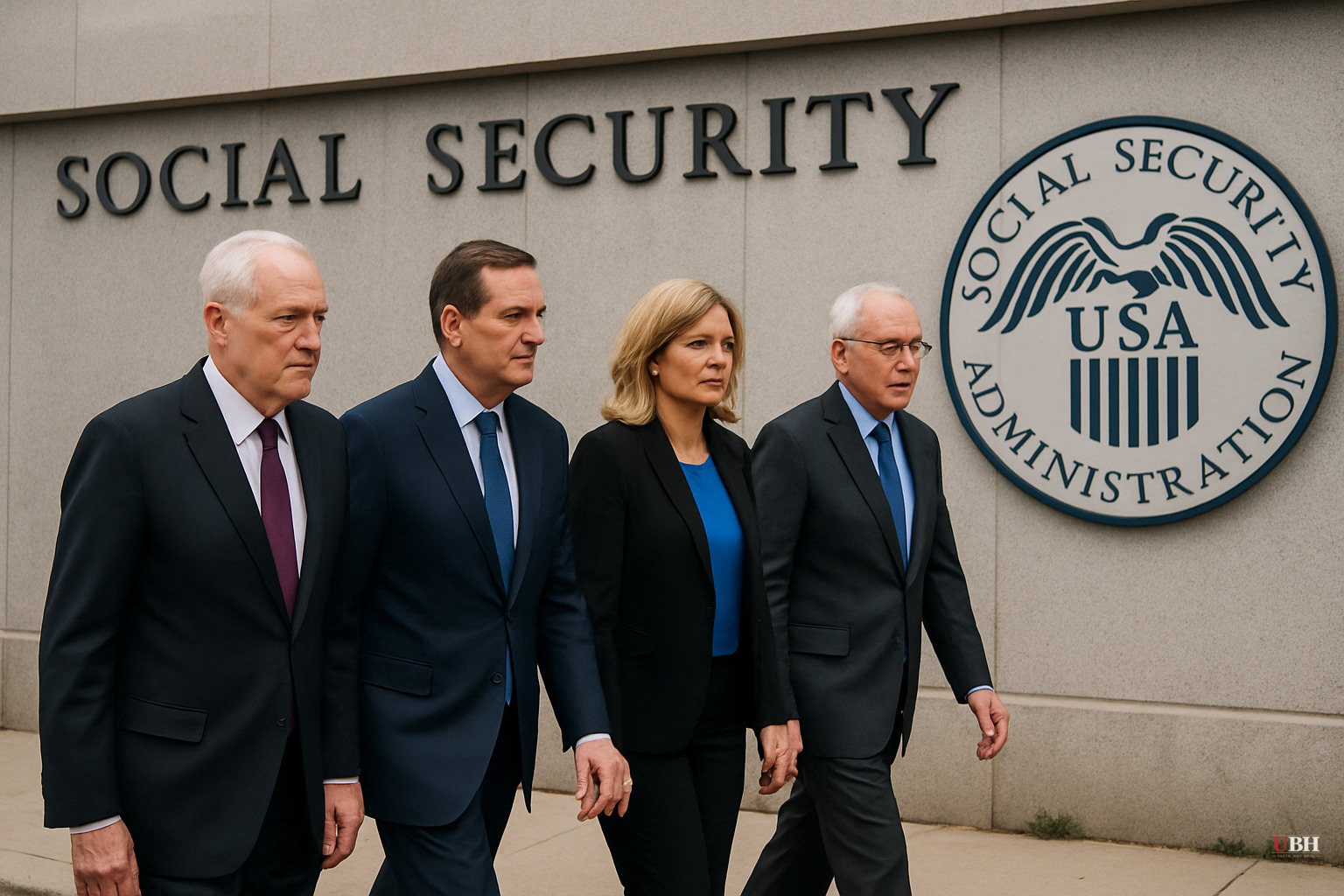
Do the math. Senators elected this November take office January 3, 2027, and serve through January 3, 2033. Social Security's Old-Age and Survivors Insurance trust fund is projected to run out in 2032, according to the Social Security Board of Trustees' annual report. Every senator elected this fall will be sitting in office when that happens, unless something changes first.
When Social Security's trust fund depletes, the program doesn't vanish. It keeps collecting payroll taxes and keeps paying benefits. But it can only pay out what it collects. Once the trust fund hits zero, the program can cover roughly 78 percent of scheduled benefits, according to the trustees' report cited by the Peter G. Peterson Foundation. That's an automatic 22 percent cut, across the board, for retirees, widows, disabled workers, everyone. Newsweek reported the figure as "roughly 20 percent," a rounding difference from the trustees' more precise 22 percent number, but the substance is the same: a sudden, across-the-board reduction with no carve-outs for the poor or the sick.
This isn't a hypothetical the way it was a decade ago. According to Reason, this year's trustees report moved the depletion date a full year earlier than last year's projection. The clock is accelerating, not stabilizing.
For an average retired couple, the Bipartisan Policy Center estimates that translates to a $10,600 annual cut, according to the Peterson Foundation. That's not a rounding error in a household budget. That's rent, or six months of groceries, or the difference between covering a medical bill and not.
A bipartisan bill that doesn't actually fix anything
On July 14, 2026, five senators, Tim Kaine (D-VA), Dick Durbin (D-IL), Bill Cassidy (R-LA), Thom Tillis (R-NC), and Angus King (I-ME), introduced the Protecting Retirement Opportunities and Maintaining Income Security for Everyone (PROMISE) Act, according to a statement from Kaine's office.
The bill doesn't raise taxes. It doesn't cut benefits. It doesn't change eligibility. According to Newsweek's reporting, it creates a bipartisan Social Security Advisory Board tasked with drafting a 50-year solvency plan, and then forces Congress to actually vote on that plan instead of letting it die in committee like every other Social Security reform bill for the past decade.
Durbin put it bluntly in the joint statement: "Congress has known about this challenge for more than a decade, but it has not taken up these politically challenging issues. And the longer Congress waits, the more difficult it will be to address this issue in the future."
Cassidy made the stakes plain too: "The modest reforms Congress contemplated in 2010 would have put Social Security on solid footing for 75 years; today, those same reforms would add less than two years to our current runway."
The cost of a decade and a half of nobody wanting to touch this is steep. The menu of easy options is gone. What's left are hard choices, and they get harder every year Congress punts.
The "just tax the rich" fix falls short
Some lawmakers, including Sens. Bernie Moreno (R-Ohio) and Elizabeth Warren (D-Mass.), have floated eliminating the cap on payroll taxes as a clean solution, according to Reason. It's a real, legitimate policy option worth debating. Scrapping the taxable maximum only closes 58 percent of the funding gap, according to analysis from the Mercatus Center's Jack Salmon cited by Reason, using Social Security's own actuarial data.
National Review's Ramesh Ponnuru has noted it would push the federal marginal rate on top wages to roughly 49.4 percent, with combined rates topping 60 percent in high-tax states like California and New York. That's a real tradeoff voters deserve to hear about, not a magic wand.
There's also a genuine, good-faith argument for protecting current retirees no matter the cost. According to Reason, 89 percent of Americans 65 and older favor protecting current benefits even if it means higher taxes on younger workers. That's not an unreasonable position from someone who paid into the system their entire working life and is now living on a fixed income. The concern deserves to be taken seriously, not dismissed as selfishness.
But the data on how reliant seniors actually are on Social Security is murkier than it looks. A March 2025 government survey found 24 percent of seniors said Social Security supplies 90 percent or more of their income, according to Reason. When Census Bureau researchers cross-checked those self-reports against IRS filings and benefit records, the real figure dropped to about 14 percent, because retirees routinely under-report 401(k) and IRA withdrawals. Separately, 58 percent of retirees draw less than half their income from the program. That still leaves 42 percent of retirees who are genuinely dependent on Social Security for most of their income, and any reform has to protect them first.
What happens next
The PROMISE Act doesn't pick a fix. It picks a process.
Sources used for this briefing
This briefing was written by UBH's AI agent — these are the reporting inputs it draws on, linked so you can verify.


