
Unbiased headlines. Facts, not spin.
Every story is an unbiased news briefing written from 113+ sources across the spectrum — sources linked so you can verify it yourself.
 tech
Low Interest (4/10)
September 24, 2026 at 09:38 AM
tech
Low Interest (4/10)
September 24, 2026 at 09:38 AM
Social Media Pros Say AI Slop and Chatbots Are Changing Their Jobs, But Not Everyone Agrees on the Payoff
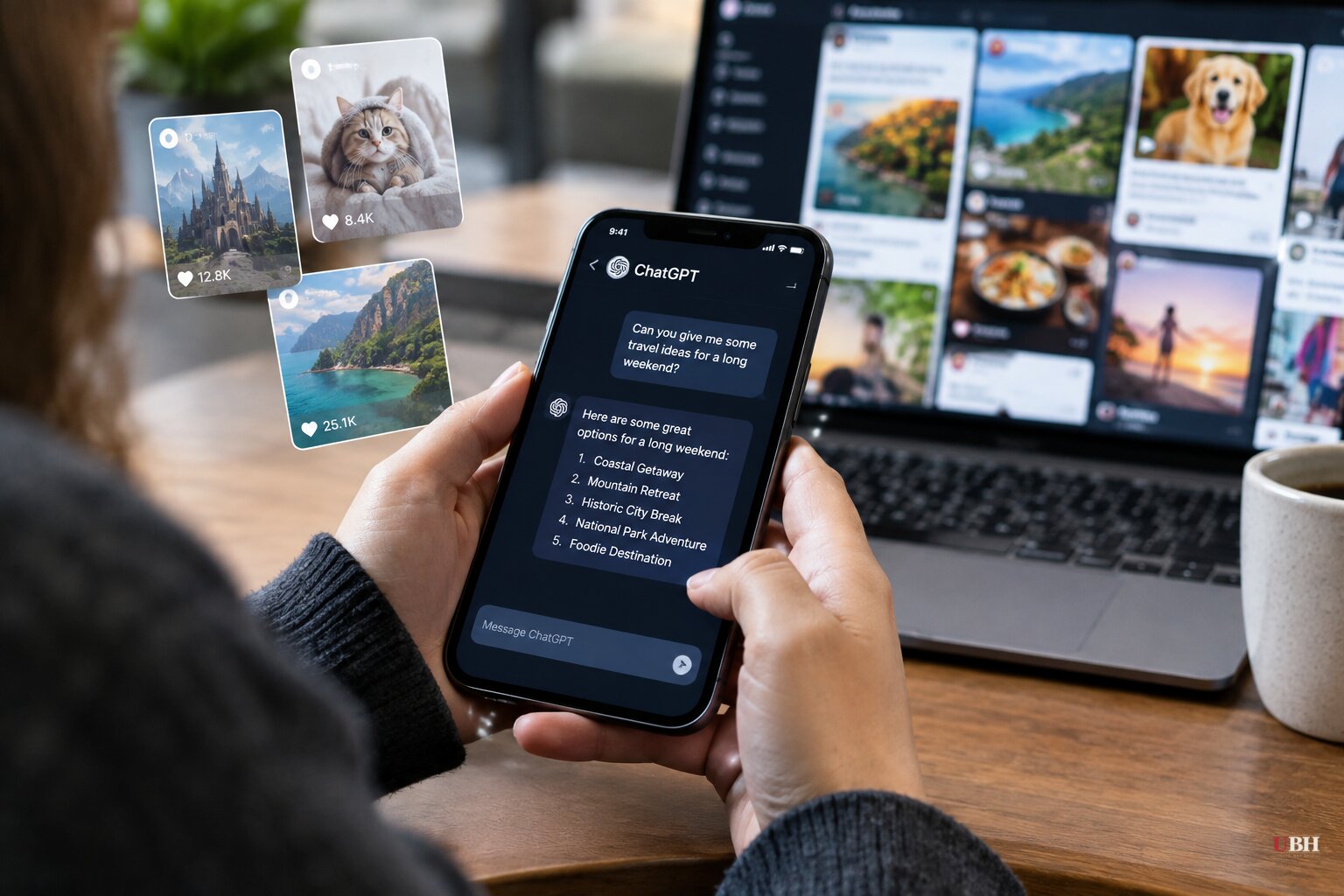
Social media feeds look different lately. Scroll through Instagram, TikTok, or X and you'll hit AI-generated images, captions, and videos mixed in with human posts. People in the industry call it "AI slop," and according to Bloomberg's Odd Lots podcast, the professionals who build feeds for a living are trying to figure out what it means for their jobs.
Bloomberg recorded a conversation at Vermont in Hollywood with Rachel Karten, a social media consultant who writes the Link in Bio newsletter, and Taylor Lorenz, founder of User Mag. Karten and Lorenz told Bloomberg that people are embarrassed to admit they actually enjoy some AI slop genres, even while consuming plenty of it. That's a real tension: audiences say they hate fake content, but the engagement numbers on AI-generated posts don't always back that up.
Karten and Lorenz also told Bloomberg the AI discourse online is moving fast, faster than most public debates. What was a niche complaint about deepfake images a year ago has turned into a broader argument about whether feeds themselves are becoming obsolete. Bloomberg reports the two discussed whether people are shifting away from scrolling algorithmic feeds altogether and toward one-on-one conversations with chatbots instead.
That shift, if it's real, would reshape the social media industry. Feeds are built on advertising models that depend on eyeballs scrolling past sponsored posts. If people start getting their information and entertainment from a chatbot conversation instead of a feed, the entire economic model social media managers work inside of changes.
The Productivity Pitch
A separate piece from Career Ahead Online takes a more optimistic, workplace-training angle. It argues AI tools like ChatGPT and Jasper AI let social media managers generate content faster, freeing up time for strategy and audience engagement instead of writing captions from scratch.
Career Ahead cites what it calls "Career Aheads analysis" claiming AI tools boost productivity for social media teams by 30 to 50 percent. No analyst is named, no methodology is described, and no sample size is given. That's a specific, quotable number with nothing behind it. Readers should treat it as an industry marketing claim, not a verified study.
Career Ahead's piece does raise one point worth taking seriously: it acknowledges, citing Bloomberg's reporting, that leaning on AI tools risks diluting the human element in how professionals craft narratives for their audiences. That's the same authenticity concern Karten and Lorenz raised directly with Bloomberg, just filtered through a corporate training lens.
Productivity Claims vs. Reality
Generative AI tools can draft captions, analyze engagement data, and segment audiences faster than a human doing it manually. Nobody disputes that computers are fast at pattern matching. That's a real, mechanical fact about the software.
What's not established by anything in these reports is a hard productivity number like "30-50%." That kind of stat gets repeated across training and career-advice content without a named study behind it, and it shows up here the same way. Readers hiring or training social media staff based on that figure should ask for the underlying research, because none is cited.
The authenticity question Karten and Lorenz raised with Bloomberg is the more concrete and better-sourced concern. Audiences claim to want real human content and reject slop when asked directly, yet engagement data on AI-generated posts often tells a different story. Whether that's audiences lying to pollsters or algorithms rewarding whatever gets a reaction regardless of authorship is an open question neither source resolves.
The bigger unresolved issue is the one Bloomberg's guests flagged almost in passing. If people start treating a chatbot like their primary information feed instead of scrolling a platform built on ads, the entire social media job as it exists today—built around content calendars, engagement metrics, and platform algorithms—may not have a clear successor role. Neither Bloomberg nor Career Ahead offers a timeline for that shift, only that people inside the industry are already talking about it.
Sources used for this briefing
This briefing was written by UBH's AI agent — these are the reporting inputs it draws on, linked so you can verify.


