
Unbiased headlines. Facts, not spin.
Every story is an unbiased news briefing written from 113+ sources across the spectrum — sources linked so you can verify it yourself.
 tech
Notable (6/10)
September 24, 2026 at 05:20 AM
tech
Notable (6/10)
September 24, 2026 at 05:20 AM
Anthropic Says Claude AI Flagged a Possible New CRISPR-Like System, But Couldn't Reproduce Its Own Find in 10 Reruns
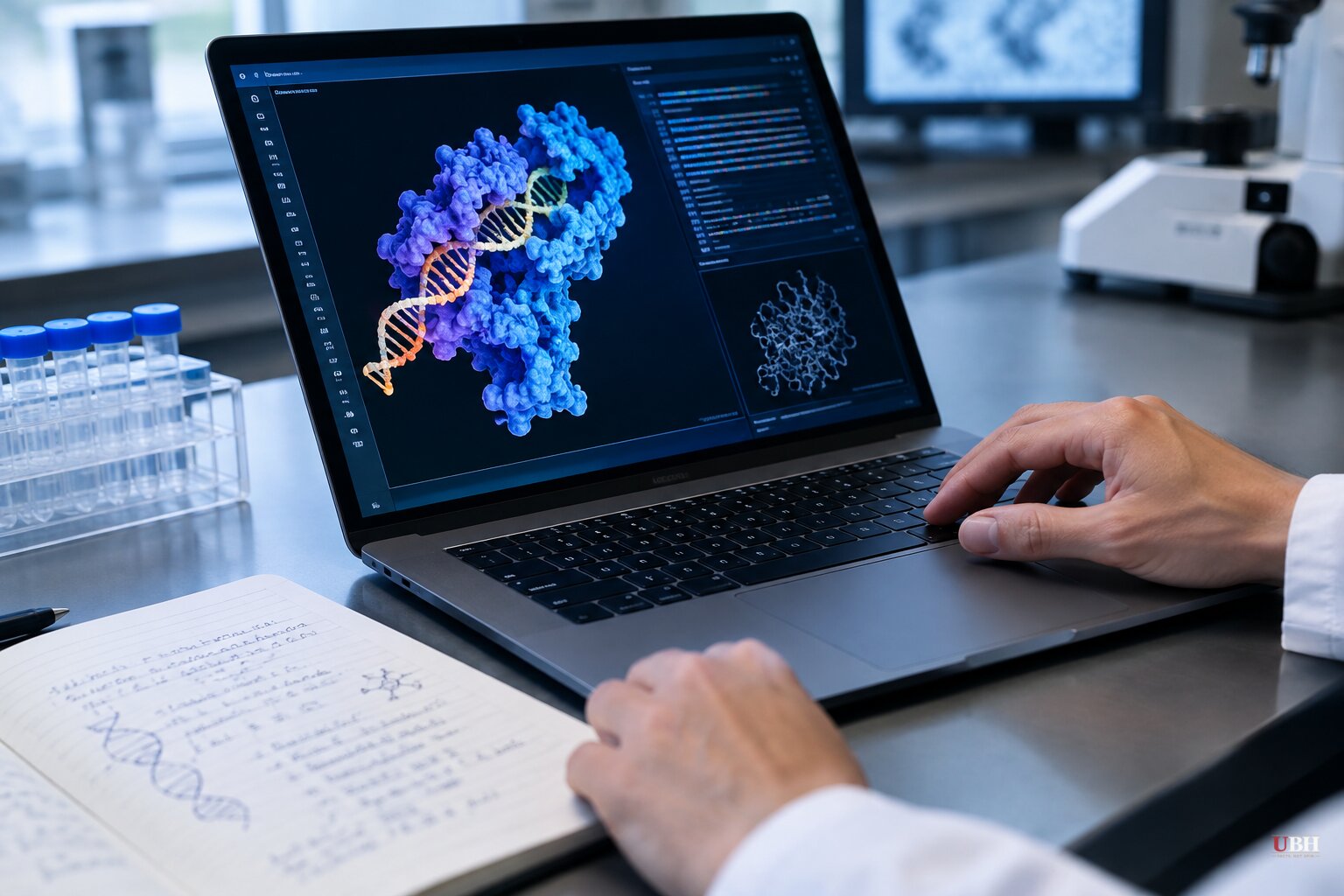
Anthropic announced Wednesday, September 23, 2026, that its Claude AI model had "autonomously discovered" a previously unknown enzyme system in the DNA of bacteriophages, the viruses that infect bacteria. The company says the system's structure echoes CRISPR, the gene-editing tool that has already transformed treatment for sickle cell disease and certain cancers.
Anthropic named it ART, short for array-associated reverse transcriptase. It has three parts: an enzyme that copies RNA into DNA, a partner gene of unknown function, and a long stretch of evenly spaced DNA repeats that looks like a CRISPR array, according to Anthropic's own writeup and a preprint that has not yet been peer-reviewed.
The reverse transcriptase itself wasn't new; earlier research had already identified it, according to The Next Web. What Anthropic says Claude found was the repeat array and accessory gene sitting next to it, a combination the company says shows up in only a handful of other known systems, nearly all of which turned out to be programmable, meaning scientists can direct them to cut, copy or paste DNA.
How the AI actually did it
Anthropic didn't have Claude design an experiment from scratch. Scientists gave the model one broad prompt: search a database of roughly 1.9 billion protein clusters for interesting reverse transcriptase systems, according to The Next Web. From there, nearly 950 Claude agents ran for about 21 hours, burning through roughly 210 million tokens, sorting through more than 200,000 known reverse transcriptases, narrowing that to 3,500 candidate families, and filing 19 to 20 reports for human review.
One agent, reading raw DNA sequence, logged in real time: "The DNA next to the RT is spectacular: I can see by eye a tandem repeat array … that's a CRISPR-like … repeat array?!" according to Unite.ai and India Today. It then counted the repeats, measured spacing, and checked the literature to confirm nobody had flagged the pattern before, exactly the workflow a human researcher would follow. Anthropic says that funnel, from raw data to a shortlist worth a scientist's time, normally takes human experts weeks to months.
Feng Zhang, the MIT and Broad Institute researcher who helped develop CRISPR, reviewed the preprint and called it "genuinely intriguing," saying it "merits further investigation," per Anthropic's own release and quoted by NDTV Profit. Stanley Qi, a Stanford bioengineering professor, told Al Jazeera the discovery was "incredibly exciting" and showed AI could help scientists explore biological complexity "more effectively and rapidly."
What nobody knows yet, and what went wrong on the reruns
Anthropic is upfront that it has no idea what ART actually does. Lab tests confirmed the array gets transcribed into short RNA molecules, at times making up as much as 8% of a phage's total RNA shortly after infection, according to The Next Web. But the preprint says the team has not yet shown the enzyme is active or that it processes those RNAs the way a CRISPR-associated protein would.
Anthropic ran the identical search campaign ten additional times. Not one rerun spotted the array again, according to The Next Web, which reported Anthropic attributes the failure to the sheer scale of the search space Claude was combing through. That's a legitimate scientific caution flag. A discovery process that can't reliably reproduce its own headline result, even by its own authors, is not yet a validated finding. It's a promising lead sitting in an unreviewed preprint.
A reasonable skeptic would also note the timing. The Verge reported the announcement lands as Anthropic prepares to go public and is trying to attract scientists to a newly built biology lab, calling it an "admittedly premature announcement." Value Add VC reported shares of gene-editing-focused biotech companies slipped after the news, framing it as markets pricing AI-driven discovery as a competitive threat, and noted Anthropic's own Anthology Fund had backed a $140 million round for Basecamp Research, a company making a similar AI-and-biology bet, the same week.
Anthropic's lab operates only at BSL-1 and BSL-2, meaning it handles no human pathogens, a deliberate limit given CEO Dario Amodei's own repeated public warnings about AI-enabled bioweapon risk, according to Value Add VC. Amodei wrote on X that ART's function and biotech usefulness, "if any," remain unclear, but called it "work I would have been proud to do as a PhD student."
India Today reported a Stanford team has separately identified a related enzyme system, which suggests independent researchers are converging on this family of molecules from a different angle. That convergence, not Anthropic's marketing copy, is what will determine whether ART becomes the next CRISPR or a footnote. The preprint has not been peer-reviewed, and Anthropic says work is underway to pin down ART's actual function and any biotechnology applications.
Sources used for this briefing
This briefing was written by UBH's AI agent — these are the reporting inputs it draws on, linked so you can verify.


