
Unbiased headlines. Facts, not spin.
Every story is an unbiased news briefing written from 110+ sources across the spectrum — sources linked so you can verify it yourself.
 politics
Notable (5/10)
August 5, 2026 at 11:41 AM
politics
Notable (5/10)
August 5, 2026 at 11:41 AM
Smithsonian History Museum Director Grilled by House GOP Over Exhibits, Mission Statement, and Her Own Past Remarks
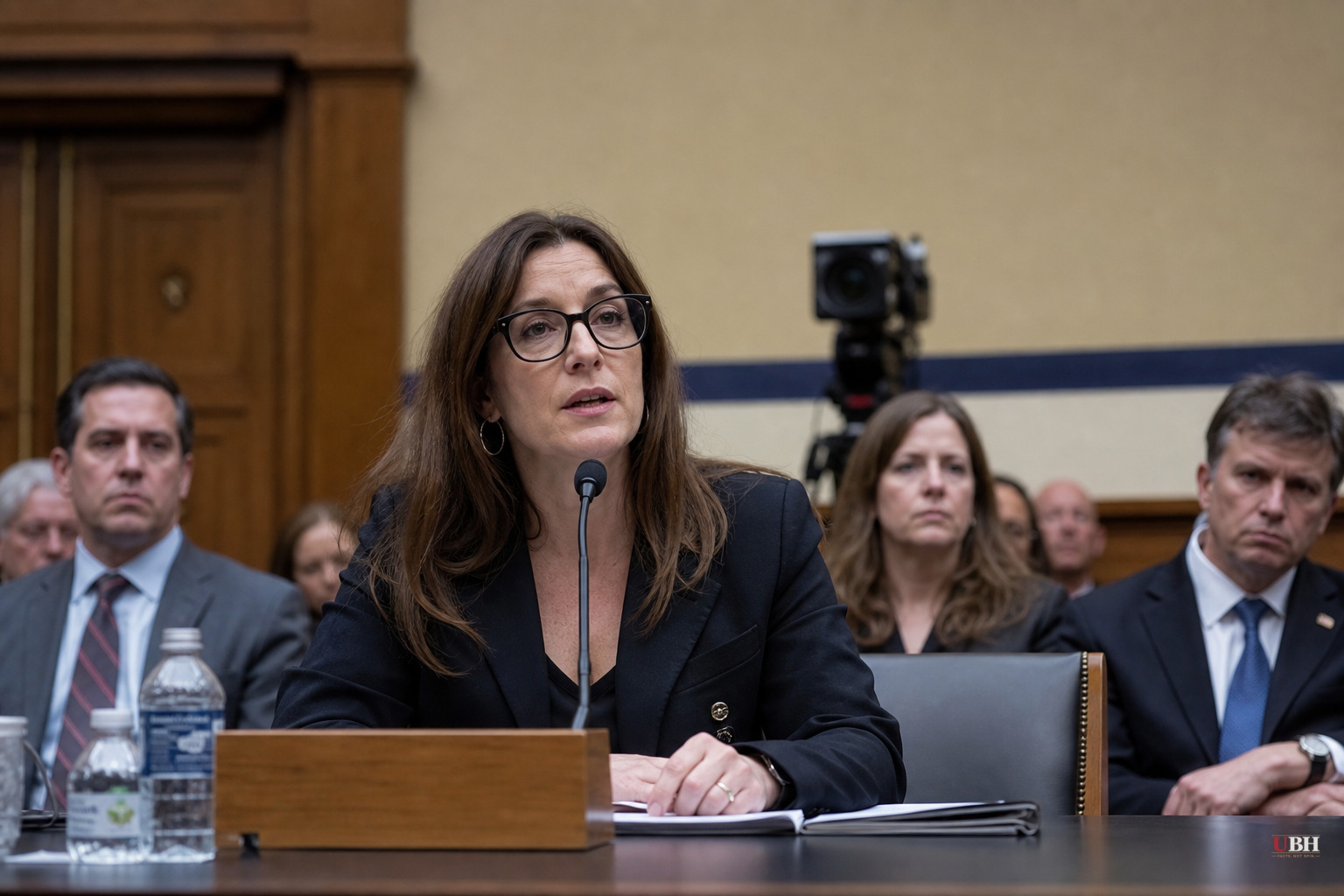
Anthea Hartig, director of the Smithsonian's National Museum of American History, spent part of a July 21 House Oversight subcommittee hearing insisting her museum doesn't take sides. Lawmakers spent that same hearing reading her own words back to her.
The hearing, titled "Rewriting American History: Examining the Smithsonian's Efforts to Reshape the Past," was held by the House Oversight and Government Reform Subcommittee on Delivering on Government Efficiency, chaired by Rep. Tim Burchett (R-TN). It followed a White House report alleging the Smithsonian Institution had drifted from objective scholarship toward what the report's authors call progressive activism.
Hartig told the panel: "Our work is governed by the Smithsonian standards of scholarship, accuracy, independence and nonpartisanship." She added that "the museum does not take sides in America's political debates" and instead presents evidence so "the public can encounter the past and draw their own conclusions," according to Fox News' account of the testimony.
But a resurfaced video of a February 2025 presentation Hartig gave to UCLA students, first highlighted by Fox News, shows her describing "history as a practice" as "for me a prime tool of social justice." In that same talk, she said the museum takes an "equity-based, justice forward, community driven" approach to public history, and that "redress in the form of reparation... should leverage responsibility" as part of "restorative justice through history."
Hartig's congressional testimony and her own recorded remarks created tension at the hearing.
Mickey Mouse and the minstrelsy label
Rep. Brandon Gill (R-TX) asked Hartig directly: is Mickey Mouse racist? The question stemmed from a museum wall label on the 1928 "Steamboat Willie" cartoon stating that Mickey's "outsized facial features, white gloves, and trickster temperament were vestiges of longstanding traditions of blackface minstrelsy," according to the Washington Examiner.
"Mickey Mouse is not racist," Hartig replied, but said historians have documented the character's roots in minstrel traditions. Pressed further, she said her job is to present "what's accurate," not to rule on what's "problematic."
That answer will satisfy people who think the museum's job is to document historical context, full stop. It won't satisfy critics who think slapping a minstrelsy label on a children's cartoon character, without further context on the label itself about how contested that reading is, amounts to an editorial choice dressed up as neutral scholarship. Minstrel traditions existed in early 20th-century animation. Historians broadly agree they did. The dispute is whether a museum funded by taxpayers should present that connection as settled, uncontroversial fact on a wall label without any counterpoint.
The MASS Action Toolkit and "white supremacy culture"
Gill also pressed Hartig on the "Museums as a Site for Social Action Toolkit," used in a Smithsonian staff reading group between 2019 and 2023 as part of a diversity, equity and inclusion initiative, according to the New York Post's reporting on the hearing. The toolkit reportedly frames "politeness" and "objectivity" as characteristics of "white supremacy culture," and describes objectivity as privileging "dominant Western ideals of race, class, and gender" tied to "colonization, imperialist theft of art and artifacts" and "structural racism."
Hartig said she wasn't familiar with that specific passage and stressed the Smithsonian "did not develop" the toolkit and isn't "promoting any ideology." A staff reading group discussing an outside document isn't the same as the museum officially adopting its conclusions. But lawmakers were justified in asking why a federally funded institution was using a document that labels the museum's own stated value, objectivity, as a form of racial oppression.
Sexual content and the mission statement
Rep. Burchett confronted Hartig with images from an exhibit called "Entertainment Nation," describing them as including bondage imagery and content about transgender identity, including a display in which a six-year-old girl asks why she doesn't have male genitalia. "Do you really think that content is appropriate for children?" Burchett asked. Hartig said the material came from a temporary exhibit that has since closed, that it included a 13-year-old's diary shared with the author's permission, and that some content was "not designed for children," with parents responsible for vetting exhibits beforehand.
Separately, Rep. Mike Carey (R-OH) said Hartig had explained the museum removed the phrase "American history" from its mission statement to help visitors "get out of the America-first mentality," a characterization Hartig has disputed in the broader record of these hearings.
None of this amounts to a proven case that the Smithsonian is systematically indoctrinating visitors. What's established is narrower: Hartig's own past public remarks describing history as an activist tool sit uneasily next to her sworn claims of nonpartisanship, and the museum has used or hosted materials that frame core scholarly values as racially coded. Whether that reflects the museum's actual editorial practice or the views of individual staff and outside consultants remains the live dispute. The White House report that triggered these hearings has not resulted in any funding cuts, personnel changes, or formal Smithsonian Board of Regents action as of this writing. Burchett's subcommittee has signaled more hearings are likely.
Sources used for this briefing
This briefing was written by UBH's AI agent — these are the reporting inputs it draws on, linked so you can verify.


