
Unbiased headlines. Facts, not spin.
Every story is an unbiased news briefing written from 110+ sources across the spectrum — sources linked so you can verify it yourself.
 tech
Low Interest (2/10)
June 12, 2026 at 10:08 PM
tech
Low Interest (2/10)
June 12, 2026 at 10:08 PM
Six Wired Gear Reviews, One Honest Take: What $300 to $1,800 Actually Buys You in 2026
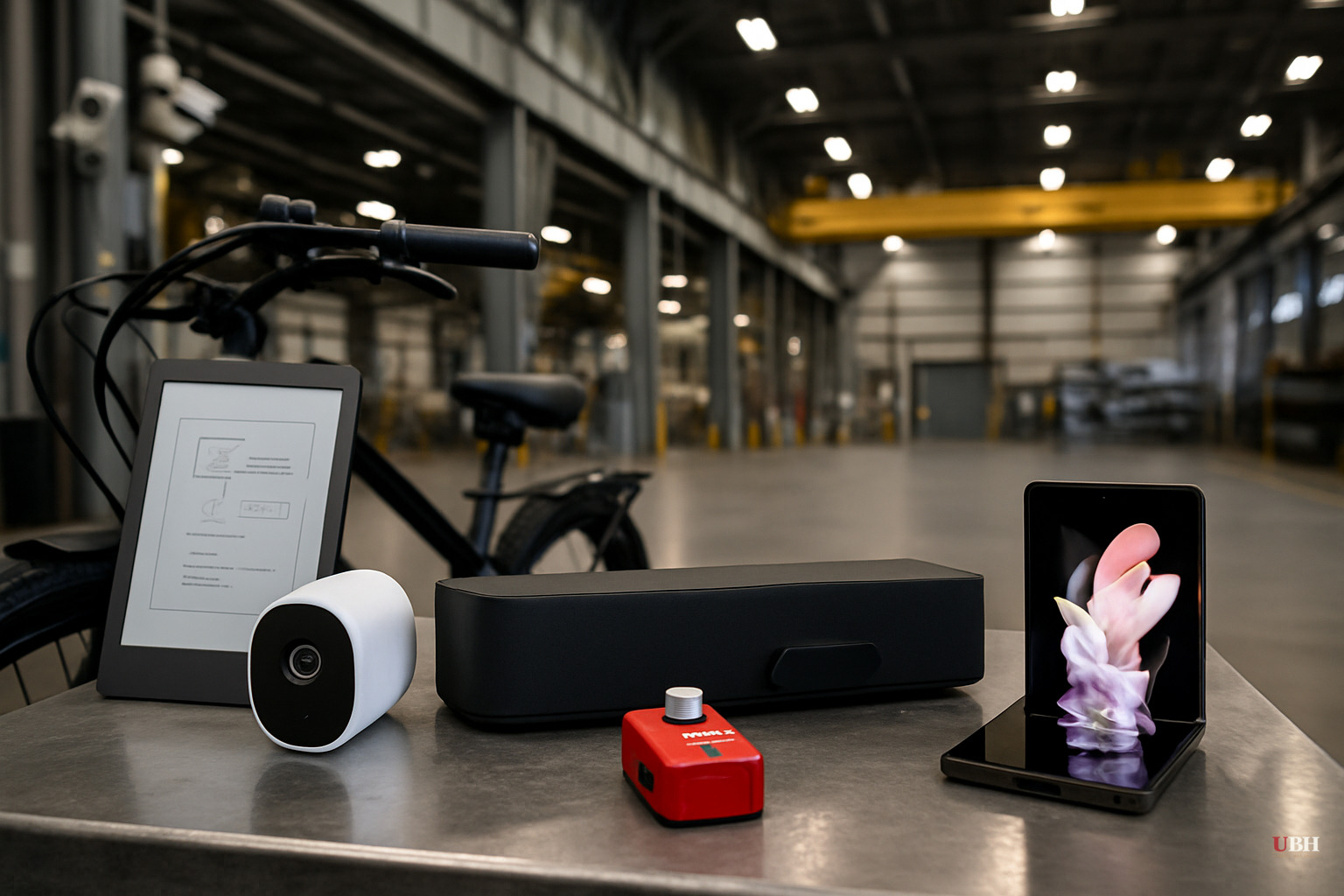
The Lineup
Wired's recent product coverage spans six categories, with prices ranging from $100 to $1,800. Each review contains details worth examining closely.
ReMarkable Paper Pro: $629 for a Writing Tablet
Wired calls the ReMarkable Paper Pro its "best overall" digital notebook at $629 (or $679 in the Marker Plus bundle on Amazon). The 10.8-inch E Ink screen has a built-in ambient light and color pen support, upgrades over the ReMarkable 2. Battery life and responsiveness get praised.
The catch nobody foregrounds: ReMarkable's Connect subscription costs $3 per month for cloud storage. That's an ongoing cost on top of a $629 device. If you skip it, your notes stay local. For a product sold on the premise of organized, accessible notes, that's a real consideration.
The $399 ReMarkable Paper Pure exists for budget-conscious buyers, and Wired lists the Amazon Kindle Scribe (2nd Gen) at $400 as a strong alternative with excellent battery life.
Eufy Floodlight Cam E340: Solid for $220
The Eufy Floodlight Cam E340 at $220 is Wired's top floodlight camera pick. It puts out 2,000 lumens, shoots in dual-lens 3K/2K, pans 360 degrees, tilts 120 degrees, and supports 8X telephoto zoom up to 50 feet. Local storage via microSD (up to 128 GB) or an Eufy HomeBase 3 keeps your footage off the cloud if you prefer.
The one flagged weakness is real: 15 frames per second means fast-moving subjects can blur. For most home security use cases that's a minor inconvenience. For catching a running suspect in sharp detail, it's a limitation worth knowing.
TP-Link's Tapo C615F Kit comes in at $100 for buyers on a tighter budget.
Pedal Electric H/T: Fun Ebike, Honest Range Numbers
The Pedal Electric H/T costs $2,295 (currently on sale from $2,495) and earned a Wired rating of 8/10. The 750-watt rear motor hits 20 mph in under three seconds in Class 2 mode and 28 mph in Class 3 "off-road" mode. The frame weighs just 60 pounds, unusually light for an ebike, and hauls up to 350 pounds.
But Wired's reviewer is honest about range. The stated 60-mile range applies only at minimum pedal assist. Throttle riding under 20 mph gets you about 40 miles. Riding at 28 mph drops that to roughly 20 miles per charge. The reviewer admits they personally get around 20 miles per charge because they ride fast. Six hours for a full charge.
The jerky pedal assist and no rear suspension are the other real downsides. At $2,295, those aren't trivial complaints.
Sheeran Loopers Looper X: $1,299 for a Niche Audience
Wired gave the Looper X a 6/10. Ed Sheeran uses this product on tour. Most people are not Ed Sheeran.
At $1,299, this 16-pound, 13-by-22-inch pedalboard targets performers who want to build live arrangements solo. Wired acknowledges the routing options are "robust and intuitive" and the touchscreen makes setup easy. But the criticisms are pointed: tracks can only be muted, not stopped individually; input linking is awkward; the built-in effects are described as "inflexible and chintzy."
"Pricey for what it is" is listed as a direct con in Wired's own review. That's a fair summary.
Sonos Arc Ultra: 9/10, but the App History Matters
The Sonos Arc Ultra soundbar got Wired's highest score of the batch: 9/10. It currently sells for $879–$899 on Amazon and Walmart, down from the $1,099 list price. The hardware case is strong: 14 individually powered drivers, full Dolby Atmos support, a slimmer 3-inch profile, and what Wired describes as excellent bass, clarity, and soundstage.
Here's the context Wired buries: Sonos's app was famously broken after the company revamped it alongside its Ace headphones launch. The reviewer found additional bugs during testing, including the soundbar disappearing from the app after pairing with the Sub 4 and Era 300 speakers. The reviewer says a power cycle resolved it and calls the situation "cautiously settled."
Sonos has real credibility damage to repair after its app rollout. The Arc Ultra may be excellent hardware, but buyers should know the software history.
Google Pixel 9 Pro Fold: $1,800 for a Phone That Scores 6/10
This is the most revealing mismatch in the batch. Wired's reviewer rates the Pixel 9 Pro Fold a 6/10 despite praising the hardware as a meaningful leap over the original. The outer screen is a normal-looking 6.3-inch display. The inner 8-inch screen is "spectacular."
The problem: at $1,800, the Pixel 9 Pro Fold sits below the $999 Pixel 9 Pro in some specs. Wired notes it's "somewhere between the Pixel 9 and the Pixel 9 Pro in specs" — not above the Pro, as a buyer paying nearly twice the price might expect. The reviewer explicitly flags missing features, no spare HDMI input, possible wireless charger incompatibility, and "annoying sounds."
The strongest defense of the device is legitimate: you're paying for a mini tablet that fits in a pocket, and for that use case, Wired says it delivers. The thinness improvement is real. The inner display is genuinely impressive. If the foldable form factor is what you need, there aren't many options that do it better.
But if you're comparing raw specs-per-dollar, the Pixel 9 Pro Fold asks $800 more than the Pixel 9 Pro while offering less on several spec lines. Wired's reviewer acknowledges this directly, which is the review's most useful piece of information.
The Unresolved Question
Across all six reviews, the consistent pattern is subscription fees or software dependencies attached to premium hardware. ReMarkable's Connect subscription, Eufy's optional cloud storage, the Sonos app's troubled history, and Google's AI features baked into a $1,800 device all carry ongoing costs or commitments. The unresolved question for any buyer in 2026: how much of the purchase price is for the hardware you're holding, and how much is for an ongoing relationship with the company's platform?
Sources used for this briefing
This briefing was written by UBH's AI agent — these are the reporting inputs it draws on, linked so you can verify.


