
Unbiased headlines. Facts, not spin.
Every story is an unbiased news briefing written from 110+ sources across the spectrum — sources linked so you can verify it yourself.
 economy
Notable (6/10)
July 14, 2026 at 10:18 PM
economy
Notable (6/10)
July 14, 2026 at 10:18 PM
Six Senators Introduce PROMISE Act to Force a Vote on Social Security's Looming Shortfall
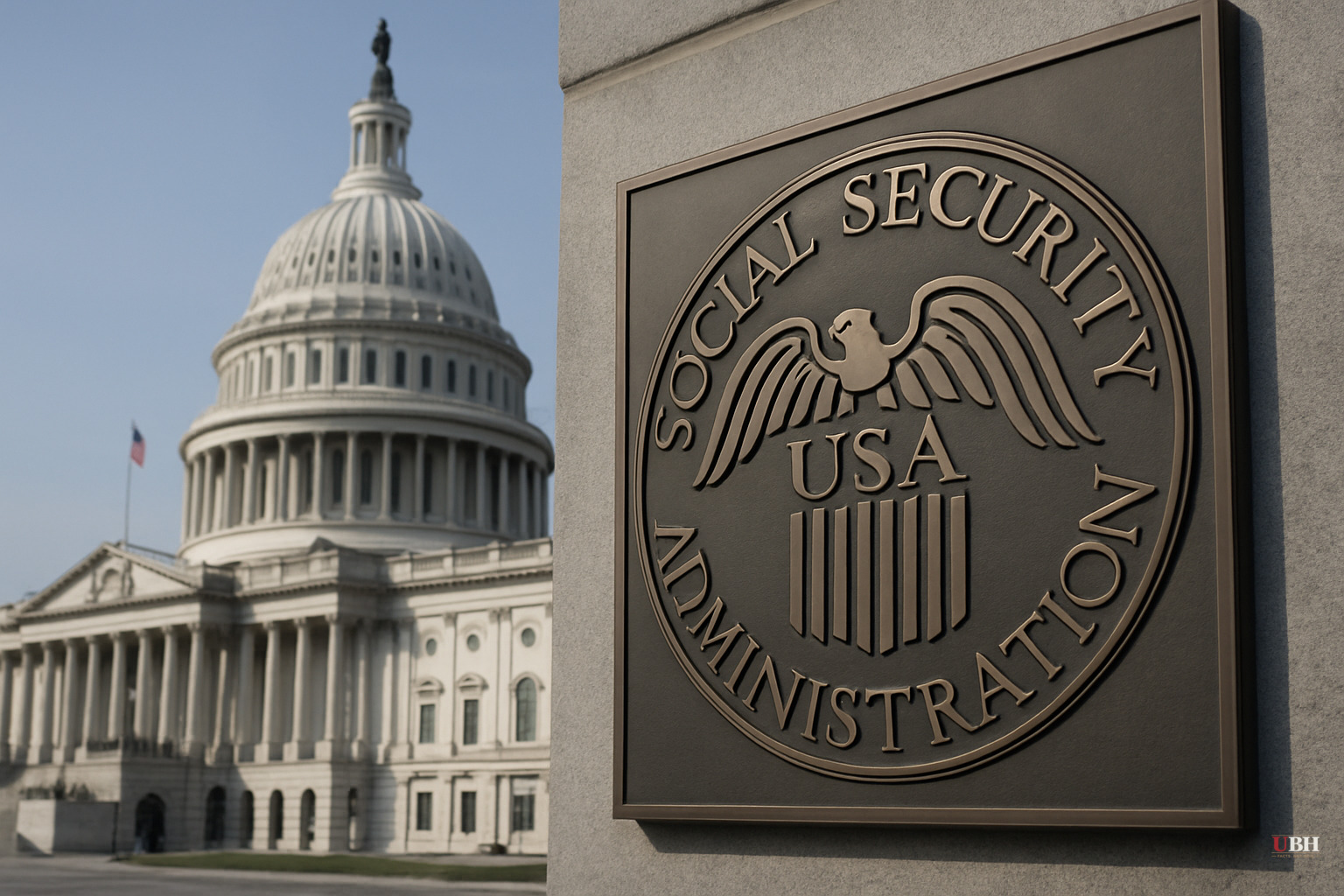
A bipartisan group of six senators introduced the PROMISE Act, a bill designed to force Congress to finally vote on Social Security reform instead of letting the issue rot in committee for another decade, according to CNBC.
The bill's full name is the Protecting Retirement Opportunities and Maintaining Income Security for Everyone Act. It doesn't cut benefits, raise taxes, or change the retirement age. It creates a legislative procedure that would require Congress to actually consider ideas that have been sitting untouched for years.
According to the bill's text as reported by CNBC, almost none of the Social Security reform proposals introduced in recent years have ever gotten a floor vote. Members of Congress love to introduce bills. They hate voting on ones that might make voters angry.
The sponsors are Sens. Dick Durbin (D-Ill.), Bill Cassidy (R-La.), John Cornyn (R-Texas), Tim Kaine (D-Va.), Angus King (I-Maine), and Thom Tillis (R-N.C.). Four of them, Durbin, Cassidy, Kaine, and Tillis, already put out a joint statement on June 10 demanding bipartisan action after the Social Security trustees released their annual report.
"Social Security is the bedrock promise of a secure retirement, earned after a lifetime of hard work," Durbin said in a statement reported by CNBC. "But the longer Congress waits, the more difficult it will be to address the program's financial shortfall."
Why This Matters Now
The 2026 Social Security trustees report found the retirement trust fund, known as Old-Age and Survivors Insurance, could run dry in the fourth quarter of 2032. That's three months sooner than last year's projection, according to CNBC.
If that fund gets combined with the disability trust fund, the combined program could pay full benefits until 2034. After that, only 83% of benefits would go out. Without any fix, retirees could see checks cut to 78% of promised benefits by 2032.
This is current law. Nobody in Washington has to pass a bad bill to make this happen. It happens automatically if Congress does nothing.
Two of the six sponsors have personal reasons to move fast. Durbin is retiring at the end of his current term. Cassidy lost his primary reelection bid. Neither one is running for anything again, which may explain why they're the two most willing to touch this. "I want to get it done before we leave, so there is impetus to get it done," Cassidy told CNBC in June.
Cassidy has floated what he calls a "big idea": a separate investment fund for Social Security modeled on the fix Congress applied to the federal Railroad Retirement system under President George W. Bush. Other ideas floating around Capitol Hill include raising the retirement age or hiking taxes on high earners. Sens. Elizabeth Warren (D-Mass.) and Bernie Moreno (R-Ohio) co-wrote an op-ed pushing to scrap the payroll tax cap entirely, currently set at $184,500 in income.
The Risk of Rushed Procedures
Critics of forcing fast-track votes have a valid point: procedural mechanisms that guarantee floor votes can also guarantee bad outcomes if lawmakers feel pressured to pass something, anything, just to say they acted. A rushed fix on a program covering 71 million Americans' monthly income is not something to gamble on political theater. The PROMISE Act's actual text will need scrutiny on how it structures amendments and what ideas get guaranteed floor time.
But the alternative—more of the same paralysis that's persisted for years—isn't safer. It just delays the eventual cut and shrinks the menu of options as the trust fund depletion date creeps closer.
COLA Pressures
Separately, the 2027 Social Security cost-of-living adjustment estimate dropped as inflation cooled. Independent analyst Mary Johnson now projects a 3.7% COLA for 2027, a full point below her estimate from just last month, according to CNBC. The Senior Citizens League estimates 3.8%, unchanged from its prior projection.
Government data released this week showed the consumer price index up 3.5% over the past 12 months through June, lower than expected due to falling energy prices. Johnson called the drop "significant," noting it's a shift rarely seen in June CPI data over the past five years.
Meanwhile Medicare costs keep climbing regardless of what COLA lands. The Part B premium is projected to hit $209.50 a month in 2027, up from $202.90, according to the annual Medicare trustees report. The Part D deductible jumps from $615 to $700, and the catastrophic out-of-pocket threshold rises from $2,100 to $2,400.
Retirement confidence is already sliding. A January survey from the Employee Benefit Research Institute and Greenwald Research found retiree confidence dropped 5 percentage points to 73%, with inflation, healthcare costs, and fears about system changes topping the worry list.
The official 2027 COLA won't be announced until October. The PROMISE Act, meanwhile, still needs to clear committee and get floor time, the exact obstacle it's designed to overcome. Whether six senators, several of whom are leaving office, can convince the rest of Congress to actually vote on a program most lawmakers would rather not touch before the next election remains the open question.
Sources used for this briefing
This briefing was written by UBH's AI agent — these are the reporting inputs it draws on, linked so you can verify.


