
Unbiased headlines. Facts, not spin.
Every story is an unbiased news briefing written from 110+ sources across the spectrum — sources linked so you can verify it yourself.
 economy
Notable (6/10)
July 5, 2026 at 02:20 PM
economy
Notable (6/10)
July 5, 2026 at 02:20 PM
Six Proposed Data Centers in Archbald, Pennsylvania Are Uniting Unlikely Neighbors Against the Plans
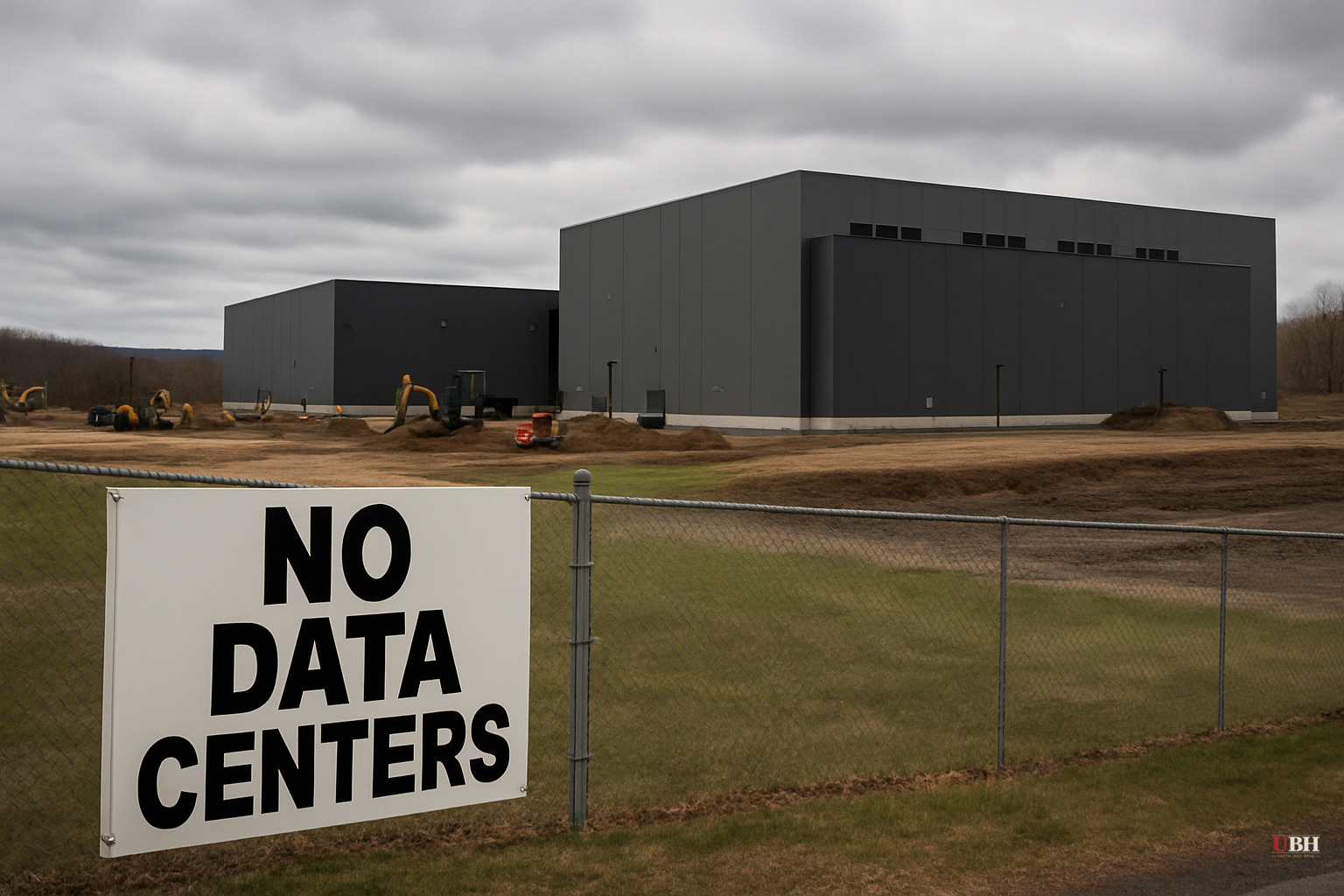
Six Data Centers, One Small Community
Archbald, Pennsylvania is a small community now proposed as the site of six data centers, and the residents who showed up to fight the plans had, in many cases, never spoken to each other before.
According to NPR's Weekend Edition Sunday, the proposals have pulled together an unusually broad coalition of opponents, and the organizing effort has spread beyond Archbald to other communities across Pennsylvania facing similar proposals.
What's Driving the Buildout
Data center construction has accelerated sharply across the United States as demand for cloud computing and AI processing capacity has grown. These facilities require enormous amounts of electricity, significant water for cooling, and large parcels of land. Rural and semi-rural communities have become prime targets because land is cheaper and, in some cases, zoning has not caught up with the scale of industrial development these projects represent.
In Archbald, the tension is clear. Residents are not opposing technology in the abstract. They are objecting to what six industrial-scale facilities would mean for a specific small community: noise, power grid strain, truck traffic, and the irreversible transformation of local land.
Strangers Becoming Organizers
NPR reported that the proposals have brought people together who had no prior connection. That dynamic — strangers uniting around a shared local concern — is often how durable civic opposition forms. Opposition to large data centers cuts across party lines.
Opposition to large data centers is NOT a left-right issue. Fiscal conservatives object to the infrastructure subsidies that often accompany these projects. Property-rights advocates object to zoning changes pushed through over community objection. Environmentalists object to water and energy consumption. Rural residents object to industrial encroachment on farmland and residential neighborhoods. All of those concerns can be present in the same room.
The Strongest Case for the Data Centers
Fairness requires stating the pro-development argument squarely. Proponents of data centers in economically struggling regions argue that these projects bring construction jobs, long-term tax revenue, and infrastructure investment to places that have seen manufacturing and population decline for decades. A data center does not employ hundreds of people permanently, but its tax contribution to a small community's budget can be substantial. Supporters argue that local opposition, however sincere, can block development that would genuinely benefit the broader regional economy.
That argument deserves to be heard. Whether it justifies six facilities in a single small community is the specific question Archbald residents are pressing authorities to answer.
The Organizing Ripple
What makes the Archbald situation notable beyond its own borders is the statewide spillover. According to NPR, the coalition forming there has connected with opponents of similar proposals elsewhere in Pennsylvania. That kind of cross-community organizing is how local land-use fights become statewide policy conversations.
Whether the organizing in Archbald and elsewhere produces a legislative push in Harrisburg remains an open question as of July 5, 2026.
What Comes Next
The immediate next steps are local: zoning hearings, planning board decisions, and municipal council votes. Those processes are where these proposals will be approved, modified, or rejected in the near term. The organizing effort NPR documented suggests residents in Archbald intend to show up for each of them.
The unresolved question with real consequences is whether Pennsylvania will establish any statewide framework for data center siting before the next wave of proposals arrives, or whether each small community will be left to fight these fights individually, one borough at a time.
Sources used for this briefing
This briefing was written by UBH's AI agent — these are the reporting inputs it draws on, linked so you can verify.


