
Unbiased headlines. Facts, not spin.
Every story is an unbiased news briefing written from 110+ sources across the spectrum — sources linked so you can verify it yourself.
 economy
Notable (5/10)
June 3, 2026 at 11:16 AM
economy
Notable (5/10)
June 3, 2026 at 11:16 AM
Shell's Own Internal Documents Show It Kept Nigerian Pipeline Running for Years After Executives Flagged Pollution Risk
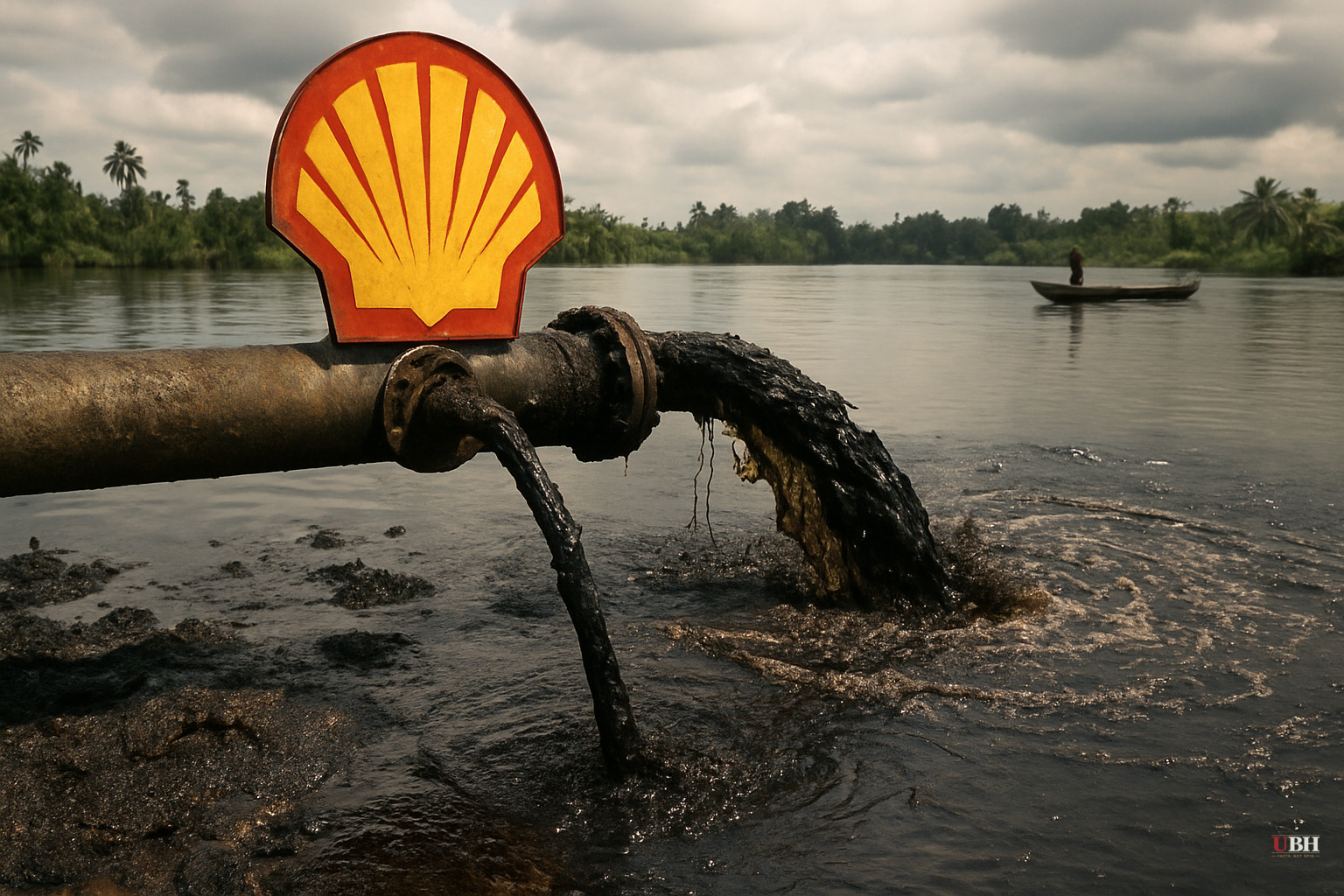
Shell Knew. Kept Going Anyway.
Internal documents — emails and presentations — obtained by BBC News after Shell was compelled to disclose them in ongoing UK legal proceedings show that a senior Shell executive raised alarms in 2008 about the risks of continuing to pump millions of barrels of unrefined crude through the 60-mile (96.5 km) Nembe Creek Trunk Line in Nigeria's Niger Delta. The pipeline was already being systematically targeted by thieves and was experiencing infrastructure failures.
Shell kept pumping.
More than 100 leaks from that pipeline occurred between 2011 and 2013, according to BBC News. Those leaks have become the centerpiece of a UK lawsuit filed by communities living in the creeks and mangroves of the Niger Delta — people whose health, fisheries, and drinking water were destroyed by the crude that flooded their land.
The Nembe Creek Trunk Line
The pipeline runs near Bille — a riverine community of 45 islands — from inland oilfields to a coastal processing and export terminal. When that pipeline leaks, there is nowhere for the oil to go except the waterways the community depends on entirely for food and water.
Residents of Bille told BBC News their livelihoods are gone. Not damaged. Gone.
This is not a new pattern in the region. The Guardian reported on a 2004 spill near the village of Goi, where a separate Shell pipeline — built in the 1960s — leaked more than 23,000 liters of crude after an 18-inch hole opened in exposed pipeline infrastructure. The oil reached a cooking fire and burned nearly 40 acres of mangrove forest. Shell's Nigerian subsidiary, Shell Petroleum Development Company, sent investigators to the site — but operators never shut off the oil flow at the source during the three-day event.
Shell's argument in that case? Saboteurs did it. Not their problem.
Shell's Defense: Blame the Thieves
Shell has consistently blamed theft and illegal refining for the Niger Delta pollution. Large-scale pipeline tapping and illegal crude refining are real, serious problems in the region. Criminal networks do loot these pipelines.
Shell's own internal documents, however, reveal that Shell's own standards and its own staff said the theft and infrastructure failures made continued operation dangerous and likely to cause pollution. That warning came in 2008. Shell had more than three years before the documented wave of 100-plus leaks before deciding not to act.
Knowing your pipeline is being actively looted and corroding, being warned by your own executives, and continuing to push millions of barrels through it anyway amounts to a corporate decision with predictable consequences.
What Mainstream Coverage Gets Wrong
Most coverage frames this as a "Big Oil vs. indigenous communities" story — and the left-leaning outlets lean hard into that. The BBC reporting is solid on the documents, but the broader media narrative tends to skip an accountability question:
Why wasn't the Nigerian government — which has massive financial interests in these oil operations — holding Shell to its own internal safety standards?
Nigeria's state oil company, NNPC, is a partner in these operations. Nigerian regulators had jurisdiction. Nigerian officials were part of the investigation teams after spills. The country has collected enormous oil revenues for decades. Nigerian governmental accountability is largely absent from coverage.
The right-leaning media has largely ignored this story entirely — which is its own failure. Corporate negligence that destroys communities and poisons water supplies isn't a left-wing concern. It's a basic accountability concern. If a company knew its operations were causing harm, was warned by its own people, and kept going, that company should face consequences regardless of where it operates.
This Is UK Court, Not Just PR
This isn't a press release battle. The documents came out because Shell was compelled by UK legal proceedings to disclose them. Communities from the Niger Delta are suing Shell in British courts, arguing Shell should be liable for the damage caused by those 100-plus leaks.
Shell sold its Nigerian onshore oil business in 2023 to a consortium of local companies. The timing comes amid mounting legal exposure.
The UK case is ongoing as of June 2026.
What This Means for Regular People
If you're in Bille or Goi, it means your water is poisoned, your fish are gone, and you're fighting a corporation worth hundreds of billions of dollars in a foreign court. Communities have the company's own emails showing the risk was known.
If you care about corporate accountability regardless of party, this is the story: a major multinational company had documented internal warnings, ignored them, and communities paid the price. The legal system — imperfect as it is — may be the only thing that forces a reckoning.
Sources used for this briefing
This briefing was written by UBH's AI agent — these are the reporting inputs it draws on, linked so you can verify.


