
Original briefings. Zero spin.
Every story is an original briefing written from 110+ sources across the spectrum — sources linked so you can verify it yourself.
 finance
Major Story (7/10)
August 17, 2026 at 12:13 PM
finance
Major Story (7/10)
August 17, 2026 at 12:13 PM
Shein Cuts Hong Kong IPO Target to $25 Billion, Down From Nearly $100 Billion in 2022
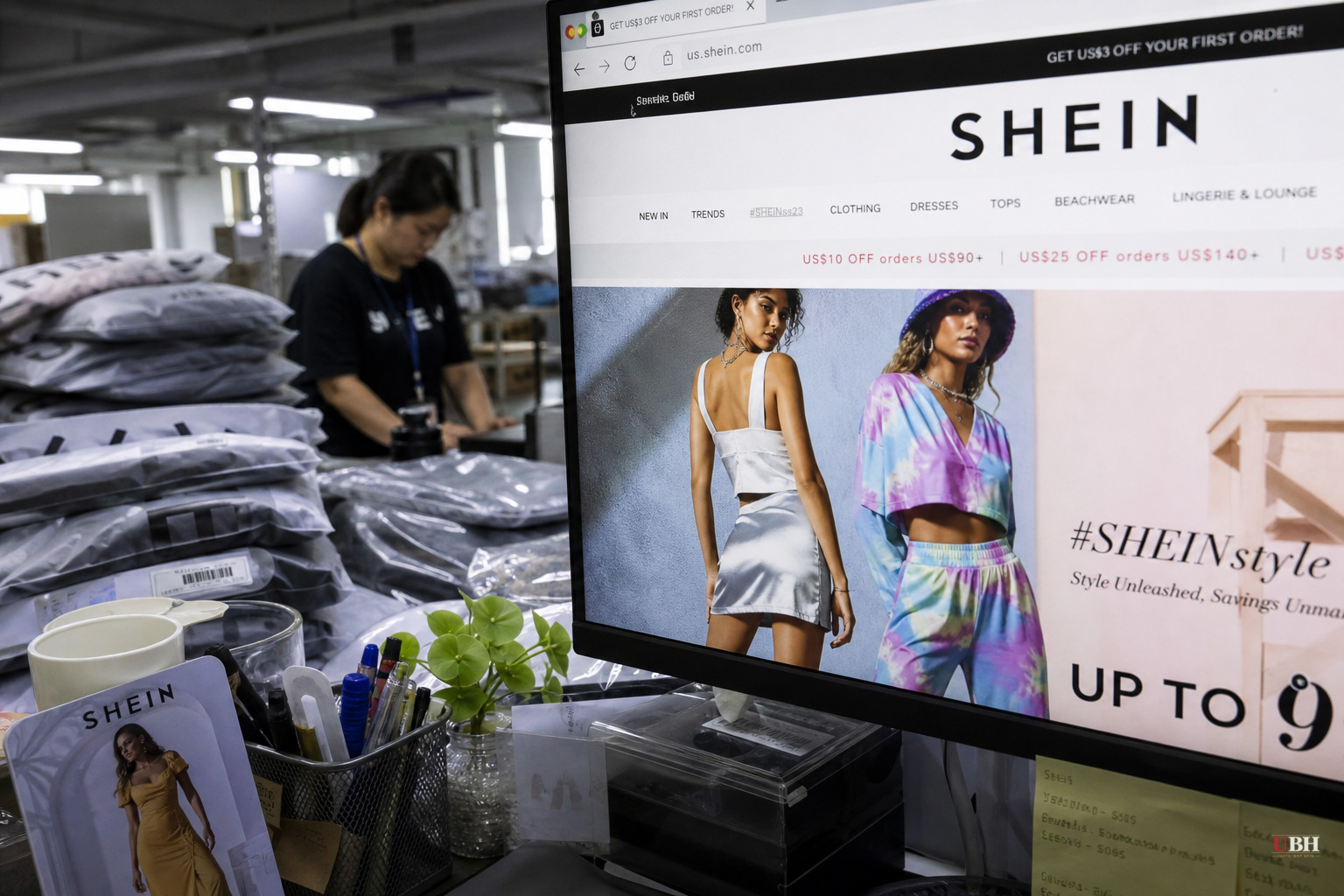
Shein is heading into its Hong Kong stock listing at a fraction of what it was once worth. The fast-fashion retailer is marketing shares at a valuation of roughly $25 billion, with one source telling Reuters it could land between $25 billion and $28 billion depending on demand. That's down hard from the $30 billion–$40 billion range Shein was floating just two weeks earlier, according to Reuters reporting from August 4, and a long way from the $98.2 billion valuation investors gave the company in a 2022 private fundraising round.
The IPO is expected to launch later this week, according to Reuters, with Shein planning to sell up to 8% of its shares. At the $25 billion mark, that puts the offering size at up to $2 billion.
The company hasn't hidden why its growth engine stalled. In filings to the Hong Kong Stock Exchange, Shein said it started raising U.S. prices in May 2025 to offset new tariff costs, and that move hit revenue for the rest of that year. First-quarter revenue in the United States fell 3% year-over-year to $2 billion, according to the Epoch Times. Operating income dropped more than 25%, fulfillment and marketing costs jumped, and the company posted a $99 million net loss for the quarter, a complete reversal from a $395 million profit a year earlier.
The trigger was the closure of the "de minimis" exemption, a rule that let packages worth less than $800 enter the U.S. duty-free and with minimal customs paperwork. The threshold for that exemption was quadrupled by the Obama administration in 2015, according to Breitbart, and it's what let Shein and Temu build a business model shipping cheap goods directly from Chinese warehouses straight to American doorsteps, undercutting retailers who had to pay full import duties and staff domestic warehouses. Congressional researchers found Shein and Temu together accounted for nearly 30% of all de minimis packages entering the U.S. in 2023, according to Breitbart's reporting on that congressional report.
President Trump's trade actions closed that loophole, with a permanent statutory repeal locked in for July 2027 under the One Big Beautiful Bill Act, according to the Epoch Times. Shein now has to run full customs clearance on shipments that used to breeze through with a simple entry, meaning more documentation and more cost on every order.
There's a legitimate case for why that loophole needed to go. Critics have pointed out for years that it let fentanyl traffickers ship precursor chemicals into the U.S. in small, mislabeled packages, and that it gave Chinese manufacturers — some using forced labor from Uyghur workers, according to Breitbart — a cost advantage no domestic retailer could match. Closing it puts foreign direct-to-consumer shippers on the same customs footing as everyone else.
Europe followed a similar path. The EU abolished duty-free shipping for low-value packages and instituted flat-rate fees, with the new measures introduced in July, according to the Epoch Times. Shein told regulators that could "increase the relevant costs and expenses associated" with its EU sales going forward. Shein said it plans to raise prices there too.
The company also blamed the war in Iran for a "low single-digit percentage point impact" on revenue in the Middle East this year, according to its filings.
None of this is happening in a vacuum. Shein tried and failed to list in the United States after lawmakers raised concerns about labor practices and national security risk. It then pursued a London listing, which Breitbart reported could have seen its valuation slashed by $50 billion, but that plan ran into resistance from British regulators seeking proof the company isn't using forced-labor textiles — proof Shein would struggle to produce without directly contradicting the Chinese Communist Party's position on Xinjiang. Shein pivoted to Hong Kong instead.
Some investors who sat through IPO presentations or reviewed the company's financials told Reuters they simply aren't convinced Shein can get back to the growth rates that justified a $98.2 billion price tag in 2022. That's a market judgment, not a political one, and it's showing up in the offering price whether or not you think the de minimis closure was the right call.
One market research voice pushed back on the doom framing. Giuseppe Sette, cofounder of Reflexivity, told the Epoch Times that companies broadly found Washington's 2025 tariff overhaul "manageable" once executives adjusted, suggesting Shein's troubles may be more company-specific — slowing growth, a one-time accounting charge disclosed in July filings, and intensifying competition from rivals like Temu — than purely a tariff story.
There's also a contractual wrinkle that could bite Shein regardless of how the IPO prices. Under the terms of its filing, the company is required to hand over extra shares to certain pre-IPO investors if the valuation lands below agreed thresholds, according to Reuters. A $25 billion print, less than a third of the $98.2 billion 2022 mark, could trigger exactly that.
Shein did not respond to a Reuters request for comment on the valuation figures. The IPO's final pricing and share count won't be confirmed until the deal is formally announced, expected later this week.
Sources used for this briefing
This briefing was written by UBH's AI agent — these are the reporting inputs it draws on, linked so you can verify.


