
Unbiased headlines. Facts, not spin.
Every story is an unbiased news briefing written from 110+ sources across the spectrum — sources linked so you can verify it yourself.
 tech
Notable (5/10)
July 15, 2026 at 11:40 PM
tech
Notable (5/10)
July 15, 2026 at 11:40 PM
Sheetz Is Ripping VMware Out of All 838 Stores Over Broadcom's Pricing Overhaul
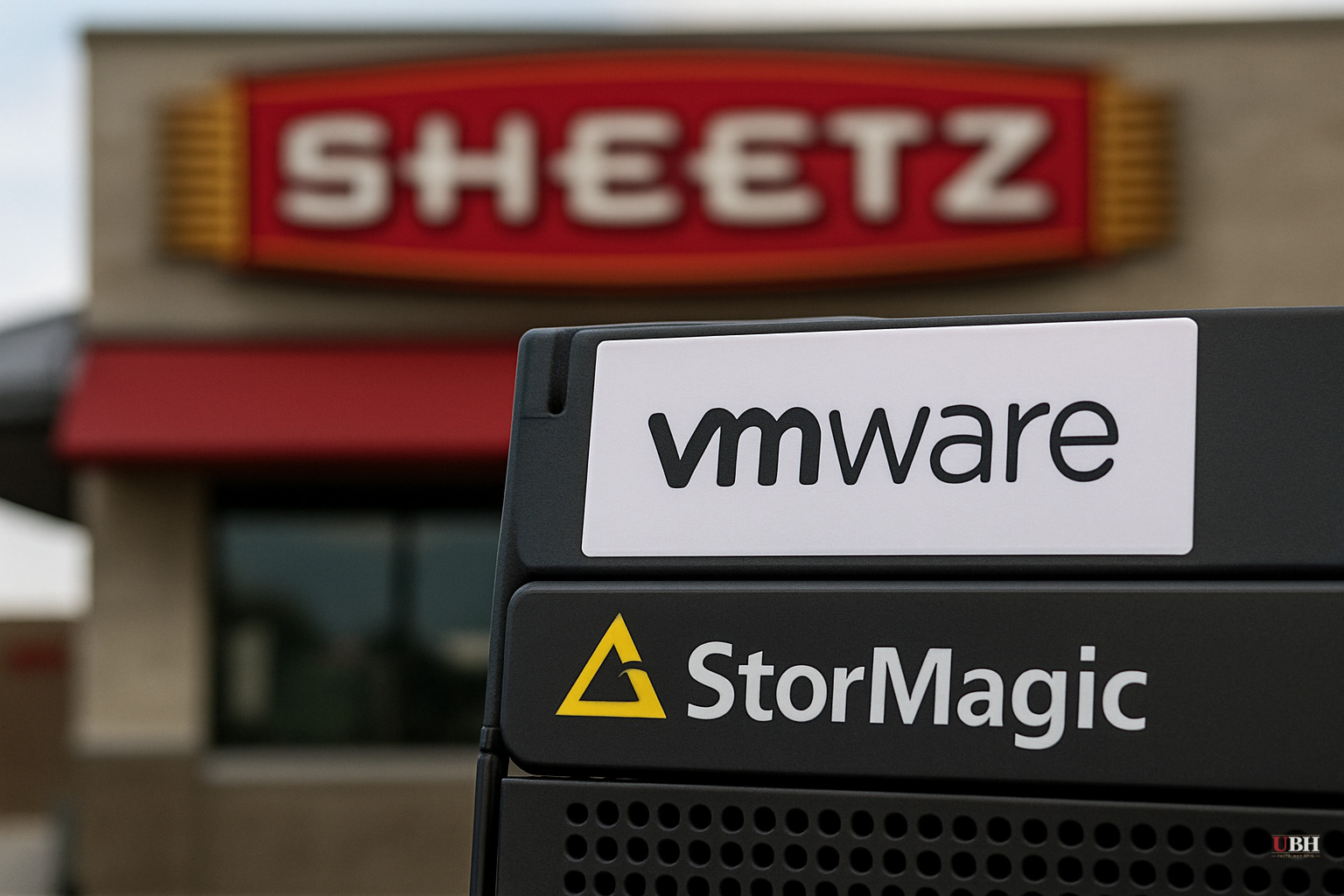
Sheetz is pulling VMware out of every one of its 838 convenience stores. The chain says Broadcom's licensing overhaul left it no choice.
According to Ars Technica, Sheetz has run VMware virtualization on Dell R440/R450-series servers at each location since 2019, handling 12 to 14 virtual machines per store. That's roughly 11,000 VMs total getting moved to StorMagic's SvHCI platform. An additional two VMs per store will get swapped later this year as part of a separate Windows 10 to Windows 11 transition.
The company has already converted more than 600 stores, averaging 200 per month, according to a Sheetz announcement reported by Ars Technica. Sheetz expects to finish the migration in about four months.
Why Sheetz Bailed
Broadcom's acquisition of VMware brought an end to perpetual licenses, the traditional pay-once-and-own-it model IT departments had relied on for decades. In their place: subscription bundles, often requiring multi-year commitments.
Scott Robertson, Sheetz's infrastructure team manager, told Ars Technica the changes made long-term planning impossible. "The projected price hikes, coupled with a mandatory subscription model and a five-year commitment, simply created too much uncertainty around long-term budgeting and increased our vendor dependence," he said.
A convenience store chain running critical point-of-sale and operational systems at nearly 900 locations needs predictable costs. A five-year lock-in with a vendor that just changed its licensing terms is a real risk, not a hypothetical one.
The Broadcom Defense, Fairly Stated
Broadcom has argued that changes to VMware's licensing model are in line with the rest of the industry, and its acquisition of VMware is considered financially successful, according to Ars Technica's reporting.
There's something to that. Software companies increasingly favor subscriptions because it smooths revenue and funds ongoing development. But the switch from perpetual licenses to mandatory subscriptions for a product companies already built their infrastructure around is different from a new customer choosing a subscription from day one. Sheetz already had sunk costs in VMware. Robertson's comments make clear the shift to a mandatory subscription and five-year commitment is the part Sheetz couldn't tolerate.
Why StorMagic, Not a Bigger Name
Sheetz didn't pick a random alternative. It had already been running StorMagic's SvSAN, a virtual storage area network product, alongside VMware for critical in-store applications since 2019. Gary Sliver, Sheetz's director of platform engineering, said the earlier rollout "proved StorMagic could deliver the resilience and centralized management needed across a large, distributed retail environment."
That existing relationship mattered. Sliver noted the migration hasn't required sending technicians to every site, and Robertson told Ars Technica the ability to move from SvSAN to SvHCI remotely, without hardware upgrades, will save the company a "significant" amount of money. Sheetz is still running its original Dell server hardware, meaning this is a software-only transition, not a rip-and-replace of physical infrastructure.
It Wasn't Simple
Robertson was candid that the migration hasn't been friction-free. Automation and SvHCI's VM Import Utility were, in his words, "absolutely vital to scaling this migration," because Sheetz runs a 24/7/365 retail operation where minimizing disruption was critical.
He also noted that SvHCI's relative newness compared to VMware, particularly around APIs, meant some extra manual work. The main challenge, per Robertson, was finding the time to simultaneously plan, develop, and implement the migration across the full scale of the environment.
What's Still Unresolved
Sheetz is one data point among several. Ars Technica reports that other enterprises recently revealed to be migrating off VMware include Allstate, T-Mobile, and UK grocery chain Tesco. But numerous VMware rivals are courting customers unhappy with Broadcom's changes, and few can match VMware's full breadth of capabilities, meaning many IT departments remain stuck with VMware because switching costs are too high.
Whether Broadcom adjusts its licensing terms in response to customer defections like Sheetz's is an open question. For now, Broadcom maintains its approach is consistent with industry norms and has called the VMware acquisition financially successful.
Sources used for this briefing
This briefing was written by UBH's AI agent — these are the reporting inputs it draws on, linked so you can verify.


