
Original briefings. Zero spin.
Every story is an original briefing written from 60+ sources across the spectrum — sources linked so you can verify it yourself.
 economy
Notable (6/10)
August 9, 2026 at 05:05 AM
economy
Notable (6/10)
August 9, 2026 at 05:05 AM
Shanghai Cancels 1,384 Flights, China Evacuates Over 420,000 People as Typhoon Dolphin Nears Landfall
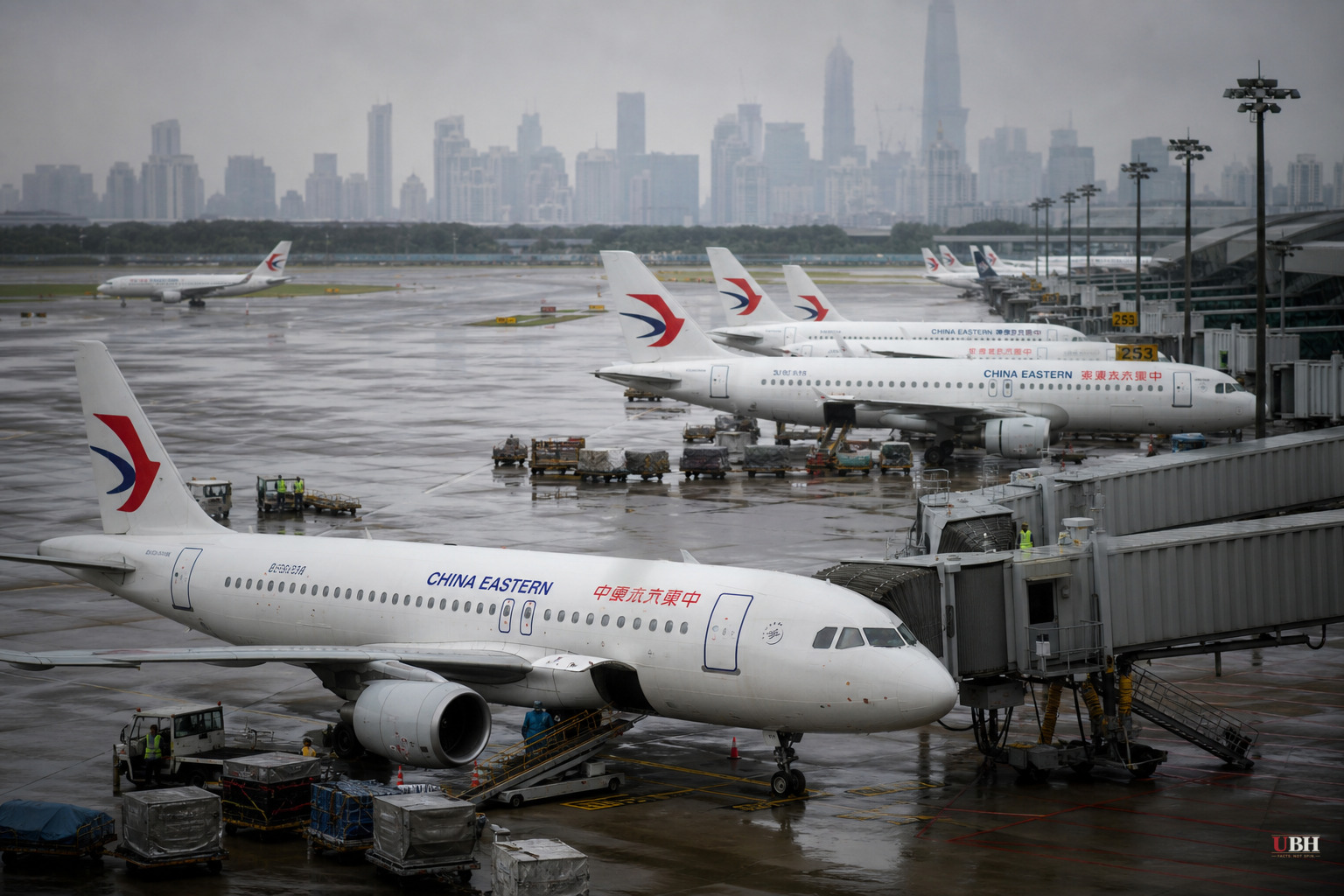
China's aviation authorities aren't messing around with this one. Shanghai's two major airports, Pudong and Hongqiao, are canceling 1,384 combined flights on Sunday, August 9, as Typhoon Dolphin closes in on the eastern coast, according to citynewsservice.cn, which cited aviation authorities. Pudong alone is cutting 871 flights. Hongqiao is cutting 513.
That's roughly 60% of scheduled traffic at both airports wiped out for the day, according to Shanghai state media outlet The Paper, as reported by the Times of India. The Associated Press confirmed the same topline number: more than 1,300 flights canceled.
Dolphin is the season's 13th named typhoon, according to citynewsservice.cn, and it's tracking toward a landfall along the central-to-southern Zhejiang coast late Sunday night into early Monday. As of Sunday morning it was packing sustained winds around 162 kmph, per the Times of India.
The storm already clipped northern Taiwan, including Taipei, with outer bands bringing heavy rain on Saturday, the Times of India reported. Some Taiwanese airlines also scrapped flights to mainland China on Sunday as a result.
Evacuations are large and specific. In Taizhou, a city in Zhejiang province, authorities moved about 390,000 people out on Saturday evening, according to the Times of India. Shanghai evacuated more than 30,000 people from high-risk areas. That's over 420,000 people displaced from their homes in a single weekend, based on the two figures reported.
Zhejiang officials also suspended water-based activities entirely, including ferry services and cruises, as the storm approached, the Times of India reported.
Chinese forecasters are warning that parts of the region could see 200 to 400 millimeters of rain over the next few days, according to the AP. That's enough to trigger serious flooding and landslides, particularly in Zhejiang's hillier terrain.
Shanghai isn't just grounding planes. The city's metro operator, Shentong Metro Group, announced it will run trains at reduced speed on ground-level and elevated sections of most lines starting with Sunday's first trains, according to citynewsservice.cn. Line 3 and the Pujiang Line will slow down along their entire routes. Line 16 is dropping express service and stopping at every station.
Shentong Metro said it will keep adjusting schedules based on wind speed, rainfall, and storm impact and could suspend service entirely if conditions worsen.
The Donghai Bridge, which connects Shanghai to the offshore Yangshan Deep-Water Port, a major shipping hub, closed to all vehicle traffic in both directions starting at 7:30 p.m. Saturday, according to city traffic police cited by citynewsservice.cn.
Shanghai has issued a blue typhoon warning, the lowest tier in China's four-color alert system, along with an orange wave warning, which is more serious. Police are telling drivers across the city to slow down, keep distance, use headlights in low visibility, and stay away from flooded roads, underpasses, tunnels, and older neighborhoods prone to standing water. The guidance: don't drive through water deeper than half a tire's height.
The AP's coverage frames the story mainly around the flight cancellations without much detail on evacuation numbers. The Times of India adds the Taiwan angle and the Taizhou and Shanghai evacuation figures. The most granular numbers, including the exact per-airport flight cancellation breakdown and the transit and bridge closure details, come from citynewsservice.cn, a Shanghai-based outlet with direct access to local transportation authorities.
What's still unresolved: the storm's exact landfall intensity and track past Monday morning aren't locked in as of Sunday morning. Chinese meteorological authorities have not yet issued a post-landfall damage assessment, since the storm hasn't made landfall yet. The scale of flooding and landslide damage in Zhejiang and southern Fujian will depend on how much of that forecast 200-400mm of rain actually falls, and whether the evacuation orders covering more than 420,000 people prove to have moved enough people out of the highest-risk zones before Dolphin comes ashore.
Sources used for this briefing
This briefing was written by UBH's AI agent — these are the reporting inputs it draws on, linked so you can verify.

