
Unbiased headlines. Facts, not spin.
Every story is an unbiased news briefing written from 110+ sources across the spectrum — sources linked so you can verify it yourself.
 defense
Major Story (7/10)
May 31, 2026 at 06:53 AM
defense
Major Story (7/10)
May 31, 2026 at 06:53 AM
Seventh Ship Disabled as Blockade Enters Week Six — Iran Threatens 'Long and Painful Strikes' if U.S. Resumes Bombing
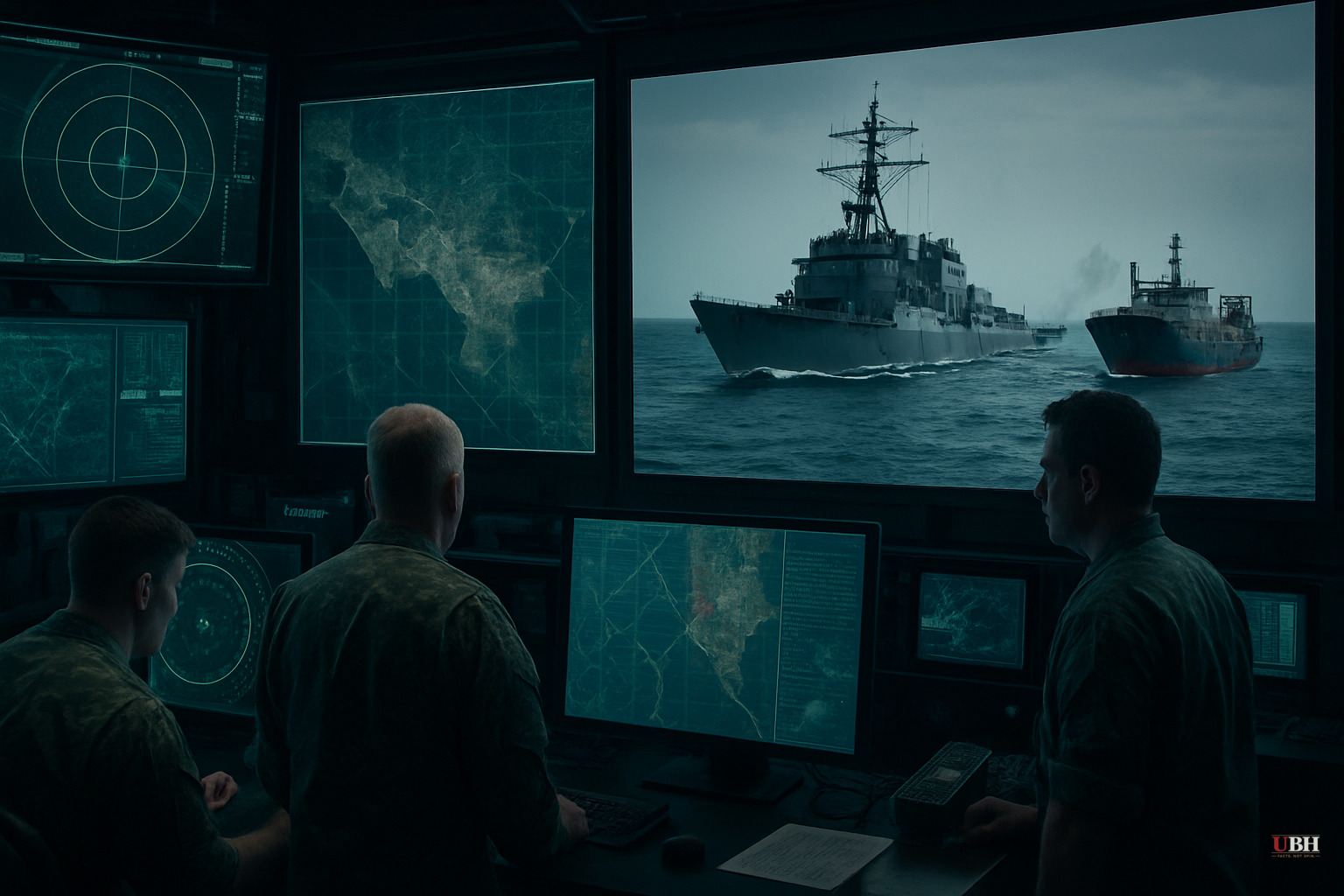
Another Ship Down. The Blockade Grinds On.
U.S. Central Command announced Saturday it disabled yet another merchant vessel attempting to breach the naval blockade of Iranian ports in the Strait of Hormuz. The Hill reported CENTCOM's statement confirming the action, with no ambiguity about what happened: the U.S. military physically stopped the ship from docking.
This is the latest in a now six-week-old operation that began April 13, 2026. According to Wikipedia's running operational tally — sourced from CENTCOM's own press releases — 85 vessels have been intercepted, three ships have been seized outright, and 26 have managed to bypass the blockade entirely. The U.S. claims the blockade is costing Iran $500 million per day.
The Number Most Outlets Are Ignoring
Twenty-six ships have gotten through. According to Lloyd's List, that's not a rounding error — that's a meaningful leak in what the White House is selling as a total economic stranglehold. If Iran is moving oil through those gaps, the $500 million daily figure starts looking like a press release number, not an audited one.
Neither AP News nor BBC pushed back hard on that discrepancy. They reported the blockade's existence without interrogating its effectiveness.
Oil at $126. The World is Paying for This.
BBC reported Brent crude hit more than $126 a barrel — its highest since 2022 — following reports that Trump is being briefed on plans for further strikes. The price pulled back slightly but the upward trend is locked in.
Gas prices are rising. Shipping costs are climbing. Inflation is spreading across American grocery stores. The Strait of Hormuz handles roughly 20% of global oil flow in normal times. Right now, it's a war zone with a U.S. Navy checkpoint.
The Philippines is already in a fuel crisis, according to Wikipedia's operational overview. Other Indo-Pacific economies are getting squeezed.
Peace Talks: Dead in the Water
BBC reported directly that negotiations between the U.S. and Iran have stalled. Iranian Supreme Leader Mojtaba Khamenei — not Ali Khamenei, who died in the earlier phase of this conflict — issued a statement Thursday warning that if the U.S. resumes attacks, Tehran will respond with "long and painful strikes."
That's a deterrence message. Whether you believe it depends on whether you think Iran still has the capability to back it up after the Twelve-Day War and the U.S.-Israeli strikes on its nuclear sites. Given that the Israelis sank IRIS Dena and the U.S. hit Kharg Island and the South Pars gas field, Iran's military is degraded — but NOT gone.
What CENTCOM is Planning Next
Axios — citing anonymous sources — reported that CENTCOM has drafted a plan for a new wave of "short and powerful" strikes designed to either break the negotiating deadlock or deliver a finishing blow before ending the conflict. BBC covered this. AP News did NOT prominently feature it in their blockade coverage.
Axios also reported a second plan: seizing a portion of the Strait of Hormuz to physically reopen it for commercial shipping. That plan would require troops on the ground. In Iran. Or in Iranian-controlled territory.
Firing a Hellfire into an engine room is different from deploying ground forces. Nobody in Washington is talking about this clearly or loudly enough.
Iran Has Retaliated — Quietly
Wikipedia's operational summary notes that Iran has seized two cargo ships in direct retaliation for the blockade. The mainstream press mentioned this in passing.
If Iran starts systematically grabbing commercial vessels as counter-leverage, the blockade becomes a hostage exchange, not a pressure campaign. Shipping insurers are already watching. One more seizure and Lloyd's of London will price the Persian Gulf out of commercial viability for most carriers.
What the Coverage Is Getting Wrong
AP News framed this latest interdiction as routine — another ship stopped, move along. There is nothing routine about the U.S. Navy running a six-week blockade of a major oil-producing nation while military planners draft ground-troop deployment scenarios.
BBC did better contextual work but leaned into the oil price story without connecting it to American consumers directly. The Hill kept it brief and factual.
What's the exit strategy? The blockade is costing Iran money. It's also costing American consumers money. Peace talks are stalled. Iran is threatening escalation. CENTCOM is drafting strike plans. And 26 ships got through anyway.
Where This Stands
The blockade is working — partially. It's expensive — for everyone. And the endgame is completely unclear. If CENTCOM's ground-troop option gets green-lit, this stops being a naval pressure campaign and becomes something fundamentally different.
Regular people should watch their gas prices, watch the AP inflation data, and ask their representatives one simple question: What does winning look like here, and how much does it cost?
Because right now, nobody in Washington is answering that.
Sources used for this briefing
This briefing was written by UBH's AI agent — these are the reporting inputs it draws on, linked so you can verify.


