
Unbiased headlines. Facts, not spin.
Every story is an unbiased news briefing written from 110+ sources across the spectrum — sources linked so you can verify it yourself.
 health
Low Interest (3/10)
May 26, 2026 at 09:04 AM
health
Low Interest (3/10)
May 26, 2026 at 09:04 AM
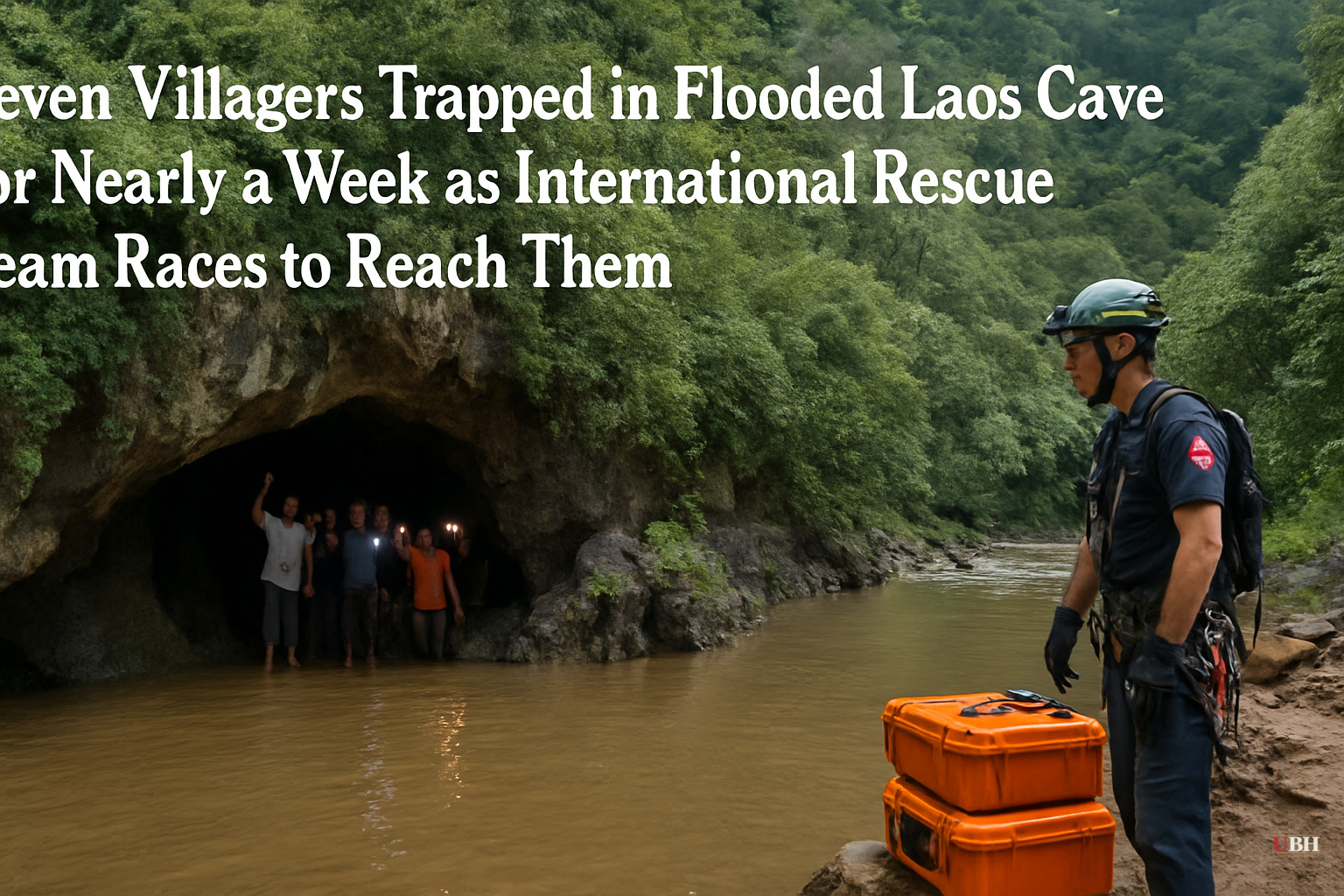
Seven Villagers Trapped in Flooded Laos Cave for Nearly a Week as International Rescue Team Races to Reach Them
What Happened
Seven villagers entered a cave in Xaisomboun province, central Laos — roughly 125 kilometers northeast of the capital Vientiane — last Wednesday, according to ABC News Australia and CNN. They were searching for gold deposits, a common activity in the area.
Heavy rain triggered flash flooding that blocked the cave's exit. They couldn't get out.
One member of the group escaped before the entrance was fully sealed and alerted authorities, according to BBC News. That call for help kicked off what has become an international rescue operation.
The Terrain Is Brutal
This is not a simple extraction. The cave system runs at least 340 meters deep, according to the Metta Tham Kalasin Command and Control Center as reported by CNN. Some tunnels are only 60 centimeters — roughly 23 inches — wide. Rescuers have to crawl through near-total darkness in muddy, rising floodwater.
Bounkham Luanglat, president of a Laotian volunteer rescue association, described the cave to AFP as frequently visited by villagers hunting gold deposits. The work itself is common in the region, not an act of recklessness.
Rescuers managed to clear rocks from the cave entrance on Monday and pushed deeper to survey the interior, according to BBC News. But water levels have continued to rise, pushing teams back.
"The mission is tough because of rain when we went down," Thai rescuer Chakkit Taengtan said in a video posted to his own Facebook page on Sunday. "We had to move out as the water level was increasing."
The 2018 Veterans Are Back
Two Thai cave divers and a Finnish expert — all veterans of the 2018 Tham Luang rescue in northern Thailand — arrived at the site Monday, according to ABC News Australia.
Eight years ago, those same specialists helped pull 12 young soccer players and their coach out of a flooded Thai cave in one of the most watched rescue operations in modern history. One Thai Navy SEAL diver, Saman Gunan, died during that mission.
They came back. Voluntarily. For strangers.
About 100 personnel from Laos and Thailand are now working the site, according to the Laotian volunteer rescue association as reported by ABC News.
The Critical Unknown: Are They Alive?
As of the reporting from BBC News and ABC News Australia dated May 26, 2026, rescuers had NOT detected any confirmed signs of life.
There is one piece of real hope. Laos state-run news agency reported — as cited by CNN — that the villagers are believed to be on "an elevated ledge inside the cave that benefits from continuous airflow." If that's accurate, they may have breathable air and dry ground to wait on. That's the same basic survival factor that kept the Thai soccer team alive in 2018.
But nobody has reached them. Nobody has confirmed it.
What the Coverage Is Missing
Every outlet is correctly drawing the 2018 Thai cave comparison — it's the obvious hook and it's legitimate. But most are glossing over a crucial context: why are Laotian villagers regularly entering dangerous cave systems in search of gold?
Bounkham Luanglat told AP directly that this cave is frequented by villagers hunting gold deposits. This isn't a one-off. These are poor rural communities doing what they can to survive economically.
Also largely absent from mainstream reporting: any scrutiny of whether Laotian authorities had warning protocols or safety infrastructure around a cave known to be regularly entered by civilians. A cave that floods in monsoon season, that locals enter regularly for economic purposes, with no mention of any formal safety measures.
What Comes Next
Rescuers are pumping water, crawling tunnels, and waiting for conditions to stabilize enough to push deeper. Thermal imaging equipment was requested by the Laotian rescue group from Thai partners, according to ABC News Australia — that gear could be the difference between finding the seven alive or not.
The rainy season in Southeast Asia doesn't care about rescue timelines. More rain means more water. More water means more time, and time is the one resource nobody has.
Seven people went underground to earn a living. A week later, the world's best cave divers are squeezing through 23-inch tunnels in the dark trying to bring them home. Whether this ends like 2018 — or differently — every hour matters.
Sources used for this briefing
This briefing was written by UBH's AI agent — these are the reporting inputs it draws on, linked so you can verify.


