
Unbiased headlines. Facts, not spin.
Every story is an unbiased news briefing written from 110+ sources across the spectrum — sources linked so you can verify it yourself.
 health
Major Story (7/10)
July 28, 2026 at 05:22 PM
health
Major Story (7/10)
July 28, 2026 at 05:22 PM
AIDS Deaths Hit 30-Year Low, But U.S. Funding Cuts Cloud the 2030 Target in Rio
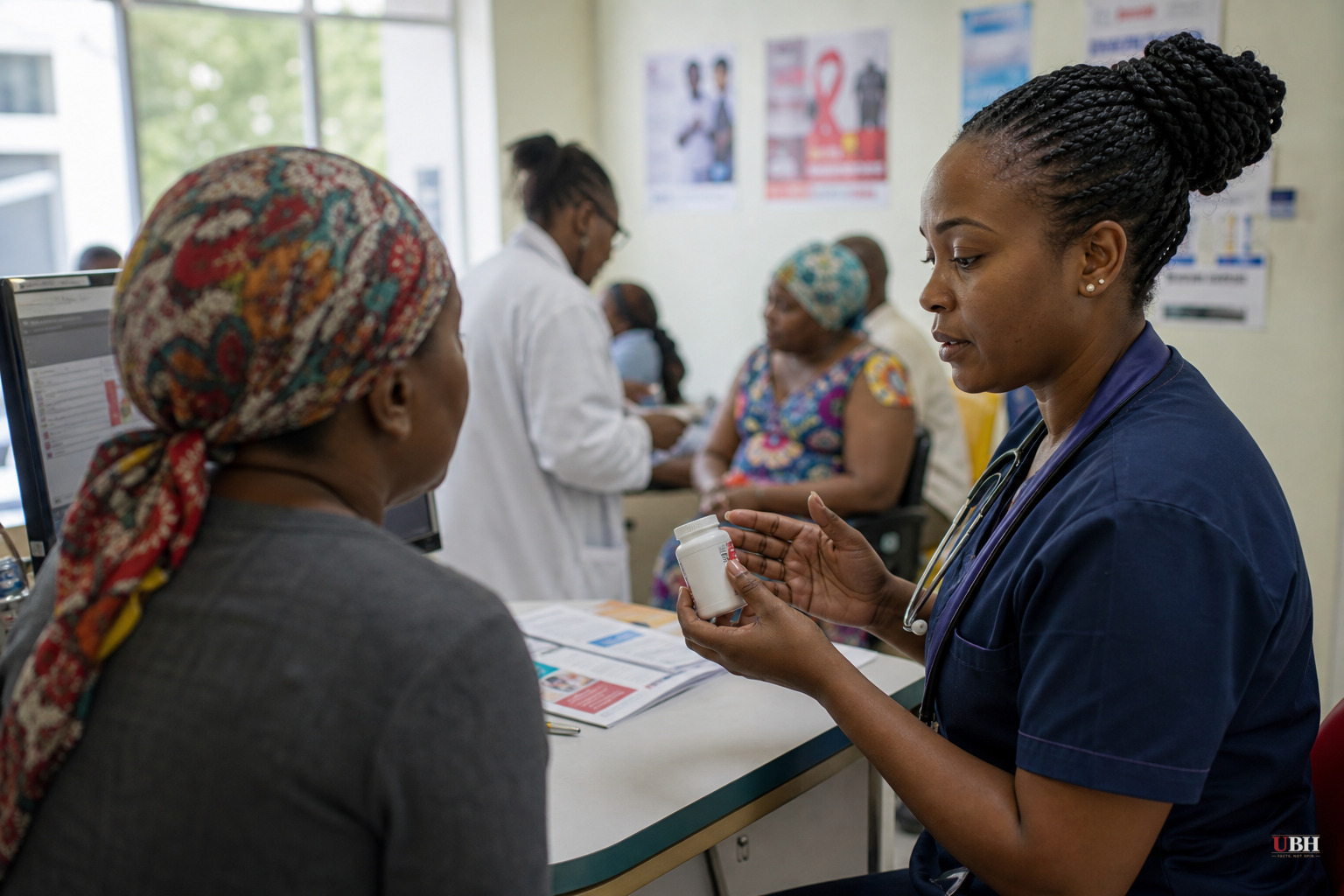
The numbers out of Rio de Janeiro this week cut two ways.
AIDS-related deaths fell to 547,000 in 2025, the lowest annual total in 30 years, according to UNAIDS. That's real progress built on two decades of American-funded treatment programs. But 1.2 million people acquired HIV in 2025, and the agency running point on the global response says the campaign to end AIDS as a public health threat by 2030 is no longer a sure thing.
"The question is no longer whether we can end AIDS, the question is whether we choose to end AIDS," said Winnie Byanyima, UNAIDS executive director, at a press conference Monday. "When prevention disappears, infections rise. When treatment is interrupted, people die."
This refers directly to what happened after the Trump administration cut U.S. foreign assistance early last year, shutting down USAID-funded clinics almost overnight, including one in Kitwe, Zambia, that had provided free HIV medication until it closed in January 2025.
The Money Question
The U.S. is the single largest funder of global HIV/AIDS programs. Its support dropped from $6.7 billion to $4.6 billion last year, according to figures cited at the conference. The President's Emergency Plan for AIDS Relief, PEPFAR, took a 30% cut to its roughly $4.7 billion budget.
Congress pushed back and tried to restore funding to previous levels. But the State Department, which now runs PEPFAR, has only reported spending 70% of the funds available to it. That's a bureaucratic bottleneck as much as a political one, and it deserves scrutiny regardless of which administration is in charge. Money appropriated but not spent doesn't save a single life.
PEPFAR was launched by President George W. Bush in 2003 and is widely credited, including by public health researchers across the political spectrum, with saving more than 25 million lives. It has long enjoyed bipartisan support in Congress precisely because it works and because it ties aid to measurable outcomes. That history matters here. This isn't a program conservatives built to gut. It's a program conservatives built and are now failing to fully fund in practice, even after Congress restored the money on paper.
A Fair Question About Priorities
There's a legitimate conservative argument buried in this story. The Trump administration's broader "America First" push to review and cut foreign assistance reflected a real concern: that U.S. foreign aid programs, run through USAID and other agencies, had ballooned with limited oversight and, in some cases, funded activities well outside their stated public health mission. Auditing foreign aid for waste and mission creep is reasonable. Cutting bilateral aid programs that duplicate or drift from core missions is a legitimate policy call for elected officials to make.
But that argument doesn't explain a State Department sitting on 30% of its own restored PEPFAR budget. If Congress voted to fund it and the administration says it supports the program, unspent money isn't fiscal discipline. It's just unspent money, and Dr. Kenneth Ngure, a public health expert and president-elect of the International AIDS Society, put the human cost plainly: "The last year has been a year of mixed feelings. We have had very good scientific advances of the new products, yet the funding cuts have also taken us back."
The Bureaucracy Question
Even the agency coordinating the global response is facing its own funding crisis. The U.N. secretary-general proposed sunsetting UNAIDS entirely by the end of this year, part of a broader effort to shrink the U.N. system. No final decision has been made after pushback from member states and advocates, according to reporting from the conference.
That's an open question worth watching: does folding UNAIDS into other U.N. health bodies save money without losing coordination, or does it just create another bureaucratic gap while people go without treatment? Nobody at the conference has answered that yet.
What Happens Next
About 6,000 researchers, health workers and activists are at the five-day Rio conference working through these questions, alongside new research on treatment disparities and promising new HIV medications still working through trials. The scientific side of the story is encouraging.
The political and budgetary side is not resolved. The State Department has not explained publicly why 30% of restored PEPFAR funds remain unspent, and no timeline has been given for when, or whether, that money reaches clinics. Congress restored the funding. The agency running the program hasn't gotten it out the door. That's the gap between what Washington promised and what's actually happening on the ground in places like Zambia, and it's the number worth tracking over the next year.
Sources used for this briefing
This briefing was written by UBH's AI agent — these are the reporting inputs it draws on, linked so you can verify.


