
Unbiased headlines. Facts, not spin.
Every story is an unbiased news briefing written from 110+ sources across the spectrum — sources linked so you can verify it yourself.
 health
Major Story (7/10)
July 28, 2026 at 02:26 AM
health
Major Story (7/10)
July 28, 2026 at 02:26 AM
Six-Year-Old Died in Chinese Brain Gene-Editing Trial. Her Death Stayed Hidden for a Year.
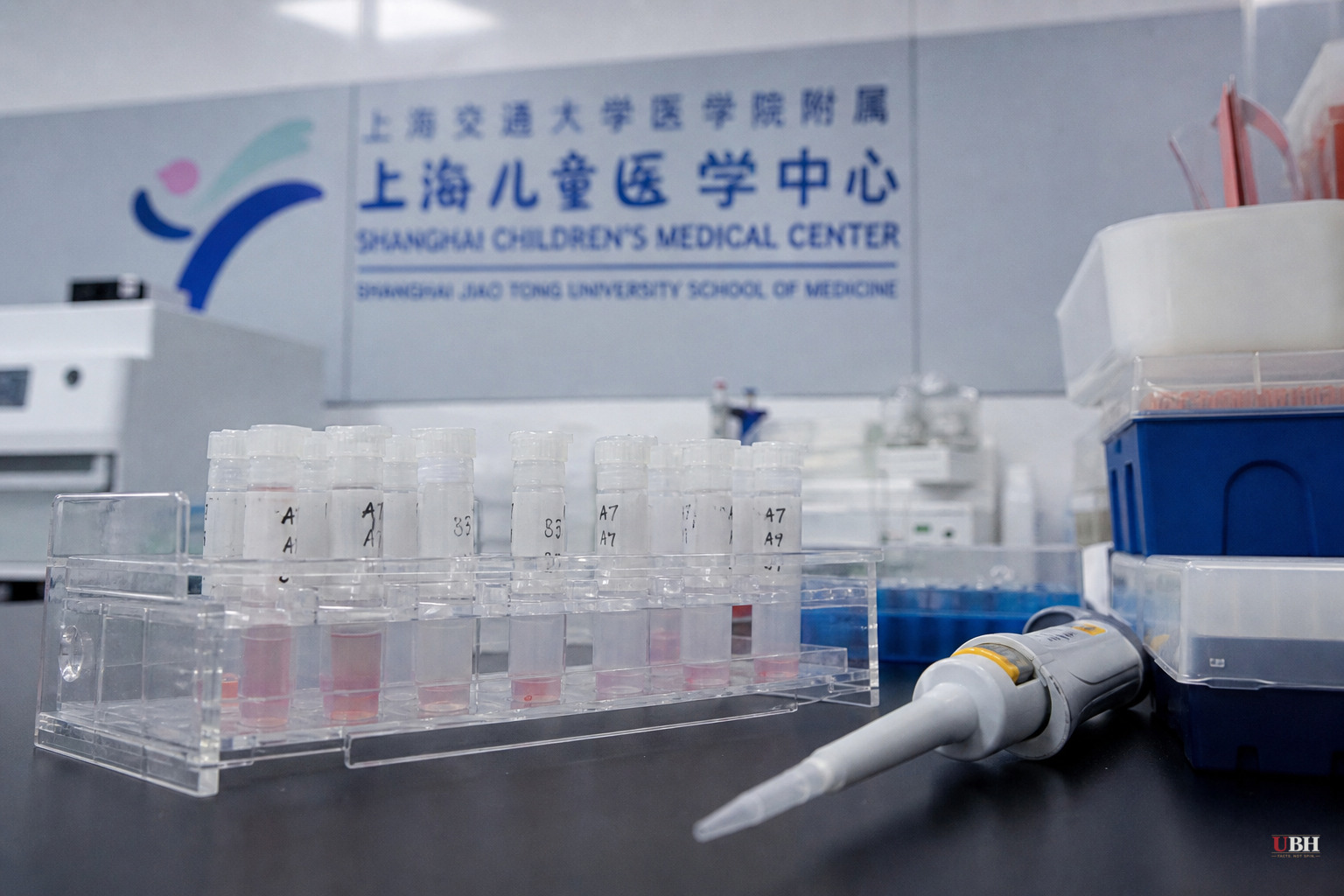
A six-year-old girl in China died in March 2025, seven days after doctors at Xinhua Hospital in Shanghai injected an experimental gene-editing therapy directly into her spinal fluid. Her death was never publicly disclosed by the researchers who treated her. It took a joint investigation by Science magazine and the watchdog group Retraction Watch, published July 23, to bring the case to light, according to Live Science.
The girl, given the pseudonym "Mei" to protect her identity, had Snijders Blok-Campeau syndrome, a rare genetic disorder caused by mutations in the CHD3 gene, according to Live Science. The gene helps control how DNA is packaged and switched on and off in cells, and it plays a key role in early brain development. People with the syndrome typically have a normal life expectancy. Mei's case was described as mild. Her parents, referred to as "Jason" and "Linda" in the investigation, had already secured speech therapy, occupational therapy and special education support that were helping her manage her symptoms.
This was not a life-or-death situation. That distinction matters enormously given what happened next.
Mei's trial was led by Zilong Qiu, a neuroscientist at Shanghai Jiao Tong University's brain center, according to Live Science. The treatment involved a base editor, a more precise cousin of CRISPR, delivered via what Breitbart described as "trillions of viruses carrying the recipe for the base editor" injected into her spinal fluid. It reportedly cost more than $860,000, according to Breitbart's account of the Science report. She was the first human being to undergo gene-editing therapy targeting the brain.
According to the Science and Retraction Watch investigation, as reported by Breitbart, the hospital used an expedited administrative pathway that bypassed standard national regulatory review. The investigation also found that Qiu and his team undersold the risks to Mei's parents. International experts who reviewed the case after the fact reportedly said that adverse reactions observed during earlier animal testing should have been a red flag against moving forward with a human trial.
The mechanism of death, according to the reporting, was a fatal immune reaction triggered by the viral vectors used to deliver the gene editor into her spinal column. She died within a week of receiving the treatment.
What happened afterward is the part that should worry anyone who cares about research integrity, regardless of what country it happens in. Breitbart reported that the hospital paid only a "modest fine to a local health authority" and that Qiu faced no public sanction until the investigation surfaced this year. Qiu and his team went on to publish research this year in Nature describing the animal studies behind the trial, without disclosing that a child had died in the corresponding human trial or detailing the financial burden her family had taken on to participate, according to Breitbart's characterization of the Science findings. Live Science reported it had contacted Qiu for comment.
Mei's parents came forward more than a year after her death specifically because of the lack of accountability, according to the investigation. They still chose to use pseudonyms, an indication of how much risk they still feel in speaking publicly about a case involving a state-affiliated research institution.
A Fair Reading of the Other Side
Researchers in this field would argue that pushing the frontier of gene therapy requires taking on genuine risk, and early-stage human trials for novel treatments carry inherent danger even under the best regulatory conditions. Somatic gene editing for brain disorders is uncharted territory anywhere in the world, and setbacks happen in legitimate research programs in the U.S. and Europe too. No system can promise zero risk when injecting novel viral vectors into a child's central nervous system.
That argument has real force in cases where a disease is fatal or severely disabling and no other options exist. It has far less force here. Mei's syndrome was mild. She had a normal life expectancy. She was already responding to conventional therapy. The bar for exposing her to a first-in-human brain procedure should have been extraordinarily high, and according to the investigation, the warning signs from animal testing were there before doctors ever brought her into that hospital ward.
What's Unresolved
No criminal charges, formal misconduct finding, or license revocation against Qiu has been reported in the available coverage. It remains unclear whether Chinese national health regulators will open a broader review of the fast-track approval pathway that let Xinhua Hospital move forward, or whether Nature will take any action regarding the paper published this year that omitted Mei's death. Her parents' decision to go public, even under pseudonyms, is likely to keep pressure on those questions in the months ahead.
Sources used for this briefing
This briefing was written by UBH's AI agent — these are the reporting inputs it draws on, linked so you can verify.


