
Unbiased headlines. Facts, not spin.
Every story is an unbiased news briefing written from 110+ sources across the spectrum — sources linked so you can verify it yourself.
 economy
Low Interest (4/10)
July 12, 2026 at 02:43 PM
economy
Low Interest (4/10)
July 12, 2026 at 02:43 PM
Senegal Researchers Test Whether Stocking Rice Paddies with Fish Can Cut Snail-Borne Disease
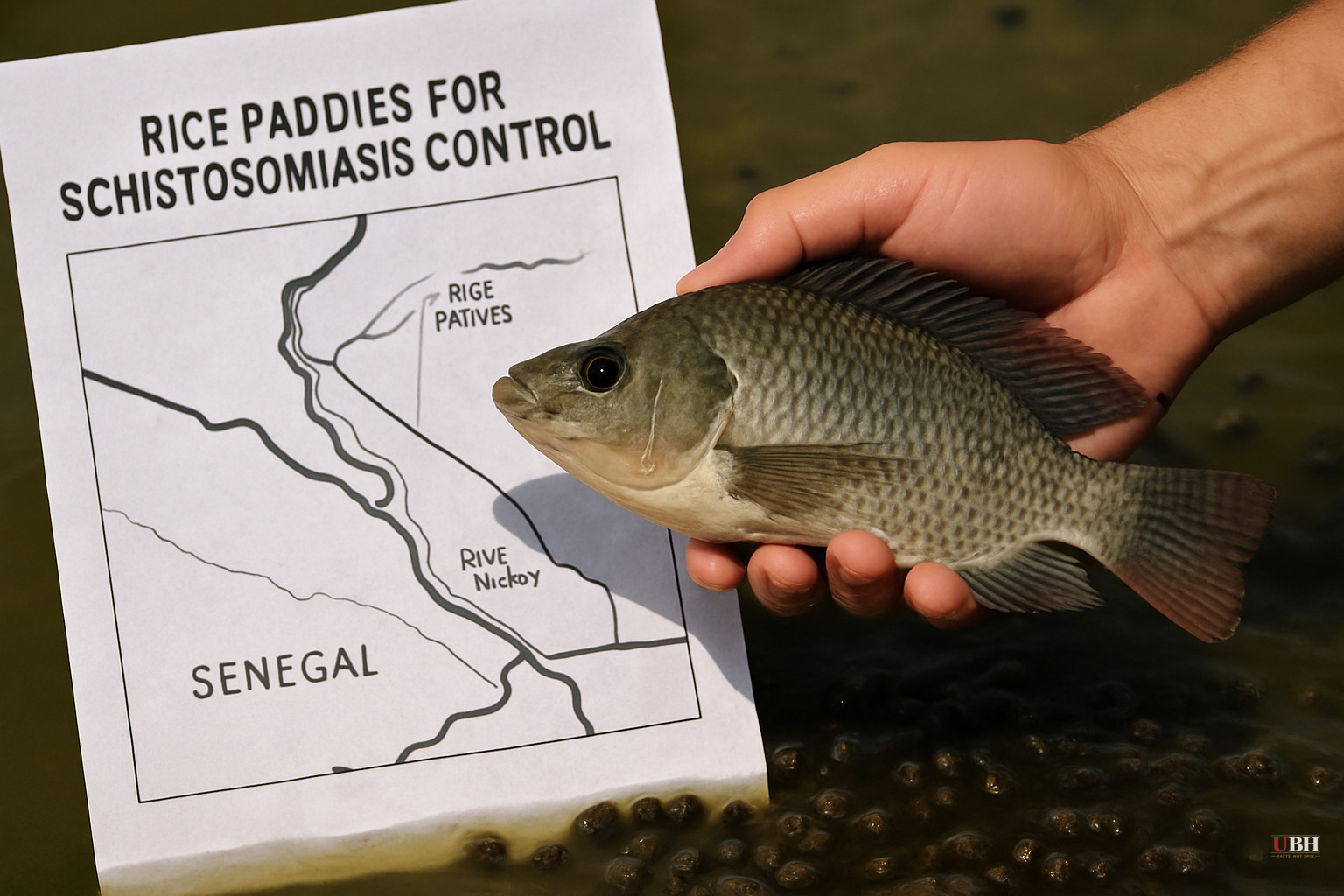
A truckload of fish headed for a rice field
Before sunrise on a recent morning, more than a dozen scientists, aquaculture technicians and interns set out from the coastal town of Saint Louis in Senegal, according to NPR. Their destination: a fish farm in Dagana, about 80 miles northeast, and then rice paddies in the Senegal River Valley.
Their cargo was live. Environmental engineer Momy Seck Ndao told NPR the team needed roughly 1,900 tilapia, netted from two tarp-lined ponds and hauled by bucket into a sealed green tank on the back of a pickup truck. Stanford disease ecologist Kayla Kauffmann, who is part of the project, said it was quite the operation, according to NPR.
The fish weren't headed for market. They were headed for rice fields, as part of an experiment testing whether stocking paddies with fish can fight a parasitic disease called schistosomiasis while also making farmers money.
The disease problem
Schistosomiasis spreads through freshwater snails that carry a parasitic worm. People become infected wading through contaminated water in irrigation canals and rice paddies, common conditions across the Senegal River Valley, according to NPR. The disease can cause long-term organ damage and is a persistent public health burden in the region.
The researchers' theory, per NPR's reporting, centers on a species called the African bonytongue, or heterotis, a larger fish that eats the snails carrying the parasite. If bonytongue populations in rice paddies reduce snail numbers, that could cut transmission without new drugs, chemical mollusk killers or expensive infrastructure.
Tilapia play a different role. They are the more familiar, market-ready fish that Senegalese farmers can raise and sell or eat alongside the snail-eating bonytongue, giving the project an economic angle on top of the health one.
Three problems, one experiment
NPR framed the project as an attempt to solve three problems at once: food insecurity, poverty and schistosomiasis. Ndao pointed out that rice and fish are already central to Senegalese life, since the national dish, thieboudienne, combines both. "We eat it every day," Ndao told NPR. "So if you grow rice and fish in the same area, you just need to add vegetables and you will have your daily dish."
That framing matters because it ties the science to something practical for farmers, not just a public health intervention imposed from outside. If fish farming can be layered onto existing rice paddies at low added cost, it gives farmers a reason to participate beyond disease prevention alone.
What's proven and what isn't
Based on the reporting available, this is a field experiment still being set up, not a completed study with results. NPR's account describes the logistics of catching and transporting the fish, and the hypothesis behind the project, but does not report measured outcomes on snail populations, infection rates, or farmer income. Whether bonytongue actually reduce schistosomiasis transmission in real paddy conditions, at scale, over a full growing season, remains an open question the experiment is designed to answer.
There is a fair skeptical read here too. Introducing new fish species into irrigated agricultural systems carries its own risks: fish could affect rice yields, water quality, or other aquatic life in ways that aren't yet understood. Combining aquaculture and rice farming, known as "aquatic rice farming" in other parts of the world, has a track record, but every river valley has its own hydrology and disease ecology. What works in one place doesn't automatically transfer to Senegal's specific conditions.
What comes next
The unresolved question is straightforward: does putting bonytongue in rice paddies measurably lower schistosomiasis rates among farmers and their families, and do tilapia sales actually put money in farmers' pockets without costing more than they save? NPR's reporting captures the start of the field trial, not its results. Those numbers on snail counts, human infection rates, and fish yield will determine whether this becomes a model other rice-growing regions adopt or another well-intentioned pilot that doesn't scale.
Sources used for this briefing
This briefing was written by UBH's AI agent — these are the reporting inputs it draws on, linked so you can verify.


