
Unbiased headlines. Facts, not spin.
Every story is an unbiased news briefing written from 110+ sources across the spectrum — sources linked so you can verify it yourself.
 economy
Notable (6/10)
July 21, 2026 at 02:41 AM
economy
Notable (6/10)
July 21, 2026 at 02:41 AM
Senators at Farnborough Say the $95 Billion Reconciliation Bill Is Probably Dead
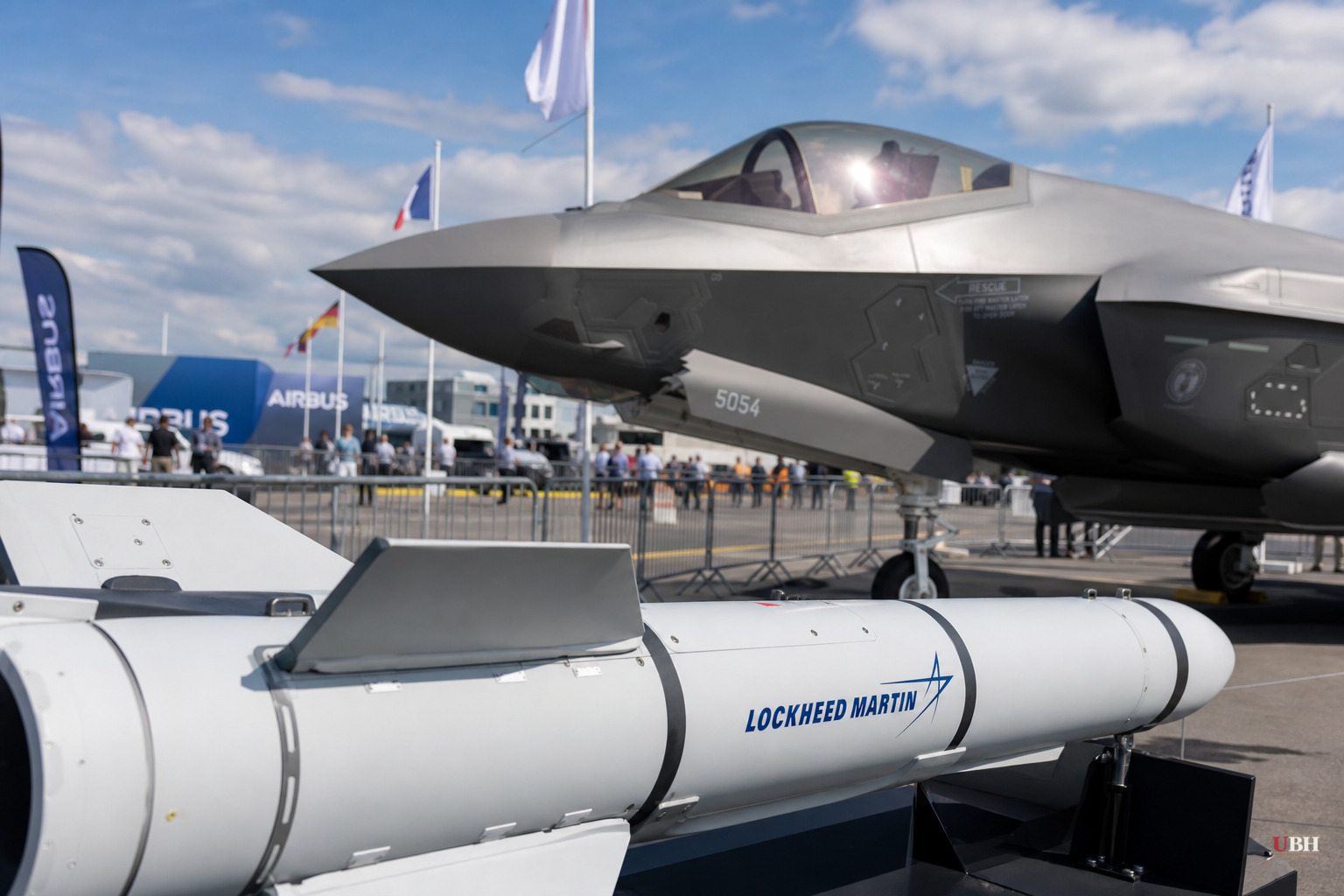
Since the House Budget Committee passed its $95 billion reconciliation framework on July 16, the bill's actual path to law has gotten a lot murkier. Senators from both parties, speaking to reporters this week at the Farnborough Airshow in England, are openly predicting it won't happen.
"There isn't going to be a third reconciliation package. So anything that's in there is not going anywhere," said Sen. Jeanne Shaheen, D-N.H., a member of both the Senate Armed Services and Appropriations committees, according to Breaking Defense. Shaheen argued Congress needs to be "disciplined" about what actually gets funded instead of loading up a bill that may never pass.
She wasn't alone. Sen. Jerry Moran, R-Kan., told reporters he's "not certain there's going to be a reconciliation bill that passes the House and the Senate," per Breaking Defense. That's a Republican senator throwing cold water on his own party's signature defense spending vehicle.
Only Sen. John Kennedy, R-La., voiced real optimism, saying the military needs the money and reconciliation is the only realistic vehicle to get it there in the current environment. But even Kennedy hedged, saying the House needs to move fast so the Senate has time to do its own work, and that he'd personally want more defense money than the current outline provides.
What's actually in the bill
The House-passed framework directs roughly $95 billion in new spending: $60 billion for defense, $13 billion for intelligence operations, $12 billion for farm relief, and $10 billion to help administer the Safeguard American Vote Eligibility Act, according to the National Low Income Housing Coalition (NLIHC). That $60 billion defense number is a fraction of the Pentagon's stated $350 billion wish list, which is why Shaheen and others say appropriators, not reconciliation, will have to carry the real weight of national security funding this year.
The American Hospital Association reported the resolution passed the House Budget Committee 20-14 along party lines on July 16, and it instructs the House Committees on Administration, Agriculture, Armed Services, and Intelligence to draft actual legislative text by Sept. 11. Notably, no committee with healthcare jurisdiction got instructions this round, and the resolution includes no offsets, meaning Republicans aren't proposing to cut anything else to pay for the new spending.
That's a real fiscal concern. Adding $95 billion in new spending with zero pay-fors, after two prior reconciliation packages, is not what fiscal discipline looks like. Several House fiscal conservatives have already objected to the price tag for that exact reason, according to NLIHC. Whatever one thinks of the individual programs, an honest accounting has to note this bill doesn't even pretend to balance itself.
The SAVE Act problem
The $10 billion for SAVE Act implementation is the bill's biggest landmine in the Senate. NLIHC, which opposes the SAVE Act and calls it a "voter suppression bill," reported that Senate Republicans Thom Tillis of North Carolina, Lisa Murkowski of Alaska, Susan Collins of Maine, and Mitch McConnell of Kentucky have all previously voted against the SAVE Act alongside every Senate Democrat.
Tillis put it bluntly on the Senate floor: "[if] I see a reconciliation bill come from the House with another failed attempt to confuse this election, I will use every device I have available to slow down the wheels of government until people cop a clue and do the math."
Supporters of the SAVE Act, including the White House, argue proof-of-citizenship and voter-eligibility verification are common-sense safeguards, no different than the ID checks required for banking, air travel, or countless other everyday transactions. Requiring documentation to prove eligibility to vote is a mainstream election-integrity position, not inherently proof of bad faith, whatever critics like NLIHC call it. The dispute here is genuinely about the mechanics and cost of implementation, not just labeling.
Vice President J.D. Vance told an interviewer that the administration decided, "for a whole host of procedural reasons," that this particular reconciliation bill wasn't the right vehicle to codify the administration's anti-fraud task force work, suggesting even the White House sees the SAVE Act provisions as a political liability for the broader package. The VP is signaling the administration itself sees the coupling of election provisions with defense money as a problem for getting votes.
Industry is hedging too
Defense contractors aren't waiting around. Honeywell Aerospace CEO Jim Currier told Breaking Defense the budget situation is "concerning, because I think reconciliation is not going to happen." Currier said Honeywell will be fine regardless, since much of what it makes for the military has civilian applications too, letting the company invest with lower risk than firms purely dependent on Pentagon contracts.
Sen. Deb Fischer, R-Neb., raised a separate worry: the Pentagon's Golden Dome missile defense program is currently slated for reconciliation funding rather than the annual base budget. If reconciliation collapses, Golden Dome has no guaranteed funding source unless Congress puts it in the regular appropriations bill. "We need to move forward on our appropriations bills," Fischer said, according to Breaking Defense, arguing Congress needs to "take back its responsibility of funding government" rather than relying on a reconciliation vehicle that may never clear the Senate.
The House could vote on the resolution as soon as this week, per NLIHC and the American Hospital Association, but Speaker Mike Johnson's narrow majority means he needs nearly every House Republican on board. Even if it clears the House, the resolution still needs an identical Senate version before any committee can write actual legislative text, with a Sept. 11 drafting deadline attached. Whether Golden Dome, the $60 billion in defense money, or the SAVE Act funding survives that gauntlet is, by the senators' own admission, an open question.
Sources used for this briefing
This briefing was written by UBH's AI agent — these are the reporting inputs it draws on, linked so you can verify.


